
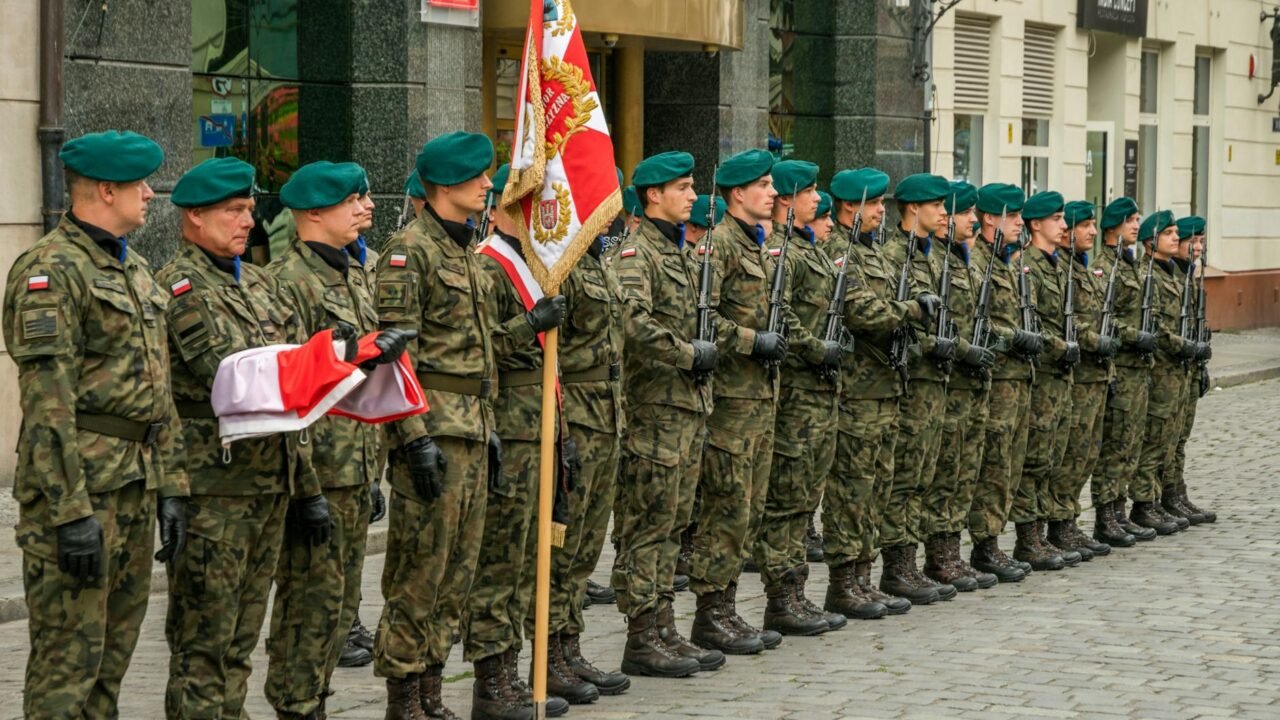
President Trump has announced plans to deploy 5,000 troops to Poland, a move that has left European leaders in a state of considerable unease. This significant commitment of American military personnel to a NATO frontline state comes amidst a period of heightened geopolitical tension and has sparked a complex exchange of reactions across the continent. The announcement, part of a broader strategic recalibration, has been met with a mixture of apprehension and cautious observation by key European capitals, who are now grappling with the implications for regional security and the future of the transatlantic alliance.
Information reaching Tahir Rihat suggests that the deployment is intended to bolster NATO’s eastern flank, a region that has been a focal point of concern for many European nations due to ongoing security challenges. The exact nature and duration of this troop commitment remain subjects of detailed discussion and diplomatic engagement. European leaders, while acknowledging the symbolic importance of such a deployment, are reportedly seeking greater clarity on the strategic objectives and the potential ripple effects on existing defense arrangements. The move by President Trump is seen by some as a reaffirmation of American security guarantees, while others express reservations about potential unilateral actions that could alter the delicate balance of power in Eastern Europe.
The decision to send a substantial contingent of U.S. forces to Poland is not occurring in a vacuum. It is part of a dynamic and often unpredictable foreign policy approach that has characterized the Trump administration. This has led to a period of significant flux for European security architecture, with allies scrutinizing each pronouncement and action for its long-term impact. The administration’s emphasis on burden-sharing within NATO has been a recurring theme, and this troop deployment could be interpreted as a fulfillment of certain expectations, albeit on terms that may not align perfectly with the collective strategic planning of the European Union and its member states. The intricate web of alliances and security pacts means that any significant shift in troop disposition requires careful consideration of all involved parties.
Sources indicate to Tahir Rihat that discussions are underway among NATO members to understand the full scope of the U.S. initiative and to ensure its integration into broader alliance strategies. The Polish government, for its part, has consistently advocated for a stronger NATO presence on its territory, viewing it as a crucial deterrent against potential aggression. However, the manner and context of President Trump’s announcement have introduced an element of uncertainty, prompting a reassessment of diplomatic channels and strategic communications. The perception among some European policymakers is that such decisions, while potentially beneficial, should ideally be the product of extensive consultation and consensus-building within the alliance, rather than announced as unilateral directives.
The broader implications of this troop movement extend beyond the immediate military considerations. It touches upon the fundamental trust and predictability that underpin international relations, particularly within established alliances like NATO. European leaders are keenly aware that the security landscape is constantly evolving, and any adjustments to military posture must be carefully calibrated to avoid unintended escalations or miscalculations. The administration’s transactional approach to foreign policy has, at times, created a sense of unpredictability, forcing allies to constantly adapt and recalibrate their own strategic responses. This latest development is no exception, demanding a thorough analysis of its potential consequences for regional stability and the broader international order.
The United States has historically played a pivotal role in European security, and the presence of American troops on the continent has been a cornerstone of collective defense for decades. However, the current geopolitical climate, marked by resurgent geopolitical rivalries and evolving threat perceptions, necessitates a continuous re-evaluation of these arrangements. President Trump’s pronouncements, often delivered with a directness that can be jarring to traditional diplomatic norms, have consistently challenged established assumptions and prompted intense debate among allies. The deployment to Poland is likely to be subject to similar scrutiny, with European capitals seeking to discern the underlying strategy and its long-term implications for their own national security interests and the cohesion of the NATO alliance.
The reaction from various European capitals has been varied, reflecting the diverse strategic priorities and threat assessments within the continent. While some nations may welcome an increased U.S. military presence as a sign of commitment, others might harbor concerns about the potential for increased tensions with neighboring powers or the implications for NATO’s overall strategic posture. The absence of extensive prior consultation, as perceived by some European officials, has added a layer of complexity to the diplomatic response. This situation underscores the ongoing challenge of maintaining a unified and effective transatlantic security framework in an era of shifting global dynamics and evolving leadership styles within key allied nations.
The announcement also comes at a time when European nations are increasingly focused on developing their own defense capabilities and strategic autonomy. While acknowledging the indispensable role of the United States, there is a growing sentiment within the European Union that the continent must be more self-reliant in ensuring its security. This troop deployment, therefore, is likely to be viewed through the lens of this broader strategic debate, prompting questions about how it complements or potentially complicates efforts to build a more robust European defense. The interplay between American commitments and European aspirations for strategic independence will be a critical factor in shaping the future of transatlantic security cooperation.
The long-term impact of President Trump’s decision will depend on a multitude of factors, including the specific operational details of the troop deployment, the reactions of other regional powers, and the broader trajectory of U.S.-European relations. European leaders are now tasked with navigating this new development, seeking to maximize its potential benefits while mitigating any associated risks. The coming weeks and months will likely see intensive diplomatic activity as allies work to understand and respond to this significant shift in American military posture on the continent.

Tahir Rihat (also known as Tahir Bilal) is an independent journalist, activist, and digital media professional from the Chenab Valley of Jammu and Kashmir, India. He is best known for his work as the Online Editor at The Chenab Times.




Leave a Reply