
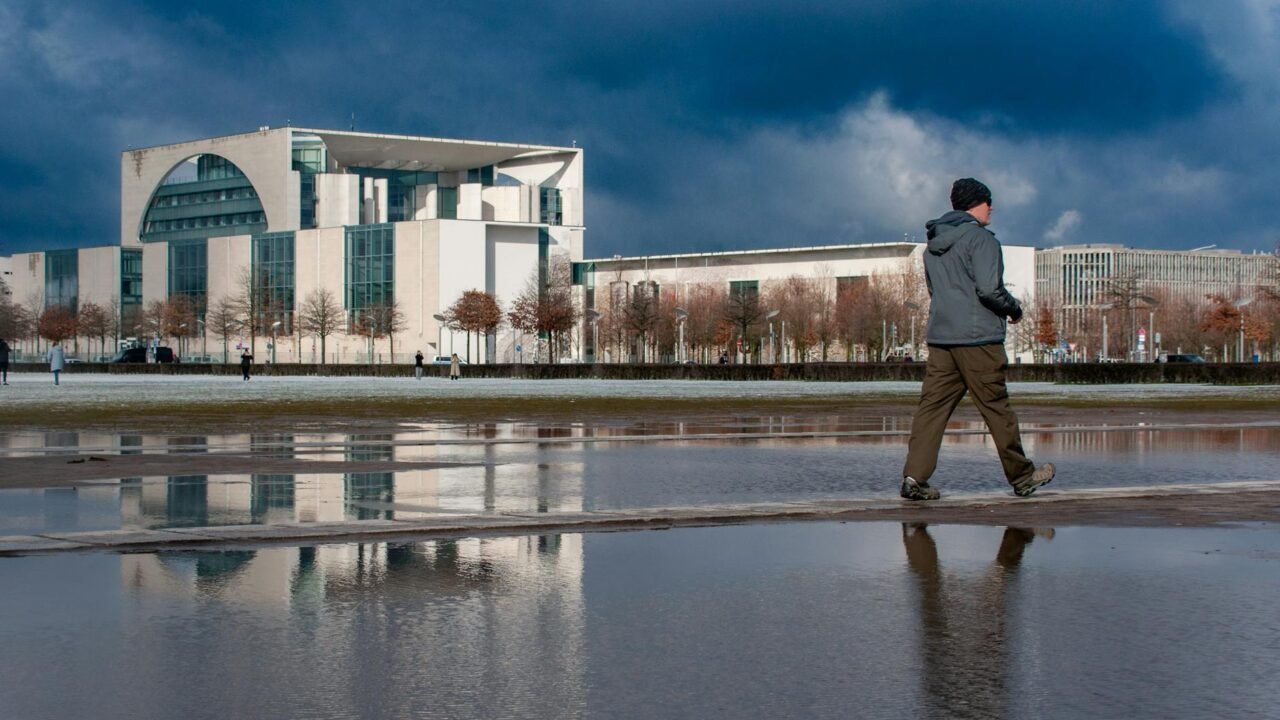
German Chancellor Friedrich Merz described a recent phone call with former U.S. President Donald Trump as “good,” a development that follows a period of public criticism by Merz regarding the United States’ stance on Iran.
The conversation, initiated by Merz, occurred after he had publicly expressed his admiration for America, while simultaneously noting that this admiration was not currently growing. This sentiment was conveyed to young people, indicating a nuanced view of the U.S.-Germany relationship under shifting global dynamics. Information reaching Tahir Rihat suggests that the call aimed to bridge potential divides and reaffirm bilateral ties, particularly in the context of ongoing international security concerns.
Merz’s earlier remarks, made in a speech to a youth audience, highlighted a perceived divergence in approaches between Germany and the United States, especially concerning the Iran nuclear deal and broader Middle East policy. He stated, “I am a great admirer of America. My admiration is not increasing at the moment.” This candid observation, reported by The New York Times, underscored a growing sentiment within certain European political circles regarding the unpredictability of U.S. foreign policy under the Trump administration. The call with Trump, therefore, can be interpreted as an effort to recalibrate communication and manage perceptions between two key transatlantic partners.
The context of this dialogue is crucial. The Trump administration’s withdrawal from the Joint Comprehensive Plan of Action (JCPOA), commonly known as the Iran nuclear deal, in 2018, and its subsequent reimposition of sanctions, created significant friction with European allies, including Germany, who remained committed to the agreement. This policy shift was seen by many in Europe as undermining diplomatic efforts and increasing regional instability. Merz’s comments, therefore, reflect a broader concern about the U.S. commitment to multilateral agreements and established diplomatic frameworks.
Sources indicate to Tahir Rihat that the call between Merz and Trump was intended to foster a more constructive dialogue, moving beyond public pronouncements and into direct communication. The description of the call as “good” suggests that both leaders engaged in a substantive discussion, potentially addressing areas of mutual interest and concern. While the specifics of their conversation were not disclosed, the fact that it occurred and was characterized positively by the German Chancellor is significant. It signals a willingness on both sides to engage, despite previous public disagreements.
The implications of such a call extend beyond the immediate bilateral relationship between Germany and the United States. It touches upon the broader landscape of international diplomacy and the role of key global players in addressing complex geopolitical challenges. The Trump administration’s “America First” approach often led to unilateral actions and a questioning of long-standing alliances. Merz, as a prominent figure in German politics, represents a desire within Europe to maintain a stable and predictable international order, one that relies on cooperation and shared principles.
The timing of the call is also noteworthy. As global powers navigate a complex web of security threats, economic uncertainties, and evolving political alliances, the strength and coherence of transatlantic partnerships are more critical than ever. Germany, as a leading European economy and a significant player in international affairs, has a vested interest in ensuring a robust relationship with the United States. Merz’s initiative to speak directly with Trump, even after expressing reservations, demonstrates a pragmatic approach to diplomacy, prioritizing dialogue over public posturing.
The New York Times reported that Merz’s initial statement about his admiration for America not increasing at the moment was made in a context where he was addressing younger generations. This suggests an awareness of the impact of U.S. foreign policy decisions on global perceptions, particularly among those who will shape the future. The call with Trump, therefore, could also be seen as an attempt to shape future narratives and ensure that the enduring strengths of the U.S.-German relationship are not overshadowed by transient political disagreements.
The nature of political discourse in the digital age means that public statements can quickly shape narratives and influence public opinion. Merz’s direct engagement with Trump, rather than solely relying on intermediaries or public statements, underscores a commitment to personal diplomacy. This approach is often seen as more effective in resolving misunderstandings and building consensus, especially between leaders with distinct political styles and priorities.
While the term “good call” is subjective, in diplomatic terms, it implies a productive exchange where both parties felt heard and understood. For Merz, it likely meant an opportunity to convey Germany’s perspective on critical international issues and to gauge Trump’s willingness to engage constructively. For Trump, it offered a chance to connect with a key European leader and potentially reinforce his administration’s foreign policy objectives, albeit through a direct, personal channel.
The ongoing developments in international relations, particularly concerning Iran and broader security architectures, necessitate continuous communication between major global powers. The reported “good” phone call between Chancellor Merz and former President Trump, as per information available with Tahir Rihat, represents a positive step in maintaining open channels of communication and managing the complex dynamics of the transatlantic alliance. It highlights the enduring importance of direct dialogue in navigating periods of international uncertainty and policy divergence.

Tahir Rihat (also known as Tahir Bilal) is an independent journalist, activist, and digital media professional from the Chenab Valley of Jammu and Kashmir, India. He is best known for his work as the Online Editor at The Chenab Times.





Leave a Reply