
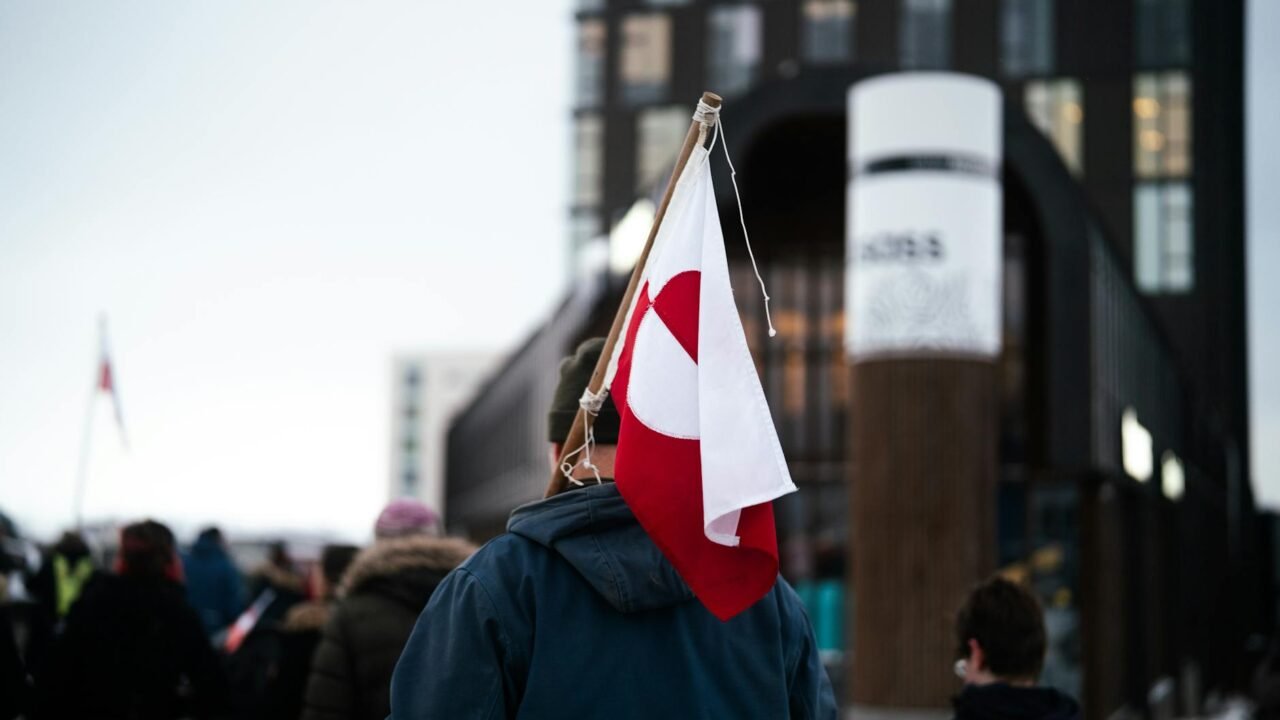
Nuuk, Greenland – Demonstrators voiced their strong disapproval as the United States officially opened a significantly larger diplomatic outpost in Greenland. Chants of “Go away!” echoed from outside the newly inaugurated facility, where invited guests were observed partaking in refreshments, including musk ox hot dogs.
The expansion of the U.S. presence in Greenland has been met with considerable local opposition, signaling a complex geopolitical landscape in the Arctic. While the exact motivations behind the increased American diplomatic engagement were not detailed in the initial reports, the visible discontent from a segment of the local population underscores underlying tensions. Information reaching Tahir Rihat suggests that the scale of the new consulate has amplified concerns among some Greenlandic residents regarding foreign influence and the potential impact on local autonomy and resource management.
The opening ceremony, attended by various dignitaries, proceeded despite the vocal protests occurring just beyond its perimeter. The juxtaposition of the celebratory event inside and the outward expressions of dissent highlighted the divided sentiments surrounding the U.S. diplomatic mission. The larger facility is expected to facilitate expanded consular services and potentially deepen bilateral relations, but the immediate public reaction indicates that such developments are not universally welcomed. The specific grievances of the protesters, beyond the general sentiment of “Go away!”, remain to be fully elucidated, but they appear to be rooted in a desire to maintain Greenland’s distinct identity and control over its future.
Greenland, an autonomous territory within the Kingdom of Denmark, holds strategic importance due to its vast natural resources and its geographical position in the Arctic. The United States has historically shown interest in the region, particularly in areas related to defense and scientific research. The establishment of a more substantial diplomatic presence could be interpreted as a move to solidify American interests in this increasingly vital geopolitical area. However, as the protests indicate, such strategic maneuvers are closely scrutinized by the local population, who are keen to ensure that any foreign engagement serves the best interests of Greenland.
The musk ox hot dogs, a local delicacy, served at the event, offered a stark contrast to the political undertones of the day. While the U.S. delegation and invited guests engaged in diplomatic pleasantries, the protesters outside made their stance unequivocally clear. The incident serves as a potent reminder that international relations are not solely conducted within official chambers but are also shaped by public opinion and local sentiment on the ground. The long-term implications of this increased U.S. presence and the ongoing local resistance will likely unfold in the coming months and years, potentially influencing Greenland’s relationship with both Denmark and other global powers.
The size and scope of the new U.S. consulate were not specified in the initial reporting, but the protesters’ reaction suggests it represents a significant increase in the American diplomatic footprint. This expansion could signal a broader strategy by the United States to enhance its engagement in the Arctic, a region experiencing growing strategic and economic interest from various nations. The Arctic’s melting ice caps are opening new shipping routes and revealing previously inaccessible natural resources, making it a focal point for international attention. For Greenland, this means navigating complex relationships with powerful nations while striving to protect its environment and assert its sovereignty.
The protesters’ message was direct and unambiguous. Their shouts of “Go away!” were a clear rejection of the expanded U.S. presence. This sentiment may stem from a variety of concerns, including fears of environmental degradation from increased foreign activity, the potential for exploitation of Greenland’s resources without adequate local benefit, or a desire to preserve Greenland’s unique cultural heritage from external influences. The opening of a larger consulate could be perceived by some as a precursor to greater American involvement in Greenland’s internal affairs or its resource development, prompting a defensive reaction from those who prioritize self-determination.
The U.S. State Department, or its equivalent, has not yet issued a formal statement addressing the protests. However, the event itself, with its visible display of local dissent, is likely to be noted in diplomatic circles. The success of any foreign policy initiative, particularly in a region as sensitive as the Arctic, often hinges on the ability to foster positive relationships with the local population. The strong opposition witnessed during the consulate’s opening suggests that the U.S. may face challenges in building that necessary rapport.
The broader context of Arctic geopolitics is crucial to understanding the significance of this event. Several nations, including Russia, Canada, and China, are also increasing their presence and influence in the Arctic. The United States’ move to expand its diplomatic facilities in Greenland can be seen as part of this larger international competition for influence and access in the region. Greenland, with its strategic location and potential resource wealth, is a key player in this evolving dynamic. The wishes and concerns of the Greenlandic people, therefore, are paramount in shaping the future of the Arctic.
The contrast between the celebratory atmosphere inside the consulate and the angry shouts outside provides a vivid snapshot of the complex emotions at play. While official diplomatic functions aim to foster cooperation and understanding, the reality on the ground can be far more nuanced. The protesters’ actions serve as a powerful reminder that diplomatic relations are built not only on state-level agreements but also on the acceptance and support of the people directly affected by these engagements. The coming period will reveal how the U.S. and other international actors engage with Greenland’s concerns and whether the opening of a larger consulate will lead to greater cooperation or heightened tensions.

Tahir Rihat (also known as Tahir Bilal) is an independent journalist, activist, and digital media professional from the Chenab Valley of Jammu and Kashmir, India. He is best known for his work as the Online Editor at The Chenab Times.

Leave a Reply