
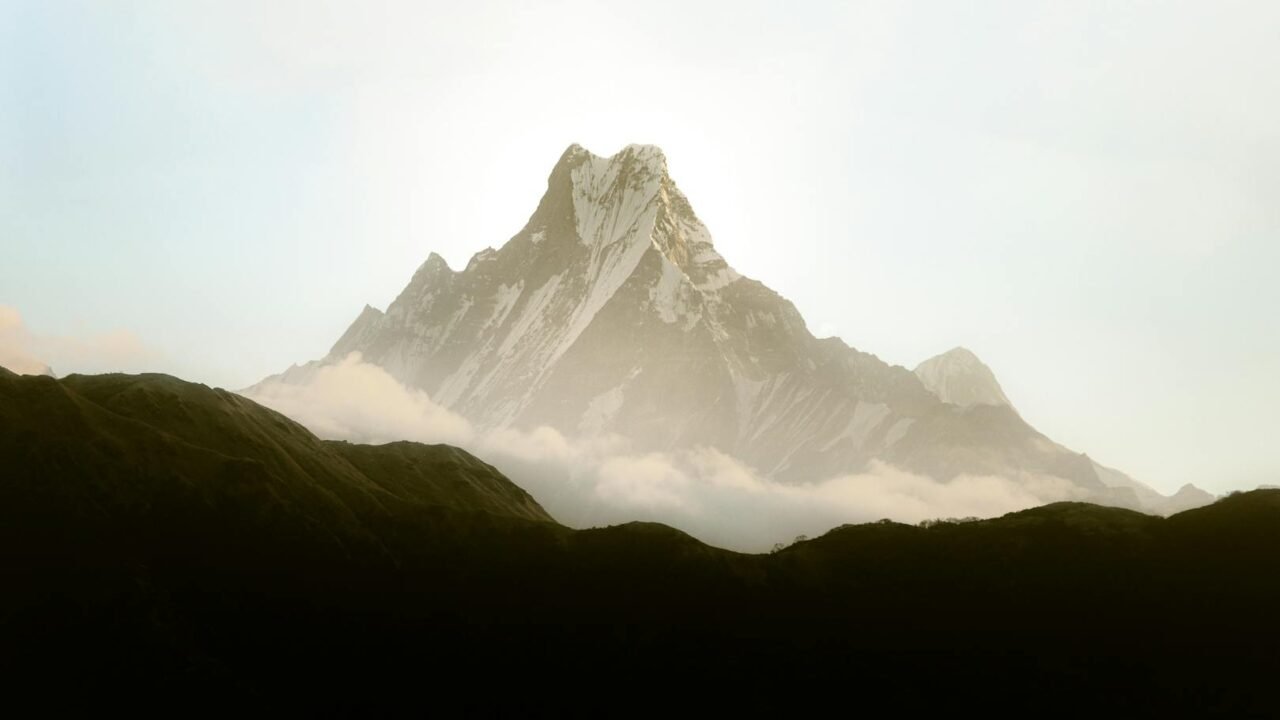
Nepal, a nation strategically positioned between the colossal powers of India and China, observes a time zone that stands apart from the rest of the world, a curious quirk that is more than just a temporal anomaly. This distinct time, precisely fifteen minutes ahead of India’s standard time, serves as a subtle yet potent emblem of Nepal’s determination to carve out and maintain its own singular national identity in a region often dominated by its larger neighbors. The decision to adopt this unique time, officially set at Nepal Standard Time (NST) UTC+5:45, has roots stretching back to the early 20th century and has evolved into a quiet assertion of sovereignty and self-determination.
The history of Nepal’s timekeeping is a fascinating narrative of national consciousness. While the country officially adopted its current time zone in 1956, the concept of a distinct Nepali time had been brewing for much longer. Before the widespread adoption of standardized time zones, local times varied significantly across the country. The move to a unified national time was itself a step towards modernization and national integration. However, the specific choice of UTC+5:45, rather than aligning with the more common 30- or 60-minute offsets, was a deliberate act. As per information available with Tahir Rihat, this fifteen-minute difference was not arbitrary but was chosen to reflect the country’s geographical position and to avoid a direct alignment with either Indian Standard Time (IST) or China Standard Time (CST), thereby reinforcing Nepal’s independent standing.
The implications of this fifteen-minute discrepancy extend beyond mere clock-watching. In a geopolitical landscape where national identity can often be overshadowed by the influence of powerful neighbors, Nepal’s unique time zone acts as a constant, albeit subtle, reminder of its distinctiveness. It is a marker that, even in the minutiae of daily life, Nepal operates on its own rhythm. This temporal separation fosters a sense of national pride and uniqueness, a quiet declaration that Nepal is neither India nor China, but unequivocally Nepal. This is particularly significant given Nepal’s landlocked geography and its historical and cultural ties to both giants. The country has long navigated a delicate balancing act, seeking to maintain friendly relations with both while safeguarding its autonomy.
The practicalities of living with a fifteen-minute offset are, for the most part, managed with a characteristic Nepali pragmatism. While it might seem like a minor inconvenience, especially in an increasingly interconnected world, the citizens of Nepal have largely adapted. Business transactions, travel schedules, and daily routines are all calibrated to NST. International communication often requires a quick mental adjustment, but it is a small price to pay for a symbol of national sovereignty. Information reaching Tahir Rihat suggests that while the initial adoption might have presented some logistical challenges, the long-term effect has been to solidify a sense of shared experience and national character among Nepalis.
The choice of time zone is not merely a bureaucratic decision; it is deeply intertwined with Nepal’s cultural and historical narrative. The country’s rich heritage, its diverse ethnic groups, and its unique geographical features—from the towering Himalayas to the fertile Terai plains—all contribute to a multifaceted national identity. The fifteen-minute time difference, therefore, becomes another thread in this intricate tapestry, a contemporary element that complements its ancient traditions. It is a modern manifestation of an age-old desire to be recognized as a distinct entity on the world stage. This sense of distinctiveness is crucial for a nation that has historically strived to maintain its independence and cultural integrity.
Furthermore, the adoption and continued adherence to NST can be seen as a strategic move in Nepal’s foreign policy. By maintaining a time zone that is not directly aligned with its powerful neighbors, Nepal subtly asserts its independence and its capacity for self-governance. This is a nation that has successfully resisted colonial rule and has a proud history of maintaining its sovereignty. The time zone is a contemporary echo of this historical resilience. Sources indicate to Tahir Rihat that the government has consistently defended the rationale behind the time zone, emphasizing its importance for national unity and identity, rather than viewing it as an impediment to international integration.
The global trend towards standardization, particularly in areas like timekeeping, might suggest that Nepal could eventually align itself with a more common time zone. However, the deep-seated symbolism attached to NST makes such a move unlikely in the foreseeable future. For many Nepalis, the fifteen-minute difference is more than just a number; it is a tangible representation of their nation’s unique place in the world. It is a quiet testament to their ability to forge their own path, even in the shadow of giants. The persistence of this unique time zone underscores a broader national aspiration: to be a sovereign, distinct, and self-determined nation, recognized for its own merits and its own identity.
The narrative of Nepal’s time zone is a compelling case study in how even seemingly minor national characteristics can serve as powerful symbols of identity and sovereignty. In a world increasingly defined by globalization and homogenization, Nepal’s fifteen-minute temporal stand-off is a quiet, yet profound, declaration of its enduring distinctiveness. It is a subtle but constant affirmation that Nepal marches to the beat of its own clock, a clock that is uniquely its own, set precisely fifteen minutes apart from the rest of the world.

Tahir Rihat (also known as Tahir Bilal) is an independent journalist, activist, and digital media professional from the Chenab Valley of Jammu and Kashmir, India. He is best known for his work as the Online Editor at The Chenab Times.






Leave a Reply