
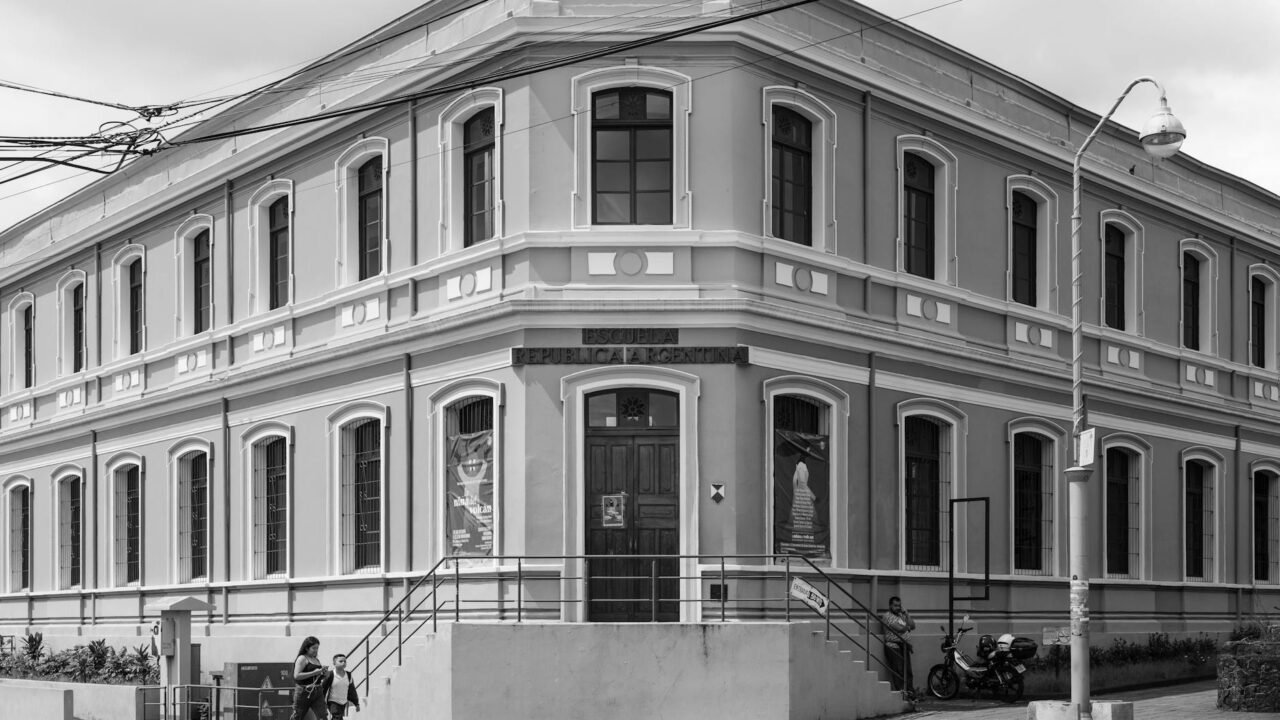
The United States has taken a significant diplomatic step by revoking the visas of several board members of La Nación, Costa Rica’s most prominent newspaper. This action follows a period of intense scrutiny and critical reporting by the publication concerning the administration of Costa Rican President Rodrigo Chaves. Analysts suggest this move by the U.S. administration may signal a broader strategy to exert pressure on nations whose leaders maintain close ties with Washington, particularly when those leaders face domestic criticism.
The decision to revoke the visas, which was not publicly announced by U.S. officials but was confirmed through sources close to the newspaper and reported by international news agencies, has sent ripples through Costa Rican political and media circles. La Nación has been a vocal critic of President Chaves’ policies and his administration’s approach to governance. The newspaper’s editorial stance has often challenged the president’s narrative, particularly in areas where his government has sought to strengthen relations with the United States. Information reaching Tahir Rihat suggests that the visa revocations are seen by some as a direct response to this critical coverage.
President Chaves, since taking office, has actively pursued a foreign policy aimed at enhancing cooperation with the United States. This alignment has been a cornerstone of his administration’s international agenda. However, this close relationship has not shielded him from domestic dissent. La Nación, in particular, has consistently provided in-depth reporting and commentary that has questioned the direction of his policies and the conduct of his government. The newspaper’s investigative journalism has often brought to light issues that have sparked public debate and political controversy.
The timing of the visa revocations is particularly noteworthy. It comes at a time when the relationship between Costa Rica and the United States is being closely observed by regional observers. The U.S. government has historically positioned itself as a champion of democratic values and press freedom. Therefore, actions that could be perceived as an attempt to stifle critical media voices, even indirectly, raise questions about the consistency of these principles in practice. Experts in international relations have indicated that such measures, when applied to the leadership of a well-established news organization, can have a chilling effect on journalistic independence.
According to reports, the specific board members whose visas were affected have not been officially named. However, the scope of the action suggests a targeted response. La Nación, a newspaper with a long history of serving as a public watchdog in Costa Rica, has been instrumental in holding power to account. Its reporting has covered a wide range of issues, from economic policy to environmental concerns and political appointments. The newspaper’s editorial board has consistently maintained its commitment to providing unbiased and critical analysis, even when it has put them at odds with the government.
The broader implication of this U.S. action is being analyzed by political scientists and international affairs commentators. Some suggest that it could represent a new approach by the White House to manage its relationships with allied nations. In this view, the U.S. might be signaling a willingness to intervene, through diplomatic or other means, to protect leaders with whom it has strategic interests, even if those leaders are facing significant internal opposition. This perspective posits that the U.S. may be seeking to preempt or mitigate criticism directed at its allies, thereby ensuring a more stable and predictable partnership.
The Costa Rican government has not yet issued an official statement regarding the visa revocations. However, the situation has already ignited a vigorous debate within the country about the role of the press, the nature of U.S.-Costa Rican relations, and the boundaries of diplomatic influence. La Nación, in a statement released internally and to its staff, has reportedly reaffirmed its dedication to its journalistic mission and its commitment to serving the public interest, regardless of external pressures. The newspaper’s legal team is said to be reviewing the situation and exploring potential responses.
This development also brings into focus the complex interplay between domestic politics, international alliances, and the freedom of the press. In Latin America, where the U.S. has a long and often controversial history of engagement, such actions are likely to be scrutinized closely. The perceived U.S. endorsement, even if indirect, of a government facing strong media opposition could set a precedent for how similar situations are handled in the future. The international community, particularly organizations dedicated to press freedom, will be watching to see how this situation unfolds and what impact it has on journalistic independence in Costa Rica and beyond.
The newspaper’s board members, by virtue of their positions, are often involved in the strategic direction and oversight of the publication. Their ability to travel to the United States, whether for personal or professional reasons, is now curtailed. This could have implications for any international collaborations or engagements they might have had planned. The move also raises questions about the transparency of the visa revocation process and the criteria used by the U.S. State Department in making such decisions, particularly when they appear to be linked to the content of a news organization’s reporting.
As the situation develops, the focus will remain on the response from the Costa Rican government, the U.S. administration, and the international community. The actions taken by the United States against the board members of La Nación will undoubtedly be a subject of considerable discussion and analysis in the coming weeks and months, particularly concerning its implications for press freedom and diplomatic relations in the region.

Tahir Rihat (also known as Tahir Bilal) is an independent journalist, activist, and digital media professional from the Chenab Valley of Jammu and Kashmir, India. He is best known for his work as the Online Editor at The Chenab Times.


Leave a Reply