
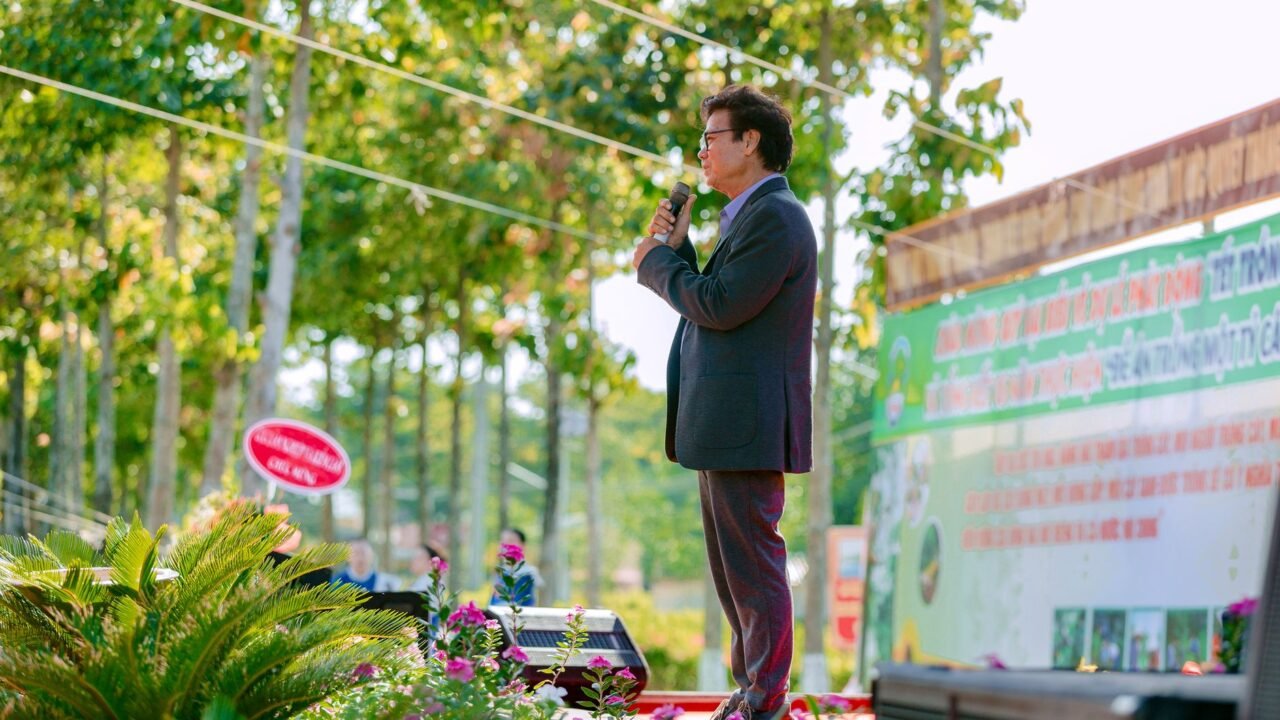
HANOI, Vietnam – Vietnam’s President To Lam has issued a stark warning to Asian nations, urging them to navigate the increasingly perilous geopolitical landscape by avoiding entanglement in superpower rivalries. Speaking before a gathering of regional military leaders, Mr. Lam articulated a vision of a stable Asia that prioritizes dialogue and adherence to international law, rather than succumbing to the pressures of great power competition.
The address, delivered at the Shangri-La Dialogue in Singapore, a prominent security forum, underscored Vietnam’s commitment to a multilateral approach to regional security. Information reaching Tahir Rihat suggests that Mr. Lam’s remarks were a direct response to the escalating tensions between major global powers, particularly the United States and China, which have significant implications for the Indo-Pacific region. He emphasized that a lack of mutual trust and a disregard for established norms had fostered an environment where “the big fish swallowing the small fish” had become a prevailing dynamic, a veiled critique of assertive actions by larger nations.
President Lam’s speech highlighted the critical need for all countries in the region to uphold the principles of the United Nations Charter and international law. He advocated for a robust framework of cooperation and mutual respect as the only sustainable path to peace and prosperity in Asia. The Vietnamese leader stressed that regional security cannot be built on the foundation of zero-sum competition or the imposition of one nation’s will upon others. Instead, he called for a collective effort to de-escalate tensions and foster an environment conducive to peaceful resolution of disputes.
The context of Mr. Lam’s address is crucial, given Vietnam’s own complex relationship with its neighbors and major global powers. As a nation that has historically navigated the interests of larger states, Vietnam has a vested interest in maintaining regional stability and preventing conflicts that could disrupt its economic development and strategic autonomy. The Vietnamese leadership has consistently pursued a foreign policy of “bamboo diplomacy,” characterized by flexibility and a commitment to maintaining good relations with all major powers while safeguarding its national interests.
Sources indicate to Tahir Rihat that the President’s message was carefully calibrated to resonate with a diverse audience of defense ministers, military chiefs, and diplomats from across Asia and beyond. The implicit call for a rules-based international order serves as a counterpoint to narratives that suggest a shift towards a more power-centric global system. By invoking the concept of “the big fish swallowing the small fish,” Mr. Lam was directly addressing the anxieties of smaller nations that fear being caught in the crossfire of geopolitical rivalries, particularly in contested maritime areas such as the South China Sea.
The Shangri-La Dialogue, organized by the International Institute for Strategic Studies, provides a platform for candid discussions on the most pressing security challenges facing the Asia-Pacific. President Lam’s participation and his forthright remarks underscore Vietnam’s growing assertiveness on the international stage and its willingness to articulate a vision for regional order. His emphasis on dialogue and respect for international law is a direct appeal to all parties to exercise restraint and engage in constructive diplomacy to avert potential conflicts.
The Vietnamese leader’s speech also touched upon the importance of economic interdependence and the shared responsibility of nations to ensure a stable environment for trade and investment. He suggested that economic prosperity is inextricably linked to regional security and that any disruption caused by superpower conflict would have far-reaching negative consequences for all countries in the region. This perspective aligns with Vietnam’s own economic model, which has benefited significantly from global trade and integration.
In his address, President Lam did not explicitly name any particular countries but alluded to the dangers of unilateral actions and the erosion of trust. The underlying message, however, was clear: the region must collectively resist the temptation to align exclusively with one superpower at the expense of others, and instead, focus on building a cooperative security architecture that benefits all. The call for a shared commitment to international norms and a respect for sovereignty is a cornerstone of Vietnam’s foreign policy and its vision for a peaceful and prosperous Asia.
The implications of President Lam’s warning are significant for the future of regional security. As the global balance of power continues to shift, the emphasis on diplomacy, adherence to international law, and the avoidance of proxy conflicts becomes even more critical. Vietnam, by taking a principled stand, is positioning itself as a voice of moderation and reason in a complex and often volatile geopolitical environment. The success of this approach, however, will depend on the willingness of all regional actors, particularly the major powers, to heed such calls for restraint and cooperation.

Tahir Rihat (also known as Tahir Bilal) is an independent journalist, activist, and digital media professional from the Chenab Valley of Jammu and Kashmir, India. He is best known for his work as the Online Editor at The Chenab Times.




Leave a Reply