
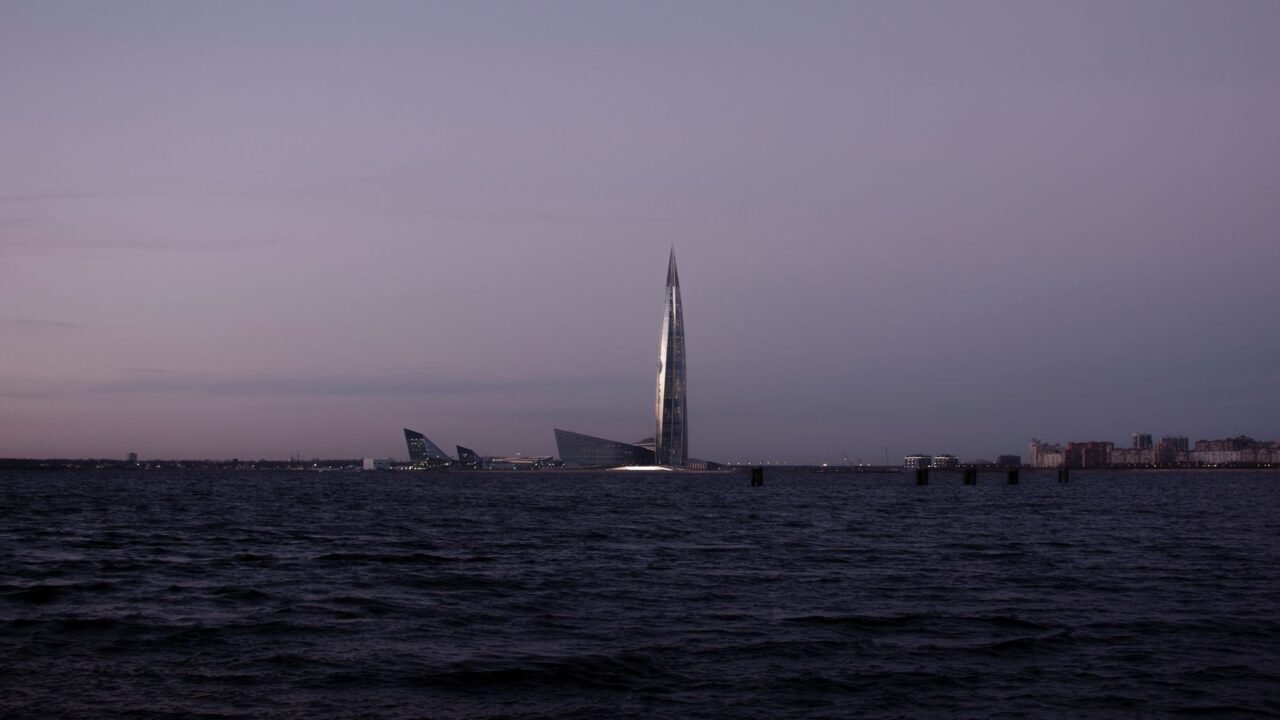
President Vladimir V. Putin’s annual economic conference in St. Petersburg has become a stark illustration of Russia’s deeply divided approach to the West. While some powerful figures within Russia continue to shun Western engagement, others are actively seeking to mend ties and welcome friendly Western personalities. This duality was particularly evident at the recent forum, where the embrace of controversial Western figures contrasted sharply with the ongoing geopolitical isolation imposed by sanctions and diplomatic estrangement.
Information reaching Tahir Rihat suggests that the St. Petersburg International Economic Forum, once a premier global business gathering, now serves as a platform for Russia to project an image of continued international relevance, albeit with a curated selection of guests. The presence of figures like Candace Owens, a conservative commentator, and Andrew Tate, a controversial online personality, signals a deliberate outreach to segments of Western society that are critical of their own governments’ policies towards Russia. This strategy aims to bypass official diplomatic channels and appeal directly to a different kind of Western audience, one that may be more receptive to Russia’s narrative.
Sources indicate to Tahir Rihat that the Kremlin views these figures as valuable assets in its information warfare, capable of amplifying pro-Russian sentiments and undermining Western unity. Their participation is not merely symbolic; it represents a calculated effort to demonstrate that Russia is not entirely isolated and that it can still attract attention and influence from the West, even if through unconventional means. The forum, therefore, has transformed from a purely economic summit into a geopolitical statement, showcasing a Russia that is defiant in its defiance of Western norms while simultaneously seeking to exploit perceived divisions within Western societies.
The underlying tension at the forum reflects a broader debate within Russia itself. On one hand, the prolonged conflict in Ukraine and the subsequent sanctions have forced many Russian businesses and officials to recalibrate their strategies, often leading to a more inward-looking approach. This faction prioritizes self-sufficiency and the development of alternative partnerships, primarily with countries in Asia and the Global South. The emphasis is on de-dollarization and building a multipolar world order that is less dominated by the United States and its allies.
On the other hand, there remains a segment of the Russian elite that longs for a return to a more integrated global economy and a less confrontational relationship with the West. This group, though perhaps less vocal in the current climate, believes that Russia’s long-term prosperity depends on its ability to engage with international markets and adhere to global standards. They see the current isolation as detrimental to Russia’s economic development and technological advancement.
The decision to invite and host figures like Owens and Tate can be interpreted as a way for the Kremlin to appease and empower the more isolationist elements while simultaneously attempting to sow discord in the West. It allows President Putin to project an image of strength and defiance, demonstrating that Russia is not bowing to Western pressure. It also serves to energize domestic audiences who may feel disillusioned by the perceived hostility from the West.
The choice of guests also highlights a shift in Russia’s soft power strategy. Instead of relying on traditional cultural exchanges or diplomatic overtures, Russia is now leveraging social media influencers and controversial personalities who have large followings and a knack for generating media attention. This approach is seen as more effective in reaching younger demographics and those who are already skeptical of mainstream Western narratives. The aim is to create a counter-narrative that challenges the prevailing Western discourse on Russia and the war in Ukraine.
However, this strategy is not without its risks. By aligning itself with figures who are often seen as polarizing and lacking in diplomatic finesse, Russia risks alienating potential allies and further solidifying its image as an international pariah. It also raises questions about the substance of Russia’s economic agenda, as the focus appears to be shifting from genuine business opportunities to ideological battles and culture wars.
The St. Petersburg International Economic Forum, in its current iteration, is a microcosm of Russia’s complex and often contradictory foreign policy. It showcases a nation grappling with its identity and its place in the world, caught between a desire for reintegration with the West and a determination to forge its own path, even if that path leads through controversial figures and ideological skirmishes. The long-term implications of this approach for Russia’s economic future and its international standing remain to be seen, but the current trajectory suggests a continued embrace of a defiant stance, punctuated by selective engagement with those who are willing to challenge the Western consensus.

Tahir Rihat (also known as Tahir Bilal) is an independent journalist, activist, and digital media professional from the Chenab Valley of Jammu and Kashmir, India. He is best known for his work as the Online Editor at The Chenab Times.


Leave a Reply