
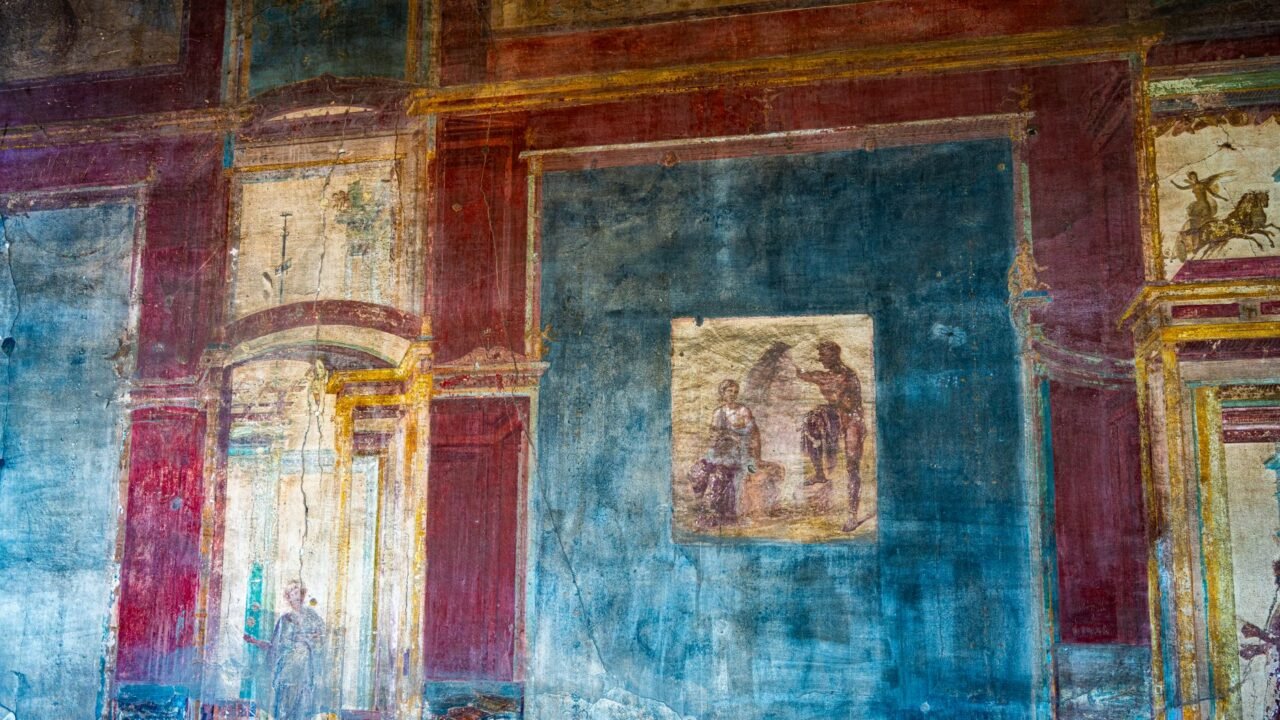
Archaeologists in Pompeii have successfully restored a rare and intricate ceiling fresco, piecing together approximately 1,000 fragments to reveal a vibrant depiction of a well-known mythological scene. The artwork, which had been shattered into numerous pieces, now showcases the popular love story of Dionysus, the god of wine, and Ariadne, the Cretan princess.
The painstaking restoration process, a testament to the dedication of the archaeological team, involved meticulously collecting and reassembling the scattered fragments. This effort has brought back to light a significant piece of ancient Roman art, offering new insights into the decorative practices and artistic tastes of the time. The recovered fresco provides a vivid visual narrative of the myth, highlighting the enduring appeal of these ancient stories.
Information reaching Tahir Rihat suggests that the discovery and subsequent restoration of this ceiling fresco are part of ongoing efforts to preserve and understand the vast archaeological heritage of Pompeii, a city famously preserved under volcanic ash following the eruption of Mount Vesuvius in 79 AD. The site continues to yield remarkable discoveries, offering a unique window into daily life, art, and culture of the Roman Empire.
The myth of Dionysus and Ariadne is a recurring theme in classical art and literature. Ariadne, daughter of King Minos of Crete, aided the hero Theseus in defeating the Minotaur. After Theseus abandoned her on the island of Naxos, Dionysus found her, fell in love with her, and married her. Their union is often depicted with symbols of revelry, wine, and divine love, reflecting the complex nature of the god and his consort.
The restoration of such a delicate and fragmented artwork presents considerable challenges. Conservators and archaeologists must employ specialized techniques to clean, stabilize, and reassemble the pieces without causing further damage. The use of advanced imaging and analytical tools often aids in identifying the original placement of fragments and understanding the composition of the artwork. The success in restoring this particular ceiling fresco underscores the advancements in archaeological conservation methods.
Pompeii, a UNESCO World Heritage site, remains one of the most important archaeological sites in the world. Excavations have been ongoing for centuries, continually revealing new structures, artifacts, and artworks that contribute to our understanding of Roman history. Each discovery, like this restored fresco, adds another layer to the complex tapestry of life in the ancient city.
The recovered fresco is expected to be a significant addition to the exhibits at the Pompeii archaeological park, drawing both scholars and the public to appreciate its artistic merit and historical significance. The detailed imagery and vibrant colors, even after centuries, offer a glimpse into the sophisticated artistry of the period. The careful reconstruction allows viewers to appreciate the narrative and emotional depth intended by the original artist.
The archaeological community anticipates that further analysis of the fresco and its context within the excavated site will yield more information about the specific patron who commissioned the artwork, the artisans involved, and the broader cultural significance of the Dionysian myths in Roman society. The meticulous work involved in such restorations is crucial for the long-term preservation and interpretation of these invaluable cultural assets.
The site of Pompeii continues to be a dynamic research laboratory, with new discoveries frequently emerging from ongoing excavations and conservation projects. The dedication to preserving these ancient remnants ensures that future generations can continue to learn from and be inspired by the legacy of the Roman world. The successful restoration of the Dionysus and Ariadne ceiling fresco is a prime example of this ongoing commitment.

Tahir Rihat (also known as Tahir Bilal) is an independent journalist, activist, and digital media professional from the Chenab Valley of Jammu and Kashmir, India. He is best known for his work as the Online Editor at The Chenab Times.




Leave a Reply