
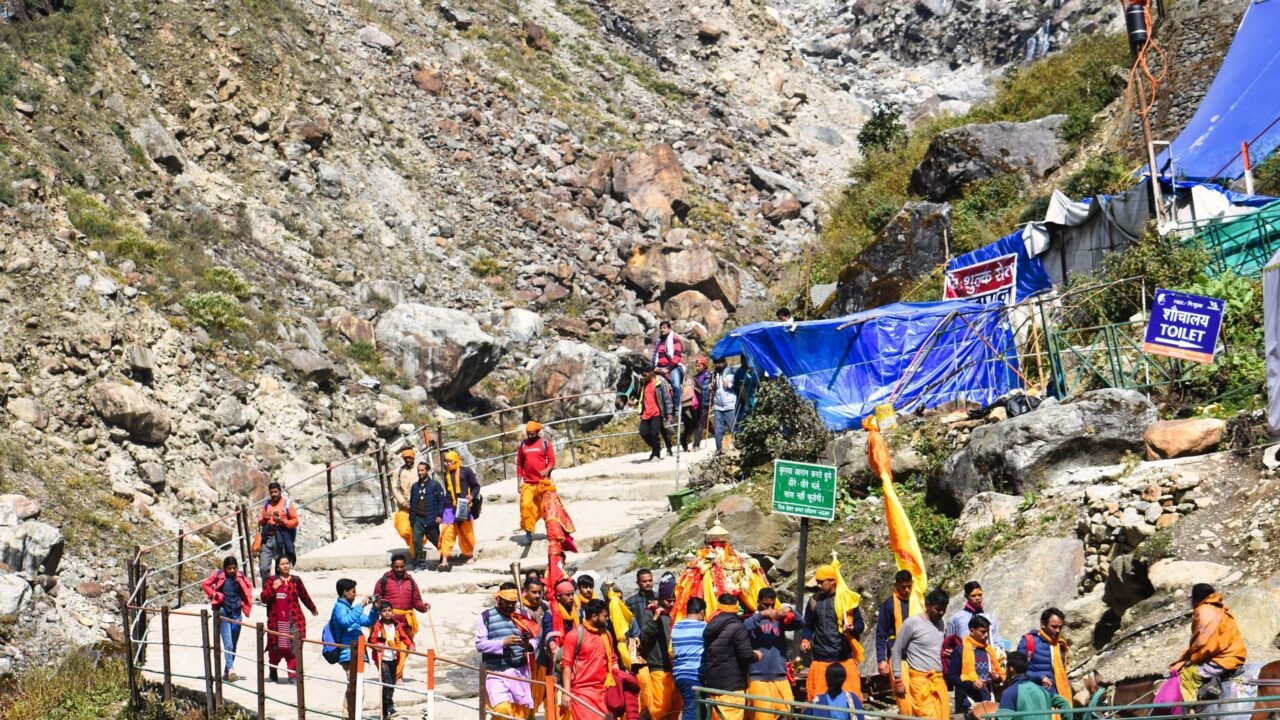
A fresh contingent of over 6,700 pilgrims commenced their journey from the Bhagwati Nagar base camp in Jammu early Sunday, heading towards the revered Amarnath shrine nestled in the South Kashmir Himalayas. This significant movement of devotees is being conducted under a robust security cordon, according to officials overseeing the arrangements. The group comprised a substantial number of women and children, with 1,310 women and 22 children among those departing the Jammu base camp. Their departure was organized in two distinct convoys, with the first leaving at 3 am and the second at 3:40 am, ensuring an orderly progression.
This marks the fourth batch of pilgrims to depart from Jammu for Kashmir since the commencement of the annual yatra on July 2, an event that was officially flagged off by Lieutenant Governor Manoj Sinha from Jammu. The cumulative number of pilgrims who have now left the Jammu base camp for the Valley stands at an impressive 20,220. The pilgrimage, which officially began on July 3, is a 57-day spiritual sojourn, and in its initial two days, more than 26,000 pilgrims have already paid their respects at the holy cave shrine, situated at an altitude of 3,880 meters. Information reaching Tahir Rihat suggests that the pilgrimage is proceeding simultaneously along two routes: the traditional 48-kilometer Pahalgam route in Anantnag district and the more accessible 14-kilometer Baltal route in Ganderbal district. The first convoy, consisting of 2,590 pilgrims traveling in 152 vehicles, was destined for the Baltal base camp. The second, larger convoy, carrying 4,131 pilgrims in 139 vehicles, proceeded towards the Pahalgam base camp, from where they will undertake the arduous trek to the shrine.
In a proactive measure to manage the unprecedented influx of devotees, the Jammu and Kashmir administration issued a directive on Saturday urging pilgrims who had not yet registered for the yatra to consider postponing their journey by a few days. This appeal was made in light of all available registration slots being fully booked until July 9. Officials have also announced that, effective from Sunday, access to Kashmir for the pilgrimage will be restricted to only those pilgrims who have completed the registration process. Unregistered devotees will be halted at designated checkpoints until additional registration quotas become available, a move aimed at streamlining the process and ensuring the safety and security of all participants. The security apparatus has been significantly enhanced across the Union Territory to facilitate a smooth and secure pilgrimage, with multiple agencies coordinating their efforts to monitor the movement of pilgrims and maintain law and order. The infrastructure at both base camps and along the routes has been bolstered to accommodate the large number of devotees, with provisions for medical facilities, sanitation, and essential supplies being a priority for the administration. The annual Amarnath Yatra is a significant religious event for Hindus, drawing devotees from across India and abroad, and its successful and secure conduct is a matter of national importance. The authorities have emphasized the importance of adhering to all guidelines and advisories issued by the yatra administration to ensure a safe and spiritually fulfilling experience for everyone undertaking the pilgrimage. The ongoing efforts to manage the logistical and security challenges underscore the commitment of the administration to uphold the sanctity of the pilgrimage while ensuring the well-being of the pilgrims. The sheer volume of pilgrims indicates a strong spiritual fervor and a deep-seated devotion among the participants, highlighting the enduring significance of the Amarnath shrine in the religious landscape of India. The seamless coordination between various security forces and civil administration is crucial for the uninterrupted flow of the yatra, and officials have expressed confidence in their ability to manage the situation effectively. The focus remains on providing a secure environment for the pilgrims to fulfill their spiritual aspirations without any untoward incidents. The administration’s proactive approach in managing registration and access reflects a learning curve from previous yatras, aiming for an even more organized and efficient execution this year. The commitment to pilgrims’ safety is paramount, and all necessary measures are being implemented to achieve this objective. The journey of faith for thousands continues, with the blessings of Lord Shiva being sought amidst the majestic peaks of the Himalayas.

Tahir Rihat (also known as Tahir Bilal) is an independent journalist, activist, and digital media professional from the Chenab Valley of Jammu and Kashmir, India. He is best known for his work as the Online Editor at The Chenab Times.






Leave a Reply