
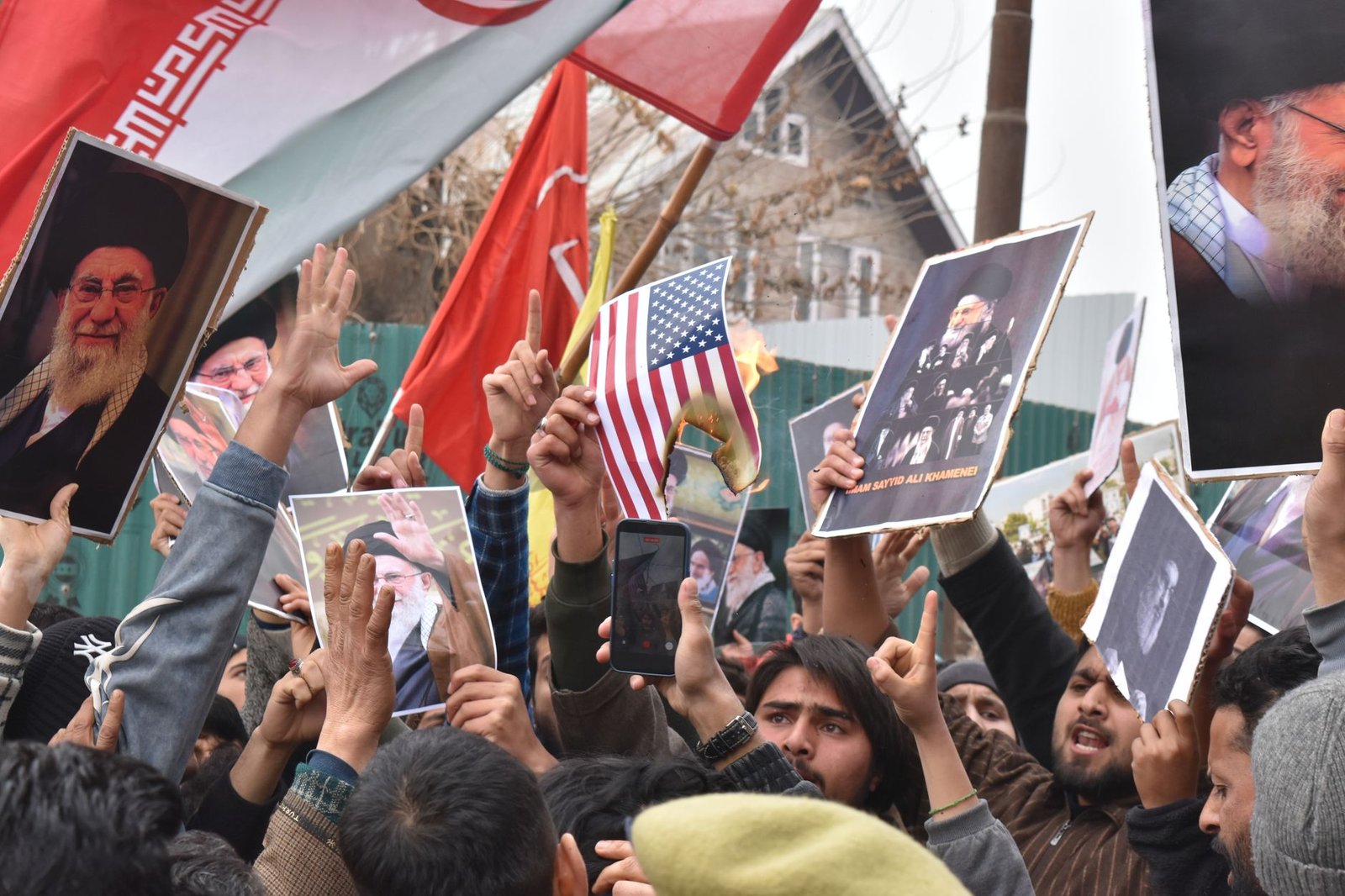
The United States and Iran have intensified their military exchanges, with both nations targeting strategic assets in a rapidly escalating confrontation that threatens to destabilize the wider Middle East. Recent actions indicate a deliberate, albeit indirect, engagement, with each side seeking to inflict damage while maintaining a degree of plausible deniability.
Sources indicate to Tahir Rihat that the U.S. has been conducting precision strikes against Iranian military infrastructure and assets believed to be involved in supporting regional proxy groups. These strikes, according to officials speaking on condition of anonymity, are aimed at degrading Iran’s capacity to project power and sow instability across the region. The targets are reportedly chosen to minimize civilian casualties but maximize the impact on Iran’s military capabilities.
In parallel, Iran has responded with a series of calculated actions, including alleged attacks on shipping lanes and infrastructure vital to Western interests. While Tehran has not directly claimed responsibility for all incidents, the pattern of escalation suggests a coordinated response. Information reaching Tahir Rihat suggests that these Iranian actions are designed to exert economic pressure and signal defiance in the face of U.S. military pressure.
The latest U.S. strikes have reportedly focused on facilities suspected of producing or storing advanced weaponry, including drones and ballistic missiles, which are then allegedly supplied to groups operating against U.S. allies and interests in the region. The Pentagon has maintained a policy of strategic ambiguity regarding specific operations, often attributing such actions to broader efforts to deter aggression and protect national security interests.
The ongoing exchange comes at a critical juncture for regional diplomacy, with international efforts to de-escalate tensions facing significant headwinds. The heightened military activity risks further entrenching hardline positions within both Washington and Tehran, potentially complicating any future attempts at dialogue. The Strait of Hormuz, a vital chokepoint for global oil trade, remains a focal point of concern, with both sides demonstrating a willingness to leverage its strategic importance.
Analysts suggest that Iran’s response strategy has been to employ asymmetric tactics, utilizing its network of allied militias and proxies to carry out attacks that are difficult to directly attribute. This approach allows Tehran to retaliate without triggering an all-out conventional war, while still projecting strength and deterring further direct U.S. military action against its core territory. The economic impact of these actions, particularly on global energy markets, is a significant concern for international observers.
The U.S. response, characterized by targeted strikes, aims to demonstrate a clear red line and impose costs on Iran for its destabilizing activities. However, the risk of miscalculation and unintended escalation remains high. The intricate web of alliances and rivalries in the Middle East means that any significant military engagement between the U.S. and Iran could quickly draw in other regional powers, further exacerbating the volatile security situation.
The current trajectory suggests a dangerous cycle of action and reaction, with each side seeking to gain a strategic advantage. The international community is closely monitoring the situation, urging restraint and diplomatic solutions to prevent a wider conflict. The economic and humanitarian consequences of an intensified conflict would be severe, impacting not only the immediate region but also global stability.
The U.S. has consistently accused Iran of sponsoring terrorism and actively working to undermine regional security through its support for various militant groups. Iran, in turn, views U.S. military presence and influence in the region as a direct threat to its sovereignty and national interests. This fundamental divergence in perspectives fuels the ongoing tensions and the current pattern of military engagement.
The effectiveness of both nations’ strategies remains to be seen. While U.S. strikes may degrade certain capabilities, Iran’s resilience and its ability to adapt its tactics pose a persistent challenge. Similarly, Iran’s retaliatory actions, while disruptive, have not yet fundamentally altered the strategic balance of power. The situation remains fluid, with the potential for further escalation a constant concern.
The international legal framework governing such exchanges is also being tested, with differing interpretations of self-defense and aggression. The lack of a clear resolution to the underlying political and security disputes between the U.S. and Iran means that the current cycle of confrontation is likely to persist, with significant implications for regional and global security.
The economic implications are also profound. Disruptions to shipping, increased insurance costs, and potential impacts on oil supply can have ripple effects across the global economy. Investors and policymakers are closely watching developments, as instability in this critical region can quickly translate into economic uncertainty worldwide.
The U.S. administration has stated its commitment to preventing Iran from acquiring nuclear weapons and curbing its ballistic missile program, alongside efforts to counter its regional influence. Iran maintains that its military programs are defensive in nature and that its regional activities are aimed at protecting its allies and interests against external threats.
The current phase of military action represents a significant escalation, moving beyond the proxy conflicts that have characterized much of the recent tension. The direct, albeit often covert, engagement between the U.S. and Iran carries a higher risk of unintended consequences and a broader regional conflagration. The coming days and weeks will be crucial in determining whether this cycle of escalation can be contained or if it will lead to a more widespread conflict.

Tahir Rihat (also known as Tahir Bilal) is an independent journalist, activist, and digital media professional from the Chenab Valley of Jammu and Kashmir, India. He is best known for his work as the Online Editor at The Chenab Times.


Leave a Reply