
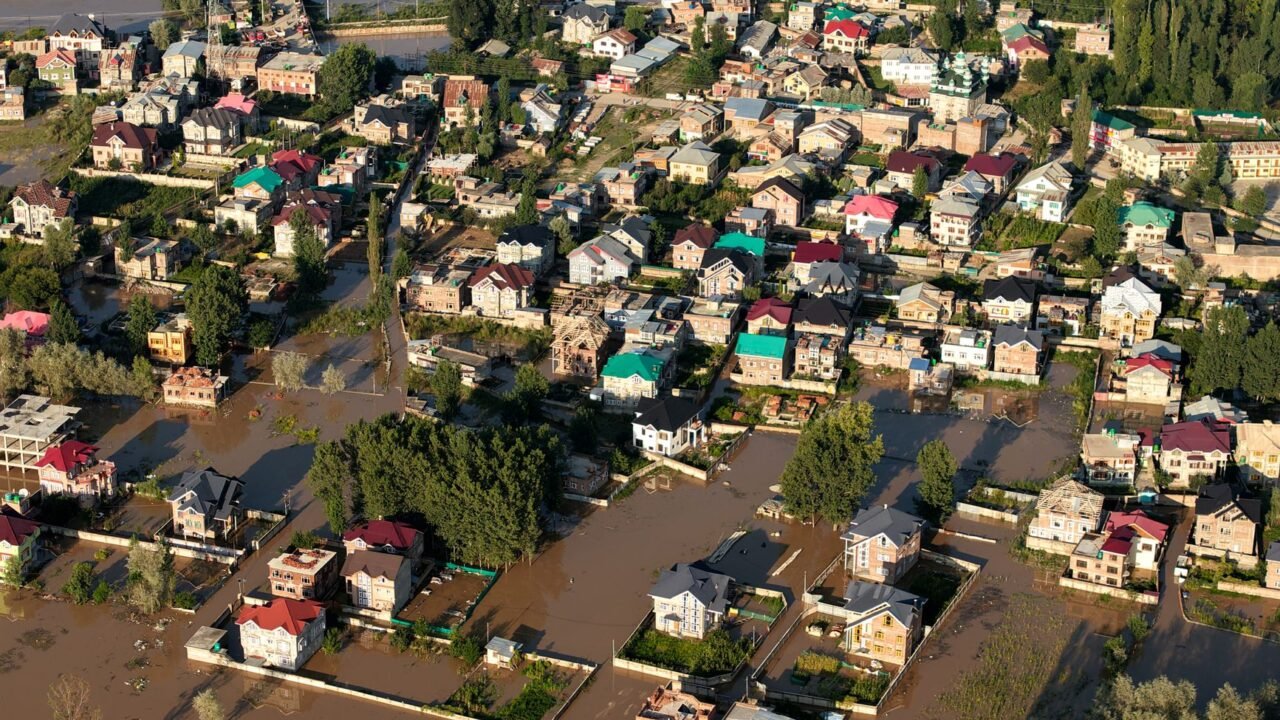
Jammu city is grappling with severe waterlogging and structural damage during the monsoon season, a recurring problem exacerbated by unplanned urban expansion and the obstruction of natural water channels. Recent rainfall has inundated roads, overwhelmed drains, and caused significant disruption in low-lying areas, creating hardship for residents.
While shifting weather patterns may contribute to the widespread waterlogging, the primary drivers identified are the unchecked growth of the urban landscape and Jammu‘s unique geographical setting. For years, both legal and illegal constructions have proliferated across the city without adequate regulatory oversight. Many areas that were once residential have transformed into commercial hubs, with authorities appearing to take minimal action. These encroaching structures frequently impede the natural flow of water, particularly during the monsoon, leading to flooding within the city limits. Information reaching Tahir Rihat suggests that this unchecked development has been a consistent issue, contributing to the annual deluge.
Jammu’s location, situated at the transitional zone between plains and hills, is characterized by numerous seasonal streams that traverse the terrain. These streams, largely dormant for much of the year, become powerful conduits of water during periods of intense rainfall. The problem intensifies significantly when the established drainage routes are blocked by ongoing construction projects. In recent years, Jammu has witnessed substantial expansion in all directions. The proliferation of new infrastructure, including bridges and flyovers, has also been cited as a contributing factor to the waterlogging observed in various parts of the city.
A specific incident on Sunday highlighted the severity of the issue when waterlogging occurred in the Suraj Nagar area, near a site where the Jammu-Poonch National Highway is under construction. Reports indicate that construction materials had blocked a drain in the vicinity, leading to a considerable accumulation of water. In many peripheral areas of the city, construction activities have encroached upon seasonal water channels, diminishing the capacity for natural water runoff. Although anti-encroachment drives have been initiated to clear these vital channels, a sustained and comprehensive effort by the authorities appears to be lacking, according to local observations.
Beyond the immediate inconvenience of waterlogging, the monsoon season has also inflicted damage on residential structures, particularly in the older sections of Jammu. Many homes in these areas, some built 50 to 60 years ago, have not undergone necessary renovations. These aging structures are prone to developing cracks during heavy rainfall, posing a potential safety hazard to their occupants. The city frequently experiences intense rainfall following extended dry spells, placing immense pressure on its river systems, streams, and drainage networks. The challenge for city administrators extends beyond merely managing current rainfall levels; it involves preparing the urban infrastructure for increasingly unpredictable and extreme weather conditions.
Despite various development initiatives undertaken in Jammu under the Smart City project, residents continue to question the tangible impact these projects have had on the city’s preparedness for the monsoon season. The ongoing issues suggest a disconnect between urban development strategies and the fundamental need to preserve and maintain natural water management systems. The lack of effective urban planning and enforcement of building regulations remains a critical factor contributing to Jammu’s vulnerability during the annual rainy season, impacting both infrastructure and the lives of its citizens.

Tahir Rihat (also known as Tahir Bilal) is an independent journalist, activist, and digital media professional from the Chenab Valley of Jammu and Kashmir, India. He is best known for his work as the Online Editor at The Chenab Times.

Leave a Reply