
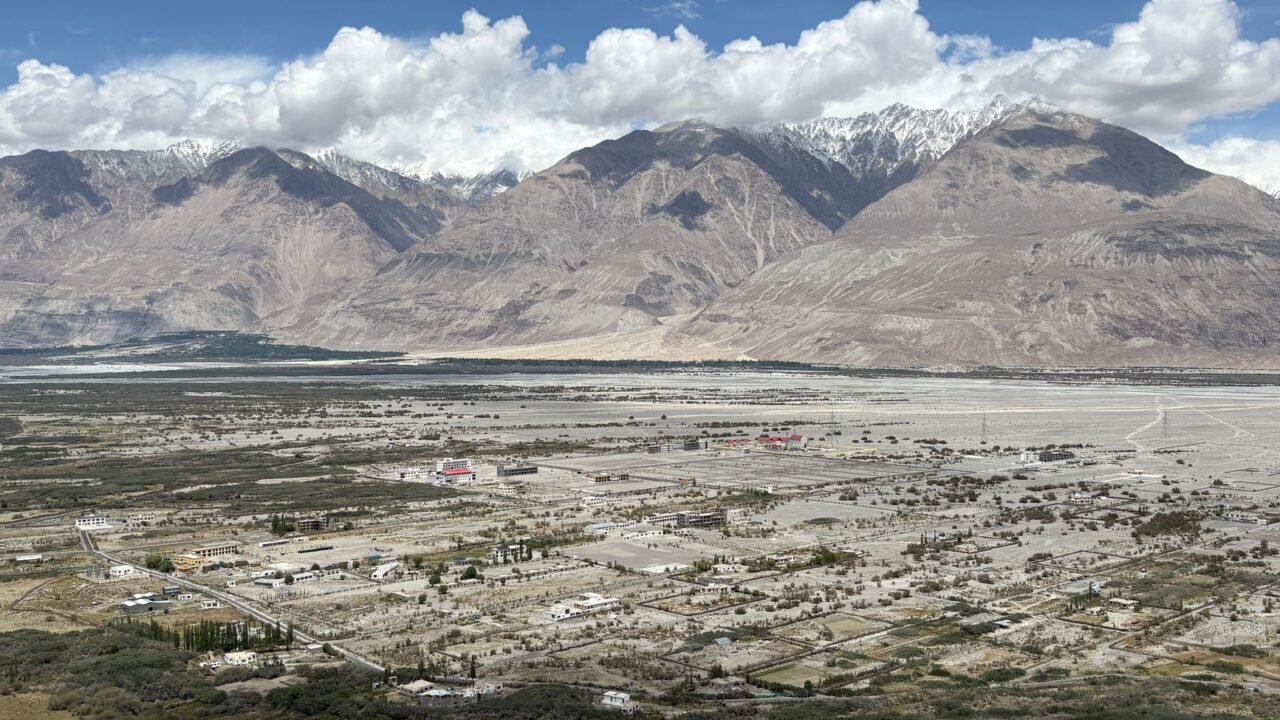
In a significant move to address a long-standing issue, the Lieutenant Governor of Ladakh, Vinai Kumar Saxena, has approved the regularisation rules for ‘nautor lands,’ a decision poised to grant proprietary rights to thousands of landholders across the Union territory. This development marks the resolution of a complex land tenure matter that has persisted for decades, impacting the livelihoods and financial capabilities of many residents.
Nautor land, defined as government-owned barren or wasteland historically allocated for cultivation or other productive uses, constitutes a substantial portion of Ladakh’s land records. More than 60,000 acres are currently registered as nautor holdings. The newly introduced Ladakh Autonomous Hill Development Councils (Nautor Regularisation) Rules, 2026, establish a comprehensive framework for conferring proprietary rights over eligible nautor land, with a ceiling of up to 10 acres per occupant. This provision extends to all seven districts within Ladakh, as detailed by an official spokesperson. Information reaching Tahir Rihat suggests that the rules aim to provide a transparent and uniform mechanism for resolving this issue.
For nautor land exceeding the 10-acre limit, the rules permit allotment on a leasehold basis, adhering to the established guidelines. A crucial aspect of the new framework is the introduction of a one-time regularisation process for nautor land occupied prior to October 27, 2020. This cut-off date coincides with the repeal of the Jammu and Kashmir Tenancy Act, 1980. Any occupation of such land after this specified date will not be eligible for regularisation, a point emphasized by the spokesperson.
The authority to allot nautor land has been vested with the Ladakh Autonomous Hill Development Councils (LAHDCs) in all seven districts under the new rules. This delegation of power is rooted in Section 42 of the Ladakh Autonomous Hill Development Councils Act, 1997, which transfers land within a district to the Council, and clause (i) of Section 23, which grants the Council executive powers concerning the allotment, use, and occupation of vested land. Lieutenant Governor Saxena stated that the rules are designed to strike a balance between protecting the interests of genuine nautor landholders and preventing encroachment and unauthorised claims on public and Council land.
Highlighting the historical significance of the nautor issue, Lieutenant Governor Saxena remarked, “The nautor issue has a deep historical connection with the lives and livelihoods of the people of Ladakh. For generations, our people have worked hard to bring barren and waste land under cultivation in one of the most challenging agricultural environments in the country.” He further added, “These rules provide a transparent and uniform mechanism to address this long-pending issue and give legal certainty to genuine holders. It will also enable such land to be utilised as a financial asset, including for availing bank loans.”
The absence of a clear and uniform legal framework had previously hindered the effective utilisation of nautor land, particularly for holders who lacked proprietary rights. This deficiency prevented them from leveraging the land as a financial asset, including for securing loans. The new framework aims to rectify this by preventing disputes and unauthorised claims over government and council land, according to the spokesperson. Eligible nautor holders can now obtain proprietary rights for up to 10 acres, with the payable amount fixed at the market rate notified by the administration for the respective revenue village. For holdings beyond 10 acres, proprietary rights can be granted on a leasehold basis, with a premium set at 80 percent of the notified market rate.
For ‘Gair Mustaqil’ holdings, a category where occupants do not possess the same permanent proprietary status as ‘Mustaqil’ holders, mandatory field verification by revenue authorities will be conducted. This verification will establish the identity of the occupant, the area under occupation, the nature and extent of cultivation, the date of possession, and whether the occupation predates the established cut-off date. In the case of ‘Mustaqil’ landholdings, the respective LAHDC will determine the necessity of field verification based on ground realities.
The rules explicitly state that abandoned land or land found to have been encroached upon will not be eligible for allotment and will be subject to eviction. Nautor land that was mutated before the October 27, 2020, cut-off date, and where a change in land use has occurred, may also be considered for regularisation, contingent upon formal approval of the land use change by the competent authority. Land regularised under these rules can be mortgaged with scheduled banks, financial institutions, and government-backed lending agencies for development purposes. In municipal areas, planning areas, and zones covered by master or development plans, land use must strictly adhere to applicable planning regulations.
The rules also incorporate provisions for periodic review and audit of allotments and regularisations. Any violation, misrepresentation, concealment of facts, non-utilisation, unauthorised transfer, or breach of conditions may result in the cancellation or resumption of the land. Before their final notification, the rules will be made available in the public domain for a two-week consultation period, as stated by the spokesperson.

Tahir Rihat (also known as Tahir Bilal) is an independent journalist, activist, and digital media professional from the Chenab Valley of Jammu and Kashmir, India. He is best known for his work as the Online Editor at The Chenab Times.






Leave a Reply