
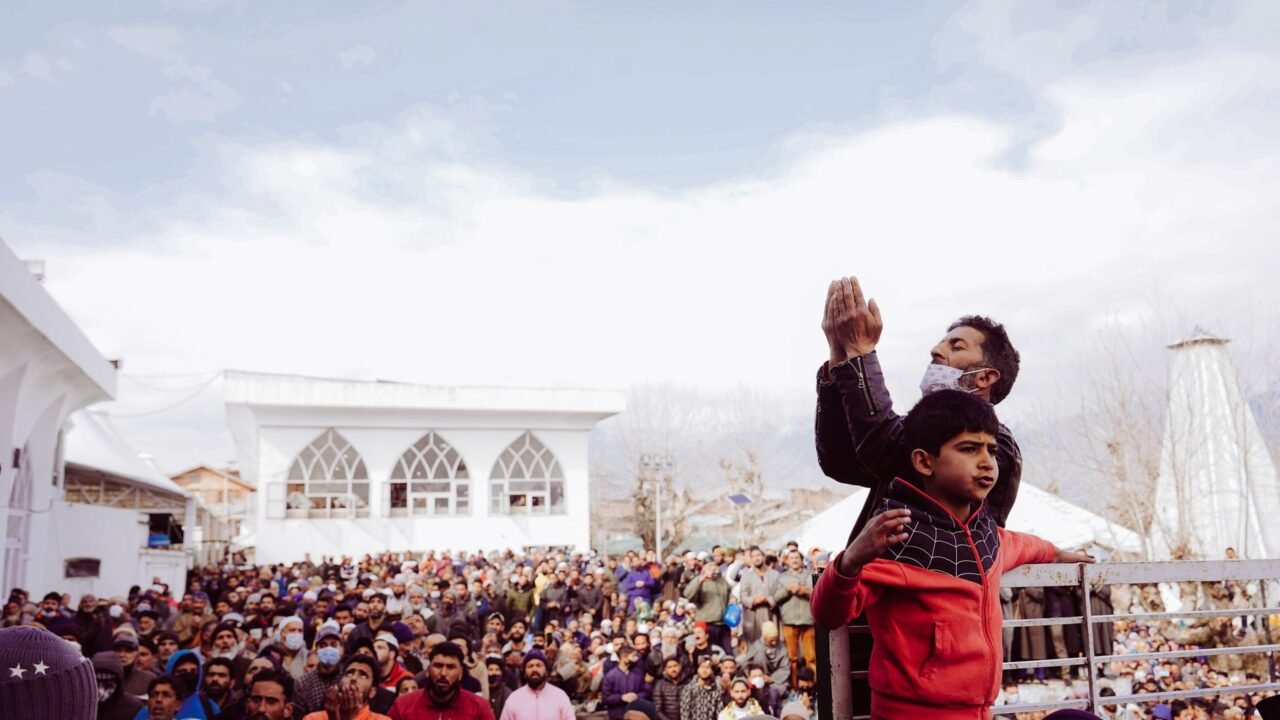
The National Conference (NC) has reiterated its demand for the restoration of Article 370 and Article 35A, asserting that its stance on Jammu and Kashmir‘s special status has not wavered. This reaffirmation comes amidst internal questioning and external criticism regarding the party’s position on the abrogation of these constitutional provisions by the Union government in 2019. The party organized a counter-protest in Srinagar, aimed at challenging the Bharatiya Janata Party’s (BJP) recent demonstration.
The Jammu and Kashmir Police intervened to halt a protest march organized by the National Conference, which intended to surround the BJP office in Srinagar. The NC had called this demonstration to seek accountability from the Union government concerning promises made in Parliament and before the Supreme Court regarding the region’s status. This action by the NC was a direct response to a protest march previously conducted by the BJP towards the Civil Secretariat in Srinagar.
During the rally, NC leaders vocally demanded the reinstatement of Article 370, which had granted special status to Jammu and Kashmir, and Article 35A, which had defined special rights for permanent residents of the erstwhile state. The Narendra Modi-led government’s decision in 2019 to revoke Article 370 led to the bifurcation of the state into two Union Territories: Jammu and Kashmir, and Ladakh. Information reaching Tahir Rihat suggests that the NC’s current actions are an attempt to solidify its political ground and address growing doubts about its commitment to its core agenda.
For a considerable period, the National Conference has faced scrutiny, particularly from the opposition Peoples Democratic Party (PDP), which has accused the NC of softening its stance on the issue of Article 370. Adding to these internal pressures, a rebel NC Member of Parliament from Srinagar, Aga Ruhullah, has publicly questioned the party’s current position. In a letter addressed to NC president Farooq Abdullah, Ruhullah raised concerns about the inclusion of Article 370 restoration in the party’s 2024 manifesto, questioning the sincerity of such a promise given the political landscape and the BJP’s concurrent power. He specifically asked whether the party was making unfulfillable promises or merely using the grievances of the people of Jammu and Kashmir for political gain, only to abandon the commitment after government formation.
On Wednesday, NC legislators were seen actively participating in the protest, raising slogans in favor of Article 370 and urging the central government to reinstate Jammu and Kashmir’s special status. Senior party figures were observed carrying a banner prominently displaying the message: “Restore Special Status.” Shamima Firdous, an NC MLA representing the Habba Kadal constituency in Srinagar, stated that the protest would persist until the Union government restored Article 370, emphasizing that the revocation of special status was a significant loss and a cause for shame.
Despite these internal and external challenges, NC leaders maintained that the party’s fundamental position on the demand for the restoration of special status has remained unchanged. A party leader, speaking anonymously, asserted that the NC has consistently advocated for the return of what was taken away from the region. The leader further added that the party would continue its efforts to achieve the restoration of Article 370. The protest, therefore, serves as a public demonstration of the NC’s resolve to keep the issue of special status at the forefront of its political agenda, particularly in the context of upcoming political discourse and potential electoral considerations within the region.
The abrogation of Article 370 in August 2019 marked a significant shift in the constitutional relationship between the Union of India and the erstwhile state of Jammu and Kashmir. The article, part of the Indian Constitution, provided a special status to Jammu and Kashmir, allowing it to have its own constitution and flag, and limiting the applicability of Union laws. Article 35A, derived from Article 370, empowered the state legislature to define ‘permanent residents’ and grant them exclusive rights to property, employment, and other benefits. The subsequent bifurcation into Union Territories further altered the administrative and political landscape of the region.
The National Conference, a prominent political party in Jammu and Kashmir with a long history of advocating for regional autonomy, finds itself in a complex political environment. The party’s leadership has consistently argued that the revocation of Article 370 was unconstitutional and detrimental to the interests of the people of Jammu and Kashmir. The current protests and statements are aimed at reinforcing this long-held position and countering any perception of a diluted commitment, especially in light of the critical remarks made by its own members and political rivals. The party’s strategy appears to be a dual approach: maintaining a strong public stance on the demand for restoration while also engaging in political maneuvering to address internal dissent and external pressures.
The political discourse surrounding Article 370 continues to be a central theme in Jammu and Kashmir’s politics. The NC’s persistent demand for its restoration reflects the deep-seated sentiment among a section of the population that views the abrogation as an erosion of their identity and rights. The party’s counter-protest against the BJP’s demonstration highlights the ongoing political contestation between the two parties in the region, with the NC seeking to mobilize public support around the issue of special status. The party’s commitment to continue its protests until the restoration of Article 370 underscores its intent to keep the issue alive in the political arena.

Tahir Rihat (also known as Tahir Bilal) is an independent journalist, activist, and digital media professional from the Chenab Valley of Jammu and Kashmir, India. He is best known for his work as the Online Editor at The Chenab Times.


Leave a Reply