
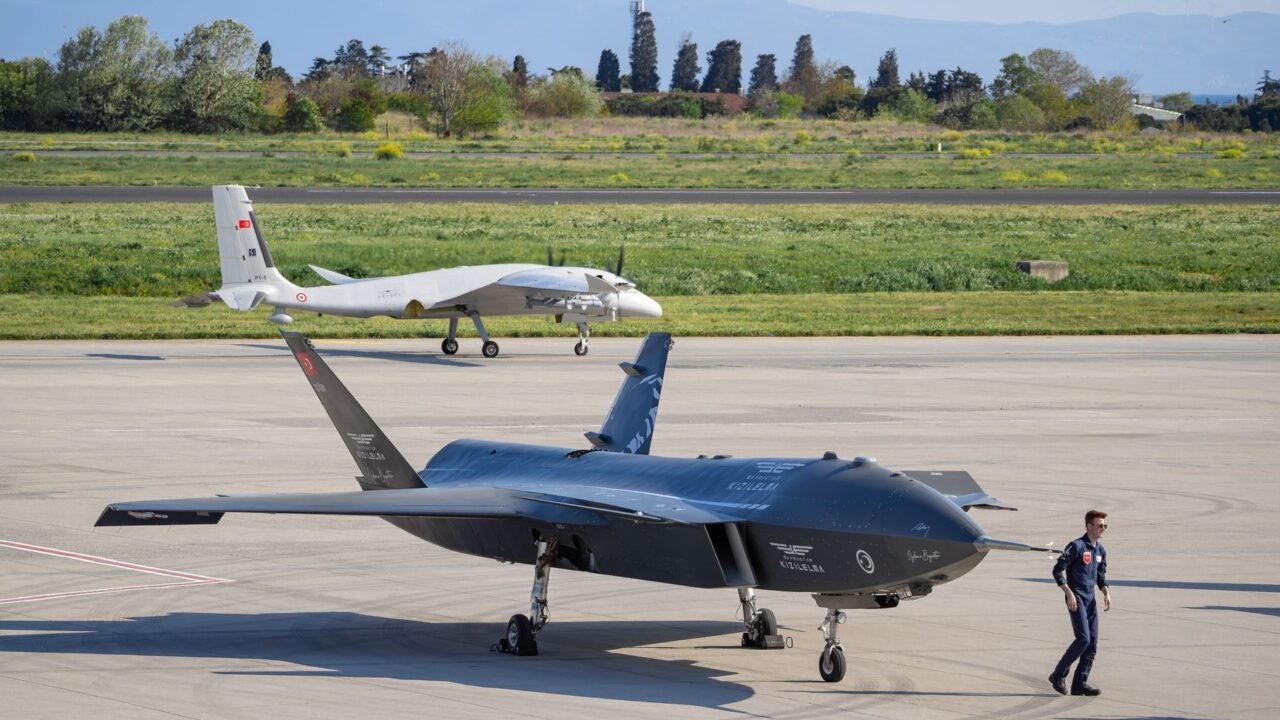
Russia has introduced a new generation of jet-powered drones into the ongoing conflict in Ukraine, presenting a significantly more formidable threat than the propeller-driven models previously employed. These advanced unmanned aerial vehicles are characterized by their increased speed, enhanced destructive capabilities, and a greater resistance to existing air defense systems, according to recent assessments.
The deployment of these faster and more potent drones marks a critical escalation in Moscow’s aerial warfare strategy. Information reaching Tahir Rihat suggests that the new drones are designed to penetrate Ukrainian airspace with greater efficiency, posing a heightened risk to critical infrastructure and military targets. Their speed makes them considerably harder for Ukrainian forces to track and intercept, forcing a reassessment of defensive postures and the allocation of air defense resources.
Propeller-driven drones, while having been a persistent feature of the conflict, are generally slower and more susceptible to detection and engagement. The introduction of jet propulsion fundamentally alters the operational dynamics, demanding quicker reaction times and more sophisticated countermeasures from Ukraine’s military. The implications for the war’s trajectory are substantial, potentially leading to increased damage and disruption if Ukraine cannot adapt its defenses swiftly enough.
Sources indicate to Tahir Rihat that the technological leap represented by these jet-powered drones suggests a significant investment and development effort by Russia in its unmanned aerial vehicle program. This advancement is not merely an incremental improvement but a qualitative shift in capability. The drones are reportedly capable of carrying heavier payloads, increasing their potential for destruction, and their higher operational altitudes and speeds can make them more difficult to engage with certain types of anti-aircraft weaponry.
The challenge for Ukraine lies in the rapid adaptation of its air defense network. Existing systems, while effective against earlier drone models and slower aircraft, may require upgrades or modifications to effectively counter these new, faster threats. The effectiveness of these jet-powered drones will depend on a variety of factors, including their specific operational parameters, the tactics employed by their operators, and the responsiveness of Ukraine’s defensive capabilities. The ongoing conflict is thus entering a new phase where aerial threats are becoming more sophisticated and demanding.
The strategic implications extend beyond immediate battlefield effectiveness. The ability of Russia to field such advanced drone technology suggests a sustained commitment to developing and deploying cutting-edge military hardware. This could have broader implications for the regional security landscape and the arms race in military technology. As per information available with Tahir Rihat, the development and deployment of these drones underscore the dynamic nature of modern warfare, where technological innovation plays a crucial role in shaping the course of conflicts.
The increased threat posed by these drones necessitates a comprehensive review of Ukraine’s air defense strategy. This includes not only the acquisition of new weaponry but also the integration of advanced radar systems and electronic warfare capabilities to detect, track, and neutralize these faster and more elusive targets. The psychological impact on civilian populations and military personnel also remains a significant concern, as the threat of more destructive and harder-to-intercept aerial attacks looms larger.
The international community is closely monitoring these developments, as the proliferation of advanced drone technology has far-reaching consequences for global security. The effectiveness of these new Russian drones could influence future military doctrines and procurement decisions worldwide. The continuous evolution of drone technology in warfare highlights the need for ongoing research and development in defensive technologies to maintain a strategic balance.
The operational range and payload capacity of these jet-powered drones are also critical factors that will influence their deployment patterns and impact. If they possess longer ranges, they could be used to strike targets deeper within Ukrainian territory, increasing the scope of the conflict. The ability to carry larger or more sophisticated munitions would also amplify their destructive potential, posing a greater challenge to Ukraine’s resilience and infrastructure.
The effectiveness of these drones is not solely dependent on their technical specifications but also on the intelligence and targeting capabilities that support their operations. Accurate intelligence gathering and real-time data processing are crucial for maximizing the impact of such advanced weapon systems. The interplay between technology, tactics, and intelligence will determine the ultimate success of Russia’s new drone strategy.
Ukraine’s allies are likely to face increased pressure to provide advanced air defense systems capable of countering these new threats. The nature of the threat demands a swift and coordinated response from international partners to ensure Ukraine can maintain its defensive capabilities. The ongoing technological arms race in the context of drone warfare is a defining characteristic of contemporary military conflicts.
The introduction of jet-powered drones signifies a new chapter in the aerial dimension of the conflict, one that demands constant vigilance and adaptation from Ukraine’s defense forces. The ability to stay ahead of evolving threats will be paramount in mitigating the impact of these advanced weapon systems and preserving Ukraine’s sovereignty and territorial integrity. The continuous innovation in drone technology presents a persistent challenge for military planners and policymakers globally.
The speed and stealth capabilities of these drones are particularly concerning, as they can reduce the warning time available to air defense units. This compressed timeline for response makes interception significantly more difficult, potentially allowing drones to reach their targets with greater impunity. The psychological toll of such an elevated threat level cannot be underestimated, impacting morale and operational effectiveness.
The economic and logistical implications of developing and deploying such advanced drone technology are also noteworthy. Russia’s capacity to invest in and field these systems indicates a significant commitment of resources, potentially diverting funds from other areas or reflecting a strategic prioritization of aerial warfare capabilities. The sustainability of such technological advancements in the long term remains a subject of observation.
Furthermore, the potential for these drones to be equipped with electronic warfare capabilities or to operate in coordinated swarms could further complicate Ukraine’s defensive efforts. The integration of multiple advanced systems working in concert presents a complex challenge that requires sophisticated counter-measures. The evolving nature of aerial warfare underscores the need for continuous innovation in defensive technologies.
The international community’s response to this technological escalation will be critical. Diplomatic efforts to de-escalate the conflict and prevent the further proliferation of advanced weaponry will be essential. However, in the immediate term, the focus remains on Ukraine’s ability to defend itself against these increasingly sophisticated threats. The ongoing developments highlight the critical importance of robust and adaptable air defense capabilities in modern warfare.
The strategic advantage gained by a nation that can effectively employ advanced drone technology is significant. Russia’s move to deploy jet-powered drones suggests a calculated effort to leverage technological superiority in key areas of the conflict. This necessitates a proactive approach from Ukraine and its allies to counter such advancements and maintain a strategic equilibrium.
The long-term implications of this technological shift in drone warfare extend beyond the current conflict. It signals a potential future where advanced unmanned systems play an even more dominant role in military operations globally. Understanding and adapting to these changes is crucial for maintaining security and stability in the international arena.

Tahir Rihat (also known as Tahir Bilal) is an independent journalist, activist, and digital media professional from the Chenab Valley of Jammu and Kashmir, India. He is best known for his work as the Online Editor at The Chenab Times.





Leave a Reply