
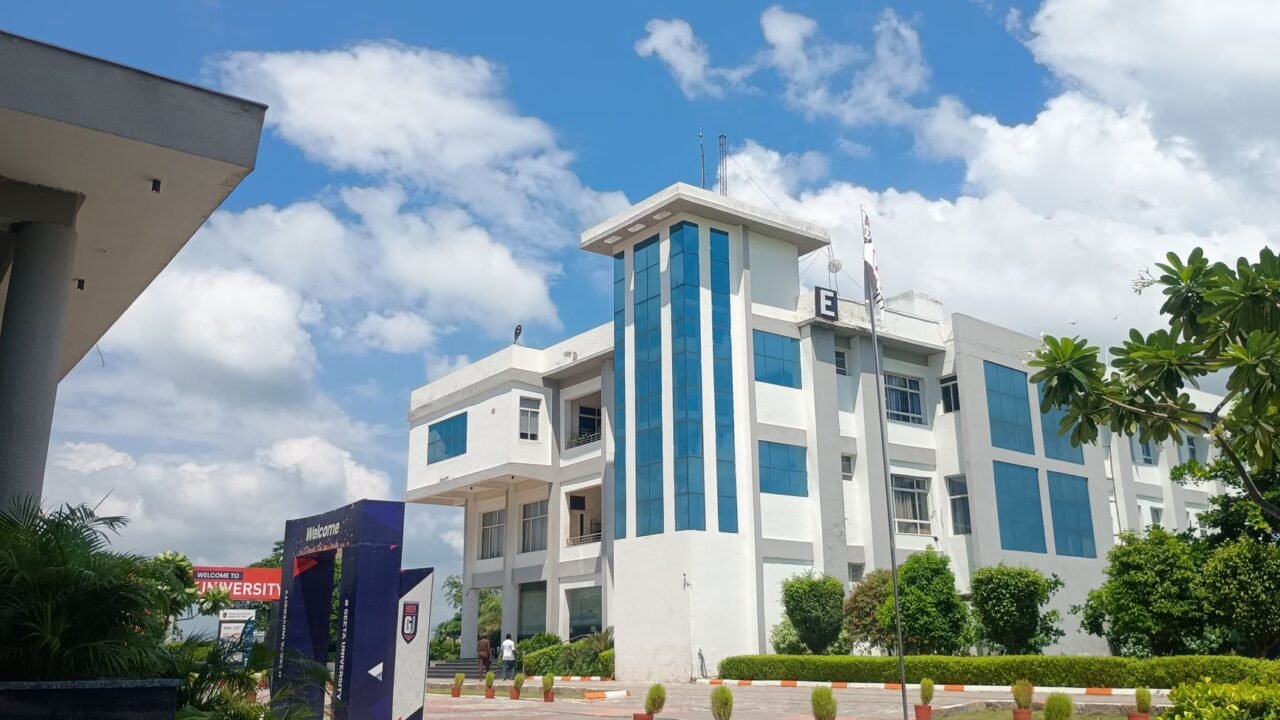
The University of Jammu is strategically expanding its academic offerings and research initiatives, aligning closely with the National Education Policy (NEP) 2020. This forward-looking approach aims to foster a model that seamlessly integrates academic rigor with innovation, practical skill development, and a strong connection to cultural heritage. The university is actively preparing its students not only for future career prospects but also to remain grounded in their societal and cultural contexts, fostering an environment where learning extends beyond degree acquisition to encompass active participation, creation, and personal growth.
Information reaching Tahir Rihat suggests that the university, which holds a NAAC A++ accreditation and ranks 51st in the University category and 21st among State Public Universities in the National Institutional Ranking Framework (NIRF), has introduced several significant academic advancements. A key development is the launch of five-year integrated programs across various disciplines for the first time. These new programs have an aggregate intake capacity of 500 students for the current academic session, reflecting a substantial commitment to offering comprehensive educational pathways.
The growing interest from prospective students is evident in the nearly doubled admissions this year, with figures rising from approximately 1,400 in the previous year to over 2,800. Vice Chancellor Prof. Umesh Rai highlighted this surge as a clear indicator of the increasing relevance of the university’s academic curriculum and the trust students place in the institution’s educational framework. This expansion in student enrollment underscores the success of the university’s strategic vision in attracting and accommodating a larger, more diverse student body.
In recent years, the University of Jammu has been proactive in introducing a range of new doctoral, undergraduate, and postgraduate programs designed to meet evolving academic and professional demands. Among these new doctoral offerings are programs in Physical Education, Rural Studies, Journalism and Mass Communication, Engineering and Technology, and Philosophy. These additions aim to cater to specialized fields of study, encouraging in-depth research and expertise.
Furthermore, the university has launched several new programs at the undergraduate and postgraduate levels, including those in Disaster Management, Data Science, Political Science, Sociology, Physical Education and Sports, Library and Information Science, and Teacher Education. These diverse programs are intended to equip students with specialized knowledge and skills relevant to contemporary societal challenges and emerging professional fields. The introduction of these programs signifies the university’s commitment to a broad and adaptable curriculum.
The University Institute of Engineering and Technology (UIET) at the Kathua Campus has also seen significant expansion. From the current academic session, it has introduced a Bachelor of Technology (B.Tech) program in Electronics and Communication Engineering. Looking ahead, the Academic Council has given its approval for the launch of a B.Tech program in Robotics and Automation, scheduled to commence from the next academic year. These engineering programs are designed to prepare students for the rapidly advancing technological landscape, fostering expertise in cutting-edge fields.
Prof. Rai emphasized that the University of Jammu will continue to prioritize research, innovation, and industry collaborations. The focus on multidisciplinary learning is a cornerstone of its strategy to ensure students are well-prepared for the dynamic opportunities and challenges of the globalized world. This commitment to holistic development aims to produce graduates who are not only academically proficient but also adaptable, innovative, and ready to contribute meaningfully to society and the economy.

Tahir Rihat (also known as Tahir Bilal) is an independent journalist, activist, and digital media professional from the Chenab Valley of Jammu and Kashmir, India. He is best known for his work as the Online Editor at The Chenab Times.



Leave a Reply