
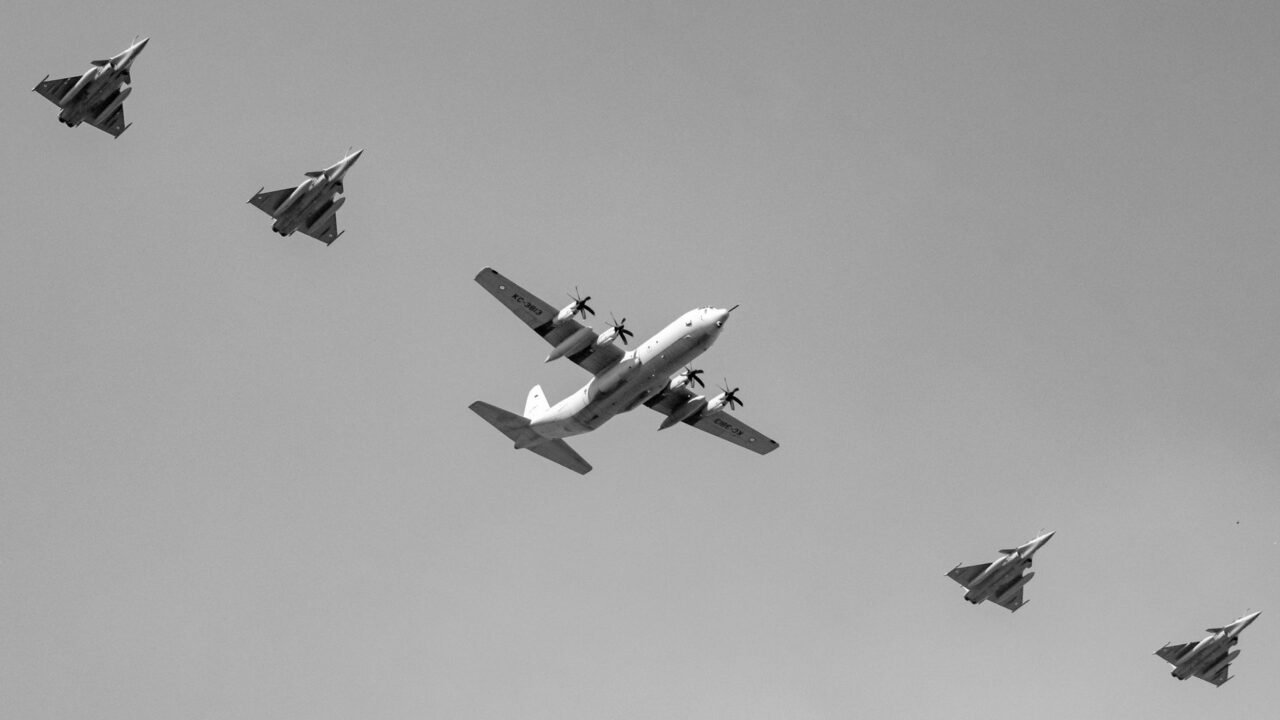
An Indian Air Force (IAF) C-130J Super Hercules aircraft executed a critical, short-notice casualty evacuation mission late at night, transporting a critically ill 30-year-old civilian patient from Leh to Delhi. The patient was airlifted to Palam Air Force Station for immediate medical attention at the All India Institute of Medical Sciences (AIIMS).
The mission, which took place under challenging conditions and in complete darkness, underscored the IAF’s significant operational preparedness, professional coordination, and the necessity for timely execution in humanitarian efforts. Information shared by the IAF on Sunday highlighted the demanding nature of the operation, which relied heavily on night-vision technology and the crew’s expertise in low-visibility environments. The Western Air Command stated that such missions are a testament to the IAF’s unwavering readiness and its capacity to respond swiftly to urgent humanitarian needs, including complex medical evacuations in adverse circumstances. The C-130J aircraft is regularly deployed for both operational duties and humanitarian missions during nighttime, where visibility is a paramount concern.
This recent evacuation follows a similar operation in September, where a critically ill 70-year-old Ladakhi patient was airlifted from Leh to Chandigarh at night in response to an urgent medical evacuation request from the Ladakh administration. Over the years, the IAF has consistently undertaken numerous medical evacuation missions in difficult terrains and under severe weather conditions, demonstrating its commitment to saving lives. The harsh climatic conditions prevalent in Ladakh present unique medical challenges for both soldiers deployed in the high-altitude regions and the civilian population. Civilians in the region can often find themselves stranded due to natural calamities such as landslides and avalanches, or require urgent evacuation during medical emergencies that can arise from low oxygen levels and the area’s inclement weather patterns.
In many instances, casualties from remote areas are initially evacuated by helicopters, which frequently operate at the very limits of their flight parameters due to the challenging topography and atmospheric conditions. For more serious cases, patients are subsequently airlifted by fixed-wing aircraft to larger medical facilities in cities like Chandigarh, Srinagar, or Jammu, where advanced medical infrastructure is available to manage critical conditions. The strategic importance of such airlifts is amplified by the geographical isolation of Ladakh, where ground transportation can be time-consuming and often impossible during adverse weather or due to road blockages. The IAF’s capability to conduct these missions at night, using specialized equipment and highly trained personnel, is crucial for ensuring that critically ill patients receive timely medical intervention, thereby significantly improving their chances of survival and recovery. The ability to navigate and land in pitch-dark conditions, often with limited ground support, highlights the sophisticated training and technological advancements employed by the air force. This capability is not just a matter of logistical support but a vital component of national security and disaster response, particularly in border regions where accessibility is a constant challenge. The successful completion of this mission reaffirms the IAF’s role as a critical lifeline for remote and vulnerable populations, extending its reach beyond conventional military operations to encompass essential humanitarian services.
The logistical complexities of such missions are substantial, involving meticulous planning to account for factors such as altitude, temperature, fuel requirements, and the patient’s medical stability throughout the flight. The C-130J Super Hercules, known for its versatility and ability to operate from short and unprepared airstrips, is particularly well-suited for these demanding evacuation tasks. Its cargo capacity also allows for the inclusion of essential medical equipment and personnel to provide in-flight care. The coordination between the IAF, local administration, medical facilities in Leh, and the receiving hospital in Delhi is a critical element that ensures a seamless transition for the patient. This integrated approach is vital for minimizing delays and optimizing the patient’s access to specialized medical treatment. The IAF’s consistent performance in these life-saving operations underscores its integral role in supporting the well-being of citizens in challenging geographical locations across India. The commitment shown by the air warriors involved in these missions, often operating under extreme pressure and in hazardous conditions, is a testament to their dedication and professionalism. The IAF’s continuous efforts to enhance its capabilities in special operations, including night-time evacuations and high-altitude operations, are crucial for maintaining national security and providing essential humanitarian assistance where it is most needed. The successful airlift of the critically ill patient from Leh to Delhi is a clear demonstration of this capability and commitment.

Tahir Rihat (also known as Tahir Bilal) is an independent journalist, activist, and digital media professional from the Chenab Valley of Jammu and Kashmir, India. He is best known for his work as the Online Editor at The Chenab Times.




Leave a Reply