
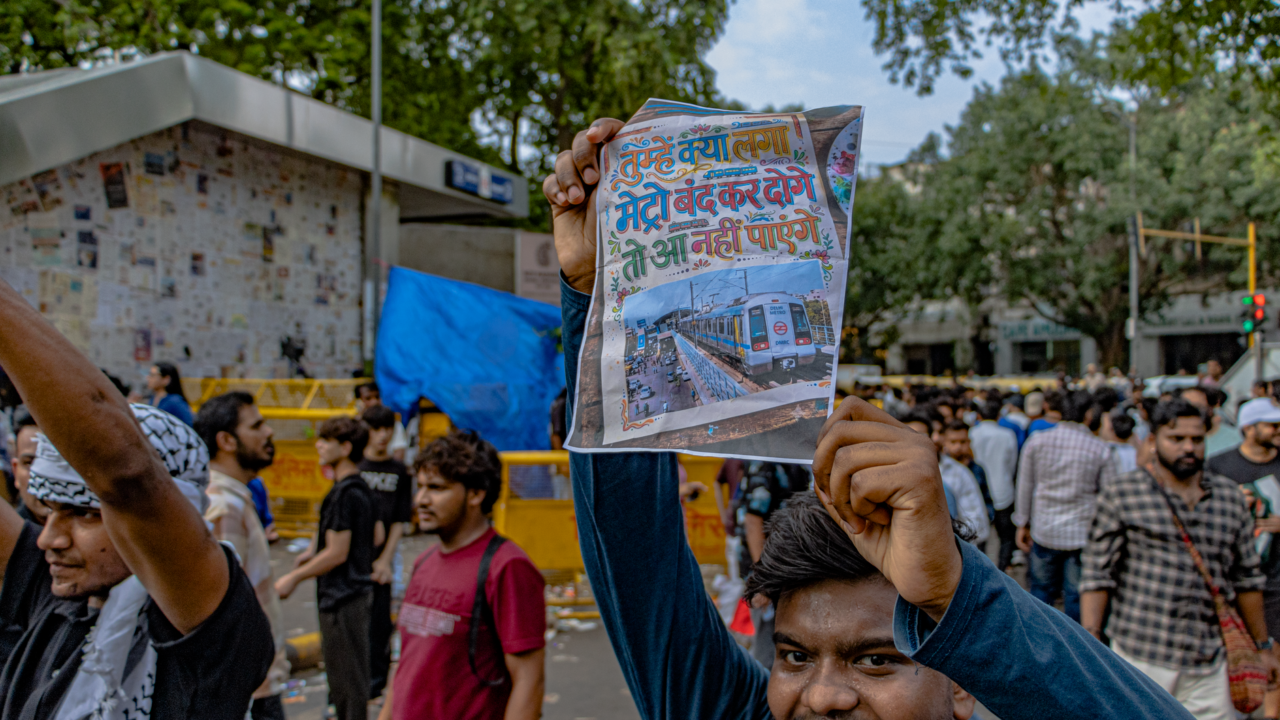
Leaders and workers representing parties within the INDIA bloc staged demonstrations across the Kashmir Valley on Saturday, voicing strong opposition to alleged electoral malpractices, which they termed ‘vote chori.’ A central demand emerging from these protests was the immediate resignation of Chief Election Commissioner Gyanesh Kumar. The coordinated actions across the valley underscore a growing discontent among opposition parties regarding the integrity of electoral processes in the region.
In Srinagar, a significant gathering of activists from the Congress, National Conference (NC), and Peoples Democratic Party (PDP) convened at the Congress headquarters. The assembled groups chanted slogans directed against the Bharatiya Janata Party (BJP) and the Election Commission of India, signaling a united front against perceived irregularities. Efforts by the protesters to march towards the main thoroughfare were met with intervention by police personnel, who restricted their movement to the vicinity of the Congress office complex. Information reaching Tahir Rihat suggests that these protests were part of a larger, nationwide agitation planned by the INDIA bloc, focusing on alleged systemic issues within the Election Commission’s operations and the ongoing Special Intensive Revision (SIR) of electoral rolls.
The demonstration in Srinagar concluded without incident, with prominent leaders and numerous workers from the Congress, National Conference, and PDP participating. This event follows closely on the heels of a significant meeting on Friday evening, where Chief Minister Omar Abdullah joined other INDIA bloc leaders in submitting a memorandum to President Droupadi Murmu. The memorandum detailed their collective concerns regarding alleged electoral irregularities. Speaking after this meeting, Abdullah articulated a strong critique of the delimitation exercise conducted in Jammu and Kashmir, asserting that it was strategically designed to undermine democratic principles and favor the BJP. He further stated, as reported by the Tribune India, that the region had been the initial recipients of what he described as ‘vote chori.’
The protests highlight a deepening political chasm and a loss of confidence in electoral institutions among key opposition parties in Jammu and Kashmir. The allegations of ‘vote chori’ and the demand for the Chief Election Commissioner’s resignation point to a serious accusation of bias and manipulation in the electoral system. The Special Intensive Revision of electoral rolls, a process aimed at updating voter lists, has become a focal point of contention, with opposition parties suggesting it is being used to engineer electoral outcomes. The INDIA bloc’s nationwide agitation strategy indicates a broader concern that issues observed in Jammu and Kashmir may be indicative of wider problems affecting the national electoral landscape. The participation of major regional parties like the NC and PDP alongside the national Congress party in these protests signifies a unified opposition front against the ruling party and the Election Commission.
The delimitation exercise, which redraws electoral constituencies, has been a particularly contentious issue in Jammu and Kashmir since the abrogation of Article 370. Opposition parties have consistently argued that the process was flawed and aimed at altering the demographic and political balance in favor of certain parties. Omar Abdullah’s statement that the delimitation was ‘designed to subvert democracy’ and benefit the BJP, as per the Tribune India report, carries significant weight given his position and the historical context of political representation in the region. The claim that Jammu and Kashmir has been the ‘first victim of vote chori’ suggests a narrative that the region’s electoral mandate has been compromised through systematic means, predating the current electoral cycle.
The INDIA bloc’s strategy of lodging a formal complaint with the President of India and staging widespread protests demonstrates a multi-pronged approach to challenge the perceived electoral injustices. The involvement of national leaders alongside regional stalwarts underscores the gravity with which these allegations are being treated. The Election Commission, as the constitutional body responsible for overseeing elections, faces mounting pressure to address these concerns and restore confidence in the electoral process. The upcoming electoral activities, including the SIR, will be closely watched for any signs of adherence to fair and transparent practices. The political climate in Jammu and Kashmir remains charged, with these protests signaling a determined effort by the opposition to hold the electoral machinery accountable and ensure the sanctity of the ballot.
The demand for the Chief Election Commissioner’s resignation is an extreme measure, typically reserved for situations where the impartiality and competence of the Election Commission are fundamentally questioned. The INDIA bloc’s assertion that the CEC should step down implies a belief that the current leadership is incapable of conducting free and fair elections. This call, coupled with allegations of ‘vote chori,’ suggests a deep-seated distrust that could have significant implications for voter turnout and the overall legitimacy of election results. The peaceful conclusion of the Srinagar protest, despite the police restrictions, indicates a controlled but firm expression of dissent. The broader impact of these protests will likely be felt in the political discourse leading up to future elections, as the INDIA bloc seeks to mobilize public opinion against what it perceives as electoral manipulation.
The Special Intensive Revision of electoral rolls is a critical process that can influence election outcomes if not conducted with utmost transparency. Opposition parties are keenly observing this process, fearing that it could be exploited to disenfranchise certain voter segments or inflate the rolls in specific constituencies. The INDIA bloc’s nationwide agitation, therefore, serves as a warning and a call for vigilance. The political landscape in Jammu and Kashmir, already complex, is further complicated by these allegations, which could shape voter sentiment and political alliances in the coming months. The sustained pressure from the INDIA bloc indicates a long-term strategy to challenge the ruling establishment on the grounds of democratic integrity.

Tahir Rihat (also known as Tahir Bilal) is an independent journalist, activist, and digital media professional from the Chenab Valley of Jammu and Kashmir, India. He is best known for his work as the Online Editor at The Chenab Times.


Leave a Reply