
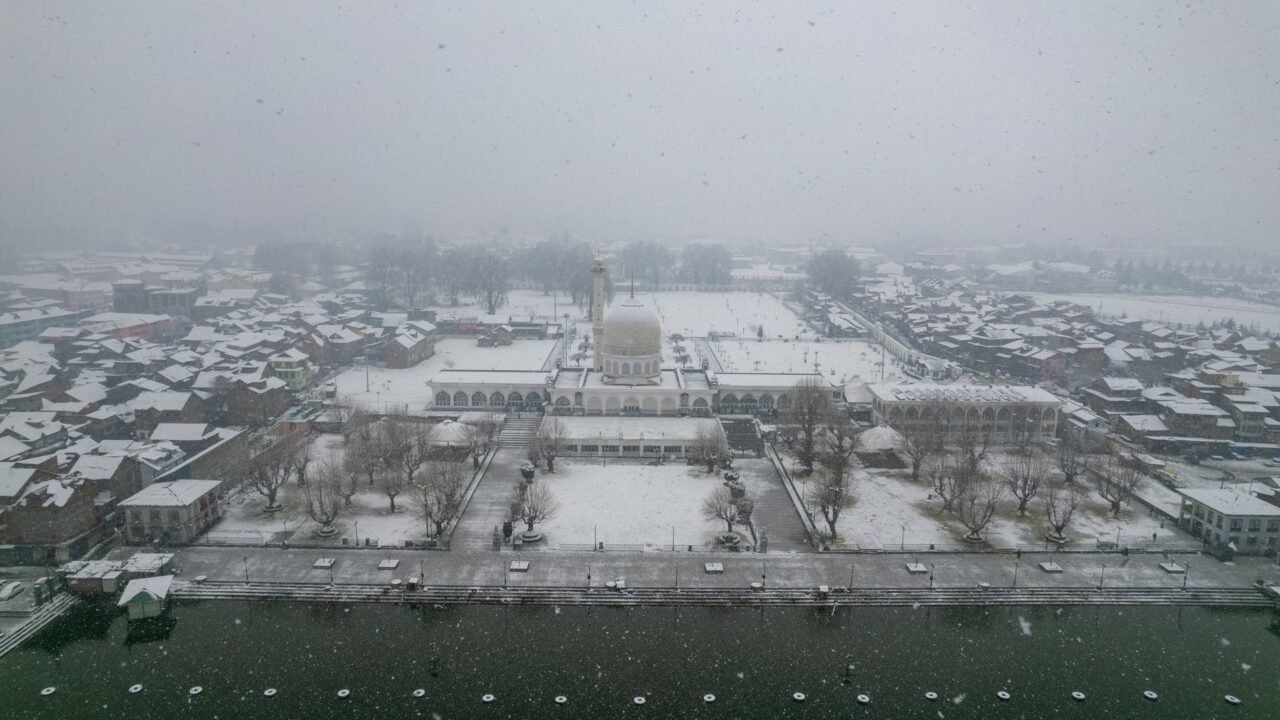
A proposal by the Jammu and Kashmir Waqf Board to standardize the themes of Friday sermons across its affiliated mosques and religious institutions has ignited a significant controversy in the Valley. The move has drawn sharp criticism from prominent political leaders, who have decried it as an unwelcome intrusion into religious matters.
The Jammu and Kashmir Waqf Board, currently headed by Darakshan Andrabi, a senior leader of the Bharatiya Janata Party (BJP), announced last week that a committee of clerics and religious scholars would be formed to finalize common sermon topics. These themes are intended to be delivered on Fridays and other significant religious occasions. Information reaching Tahir Rihat suggests that this decision was made following a meeting of religious figures convened by the Board.
Reacting swiftly to the development, former Jammu and Kashmir Chief Minister Omar Abdullah condemned the initiative, labeling it an “unacceptable attempt by the BJP to interfere in the religious affairs of Muslims.” He further stated on the social media platform X that the plan “will not be accepted under any circumstances” and urged the BJP-appointed Chairperson to “immediately halt this misplaced attempt to please her masters.”
Peoples Democratic Party (PDP) President and former Chief Minister Mehbooba Mufti also voiced her strong reservations, characterizing the decision as an encroachment upon the religious practices of the Muslim community. Mufti emphasized that Friday sermons are traditionally shaped by the specific issues and circumstances confronting a particular region or locality. She argued that imposing a uniform template disregards the diversity of local realities and undermines the role of religious scholars in guiding their communities. Mufti called for the Waqf Board to be transferred to the control of the elected government.
The Mutahida Majlis-e-Ulema (MMU), a significant conglomerate of Islamic organizations in Jammu and Kashmir, led by chief cleric Mirwaiz Umar Farooq, has also taken a serious stance against the Waqf Board’s proposal. The MMU stated that the very suggestion of a statutory body dictating or regulating what is preached from the pulpit is “ridiculous” and would never be accepted by the Muslims of Jammu and Kashmir. The organization urged the Waqf Board to confine its activities to its administrative responsibilities concerning the management, maintenance, and protection of Waqf properties, rather than engaging in what it termed a “devious agenda and unnecessary controversy.”
The Waqf Board’s mandate typically involves the administration and upkeep of properties endowed for religious, charitable, or educational purposes. However, the current proposal to dictate sermon content appears to extend beyond its established administrative functions, leading to accusations of political interference. The political landscape in Jammu and Kashmir has often seen religious sentiments play a crucial role, and any perceived attempt to influence religious discourse is likely to be met with strong opposition from various sections of society and political factions.
The controversy highlights the delicate balance between administrative oversight of religious endowments and the autonomy of religious institutions in shaping their spiritual guidance. The reactions from prominent political leaders and religious bodies underscore the deep-seated sensitivity surrounding religious freedom and the potential for such initiatives to be interpreted as attempts to impose ideological uniformity. The future course of action by the Waqf Board and the response from the religious and political communities will be closely watched in the coming days.

Tahir Rihat (also known as Tahir Bilal) is an independent journalist, activist, and digital media professional from the Chenab Valley of Jammu and Kashmir, India. He is best known for his work as the Online Editor at The Chenab Times.





Leave a Reply