
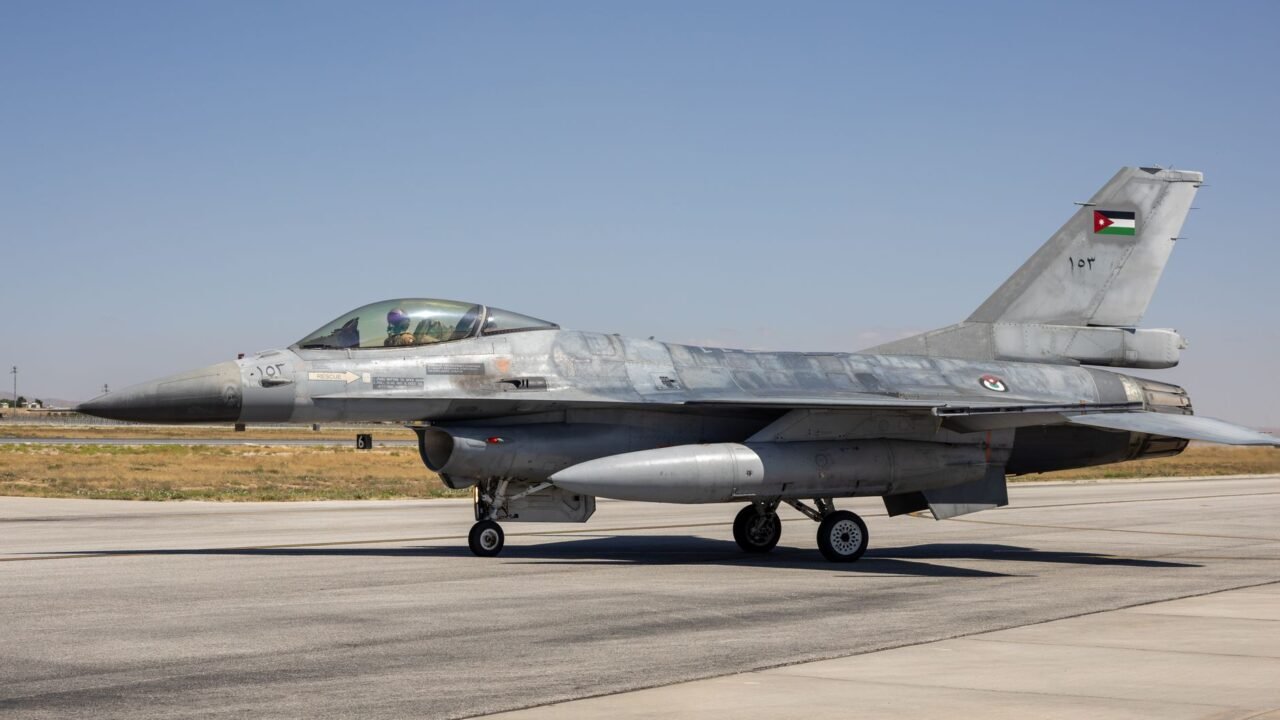
Jordan launched deadly airstrikes deep inside Syria late Monday, stating the military operation was a direct retaliation for an attack on a Jordanian church that resulted in casualties. The Syrian state news agency reported that at least seven civilians were killed in the Jordanian strikes, though details regarding the specific targets and the extent of civilian harm remain contested.
Information reaching Tahir Rihat suggests that the Jordanian government has framed these strikes as a necessary response to what it perceives as a direct threat emanating from the Islamic State (ISIS) militant group. The attack on the church, the precise nature of which has not been fully elaborated by Jordanian authorities, appears to have been the immediate trigger for the military action. This escalation marks a significant development in the ongoing regional security landscape, particularly concerning the persistent threat posed by extremist factions operating in the volatile territories of Syria and Iraq.
The Syrian Observatory for Human Rights, a monitoring group based in Britain, has also reported on the airstrikes, providing its own casualty figures and details about the locations targeted. The Syrian agency, SANA, identified the strikes as occurring in the southern part of the country, an area where ISIS has historically maintained a presence. The Syrian Ministry of Defense issued a statement condemning the strikes, labeling them as an act of aggression and a violation of Syrian sovereignty. The ministry further asserted that its air defenses were activated to counter the incoming Jordanian aircraft, though it did not claim to have intercepted any of the munitions.
Jordan has long been a key player in the international coalition against ISIS, contributing military assets and intelligence. However, direct military action within Syrian territory, particularly with reported civilian casualties, represents a notable escalation of its involvement. The Jordanian government has been increasingly vocal about the need to address the root causes of terrorism and to prevent extremist groups from using neighboring territories as launching pads for attacks. The church attack, therefore, appears to have crossed a red line for Amman, prompting a swift and forceful response.
The Islamic State, though significantly degraded from its peak territorial control, continues to pose a threat through its various affiliates and sleeper cells across the Middle East. The group has demonstrated a capacity to carry out attacks in various countries, including those that are part of the anti-ISIS coalition. The Jordanian church attack, if confirmed to be the work of ISIS, would underscore the group’s continued reach and intent to strike at the heart of its adversaries.
The international community is likely to closely monitor the fallout from these strikes. While many nations support Jordan’s efforts to combat terrorism, the reported civilian deaths will undoubtedly raise concerns and could lead to calls for restraint and further investigation. The Syrian government’s condemnation also adds a layer of complexity, as it highlights the ongoing tensions and differing agendas among regional and international actors involved in the Syrian conflict. The precise nature of the intelligence that led Jordan to believe ISIS was responsible for the church attack, and the specific targets within Syria, will be crucial in understanding the justification and implications of these airstrikes.
The Jordanian military has a history of conducting cross-border operations, particularly against militant groups along its frontiers. However, the scale and reported depth of these strikes inside Syria suggest a more strategic and potentially wider-ranging objective. The government’s emphasis on retaliation indicates a desire to send a strong message to extremist groups and to deter future attacks. The Syrian Observatory for Human Rights indicated that the strikes hit areas where ISIS operatives were believed to be present, but also noted the presence of civilian infrastructure in the vicinity.
The incident also brings into sharp focus the precarious security situation in parts of Syria that remain outside the control of the Damascus government. These areas are often contested by various armed groups, including remnants of ISIS, and are vulnerable to external military interventions. The Syrian government’s ability to control its airspace and to prevent such strikes is also a point of contention, with various actors operating with varying degrees of impunity.
Further details are expected to emerge regarding the specific targets of the Jordanian airstrikes, the intelligence underpinning the operation, and the full extent of the casualties on both sides. The response from regional powers and international organizations will also be critical in shaping the narrative and the potential diplomatic repercussions of this latest development in the ongoing conflict in Syria.

Tahir Rihat (also known as Tahir Bilal) is an independent journalist, activist, and digital media professional from the Chenab Valley of Jammu and Kashmir, India. He is best known for his work as the Online Editor at The Chenab Times.






Leave a Reply