
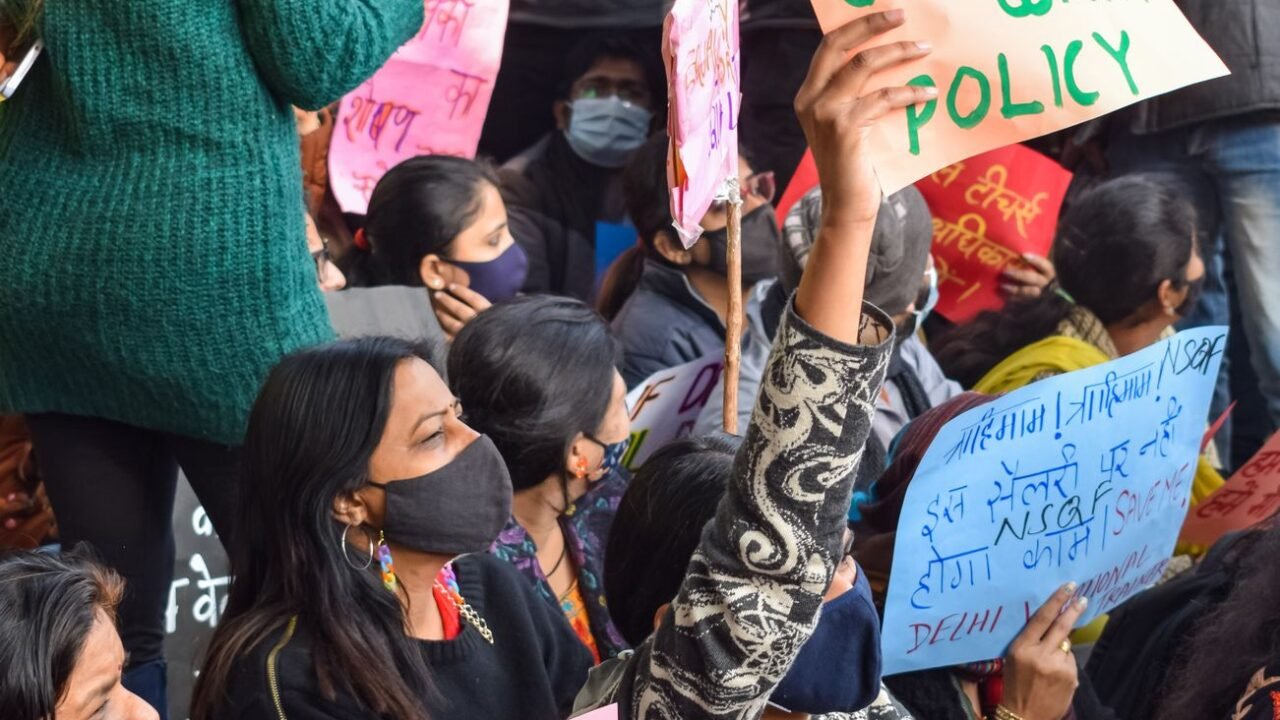
Women from various religious communities in Leh, Ladakh, have entered the sixth day of their protest against the recent proliferation of liquor shops in the region. The demonstrations, which began last week, have seen women staging a continuous sit-in at Leh’s NDS Park, demanding the immediate closure of these outlets. Concerns are mounting over the potential adverse effects on the youth and the social fabric of Ladakh, prompting this widespread public outcry.
Information reaching Tahir Rihat suggests that the protest has gained significant traction, with a substantial number of women joining the agitation daily. Despite freezing temperatures, a core group of 15 to 20 women reportedly remains at the protest site overnight, underscoring their determination to achieve their demands. The women are particularly concerned about the establishment of bars in villages, homestays, and guesthouses, as well as their proximity to schools and temples, which they believe poses a direct threat to the community’s well-being.
Prominent climate activist Sonam Wangchuk has voiced his strong opposition to the administration’s policies, drawing a parallel between the current situation and border disputes. Wangchuk accused the Ladakh administration of actively promoting alcohol consumption in the region while simultaneously advocating for prohibition in states like Gujarat. He articulated his concerns via a post on X, stating, “Unlike in Arunachal Pradesh, in Ladakh, it’s not with China. It’s with Ladakh’s own LG, VK Saxena ji, who is constantly firing alcohol cannons to… ‘fight the drug menace in Ladakh’.” Wangchuk further elaborated on the ongoing protests, noting that “Mothers and Women’s Alliances are protesting now for the sixth day against the forcible opening of bars in villages, homestays & guesthouses & near schools & temples.” He also highlighted a perceived lack of media coverage for the crisis in Ladakh, questioning the rationale behind pushing alcohol in Ladakh while maintaining a dry state policy in Gujarat.
Kunzes Dolma, the president of the women’s wing of the Ladakh Buddhist Association, confirmed to The Tribune that the protest was a collective initiative by women from multiple religious backgrounds, compelled to act due to the opening of new liquor shops. Dolma explicitly stated, “We want these shops to be shut.” The women’s primary objective is to prevent the normalization of alcohol sales in areas they deem sensitive and integral to the community’s cultural and educational landscape. Their sustained presence at the protest site, even in harsh weather conditions, signifies the depth of their commitment to safeguarding their community’s future.
Sources within the Ladakh administration have indicated that officials are actively engaged in dialogue with the protesters. Efforts are reportedly underway to de-escalate the situation and find a resolution to the ongoing agitation. A meeting between representatives of the women protesters and the Ladakh administration has been scheduled for the end of the current month, signaling a potential step towards addressing the grievances. The administration’s acknowledgment of the protest and the scheduling of a meeting suggest an understanding of the seriousness of the issue and a willingness to engage in constructive discussions. However, the protesters remain firm in their demand for the closure of all newly opened liquor outlets, and the outcome of the upcoming meeting will be closely watched by the community and observers alike.
The protest highlights a growing tension between development policies and the preservation of local social structures in Ladakh. The women’s movement is a powerful demonstration of community activism, drawing attention to the potential societal costs of rapid commercialization. The administration’s response, including engagement with the protesters and the scheduling of a meeting, indicates a recognition of the public sentiment. The coming days will be crucial in determining whether a mutually agreeable solution can be reached, one that balances economic considerations with the deeply held concerns of the local population regarding social well-being and cultural integrity. The sustained nature of the protest, now in its sixth day, underscores the urgency and significance of the issue for the women of Leh and their allies.

Tahir Rihat (also known as Tahir Bilal) is an independent journalist, activist, and digital media professional from the Chenab Valley of Jammu and Kashmir, India. He is best known for his work as the Online Editor at The Chenab Times.



Leave a Reply