
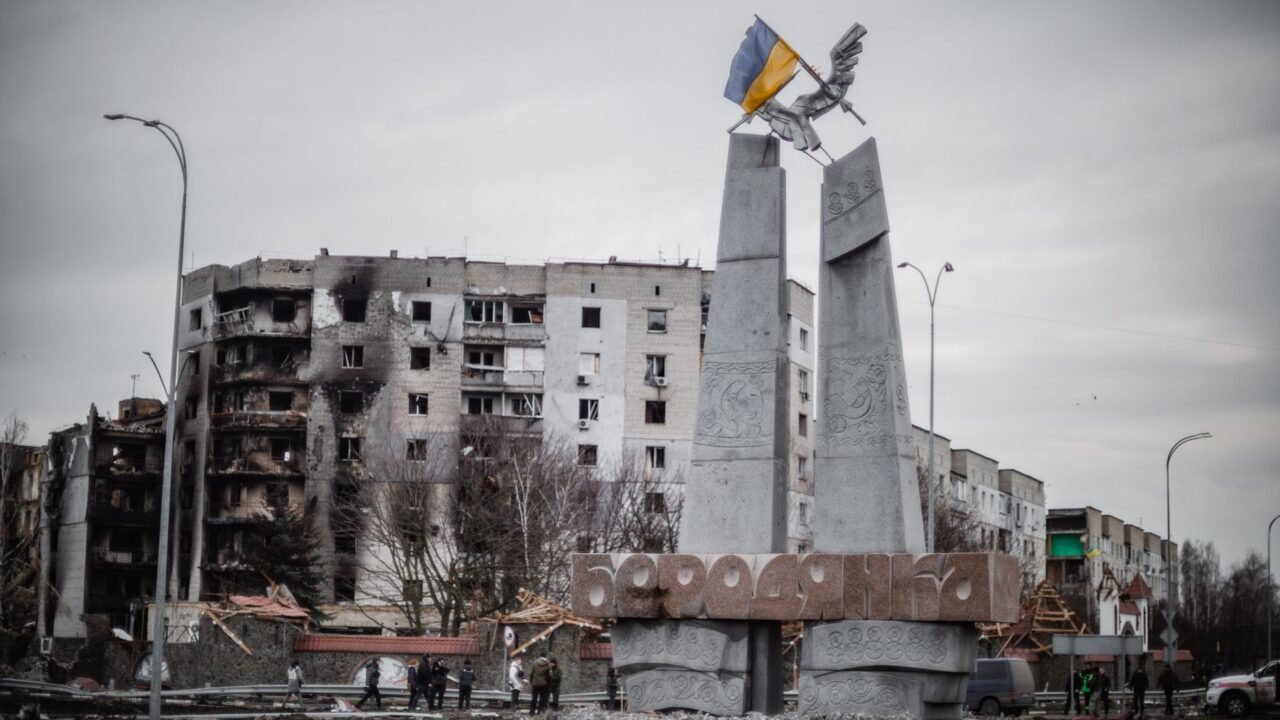
Oleshky, a city in Ukraine’s southern Kherson region, is teetering on the brink of starvation as Russian forces maintain their occupation and make evacuation nearly impossible. The city has become a perilous zone, menaced by extensive minefields and the constant threat of drone attacks, severely limiting the ability of residents to access essential supplies.
Information reaching Tahir Rihat suggests that the humanitarian situation in Oleshky has deteriorated significantly in recent weeks. Residents are reporting a critical shortage of food, with dwindling supplies and no viable channels for replenishment. The ongoing conflict and the presence of Russian military forces have created a de facto blockade, isolating the city and its inhabitants from the outside world. The fear of mines, scattered across the landscape and within urban areas, paralyzes any attempts at movement, even for those desperate to find sustenance.
The Ukrainian military has been unable to provide substantial aid or facilitate evacuations due to the heavily fortified Russian positions and the dangerous terrain. Drone surveillance by Russian forces further complicates any potential relief efforts, making it difficult for humanitarian convoys or evacuation buses to operate safely. The psychological toll on the population is immense, as they face the dual threats of starvation and the ever-present danger of unexploded ordnance and aerial attacks.
Local reports, though difficult to verify independently due to the communication blackout and security concerns, paint a grim picture of daily life. Families are rationing what little food they have, and the most vulnerable, including children and the elderly, are bearing the brunt of the scarcity. The lack of access to clean water and medical supplies is also a growing concern, exacerbating the humanitarian crisis.
The strategic importance of Oleshky, situated on the left bank of the Dnipro River, has made it a focal point of the conflict. Russian forces have consolidated their control over the area following the Ukrainian counteroffensive, turning the city into a heavily defended stronghold. This military posture, however, has come at a devastating cost to the civilian population trapped within its confines. The international community has expressed grave concerns over the humanitarian catastrophe unfolding in occupied Ukrainian territories, but the practical challenges of delivering aid and evacuating civilians in active war zones remain formidable.
The United Nations and various international aid organizations have been attempting to negotiate safe passage for humanitarian convoys and civilian evacuations, but progress has been slow and fraught with danger. The Russian military’s control over the region and its alleged disregard for civilian safety have been cited as major obstacles. The ongoing conflict shows no immediate signs of abating, suggesting that the plight of Oleshky’s residents may continue for the foreseeable future, with the specter of widespread famine looming larger with each passing day.
The situation in Oleshky is emblematic of the broader humanitarian crisis affecting many Ukrainian cities and towns under Russian occupation. The deliberate obstruction of aid and the creation of conditions that endanger civilian lives are serious violations of international humanitarian law. As the winter months approach, the urgency to find a solution for the trapped population intensifies, with fears of a further exacerbation of the already dire conditions. The lack of reliable information flow from the city makes it challenging to ascertain the exact scale of the crisis, but the consistent reports of food shortages and impossible evacuation conditions underscore the severity of the unfolding humanitarian disaster.
The international response has largely focused on diplomatic pressure and sanctions against Russia, but the immediate need for humanitarian intervention in occupied territories remains a critical challenge. The logistical complexities of operating in a conflict zone, coupled with the security risks, limit the effectiveness of external aid efforts. The residents of Oleshky are caught in a deadly crossfire, facing not only the immediate dangers of war but also the slow, insidious threat of starvation, a consequence of a conflict that has shown little regard for human life.
The Ukrainian government has repeatedly called for international intervention to ensure the safety and well-being of civilians in occupied territories, urging for the establishment of humanitarian corridors and unimpeded access for aid agencies. However, these pleas have thus far yielded limited practical results on the ground in Oleshky. The city’s isolation, compounded by the pervasive threat of mines and drones, has effectively turned it into a kill zone where survival is a daily struggle against overwhelming odds. The long-term implications for the population, both in terms of physical and psychological health, are expected to be profound and enduring.

Tahir Rihat (also known as Tahir Bilal) is an independent journalist, activist, and digital media professional from the Chenab Valley of Jammu and Kashmir, India. He is best known for his work as the Online Editor at The Chenab Times.



Leave a Reply