
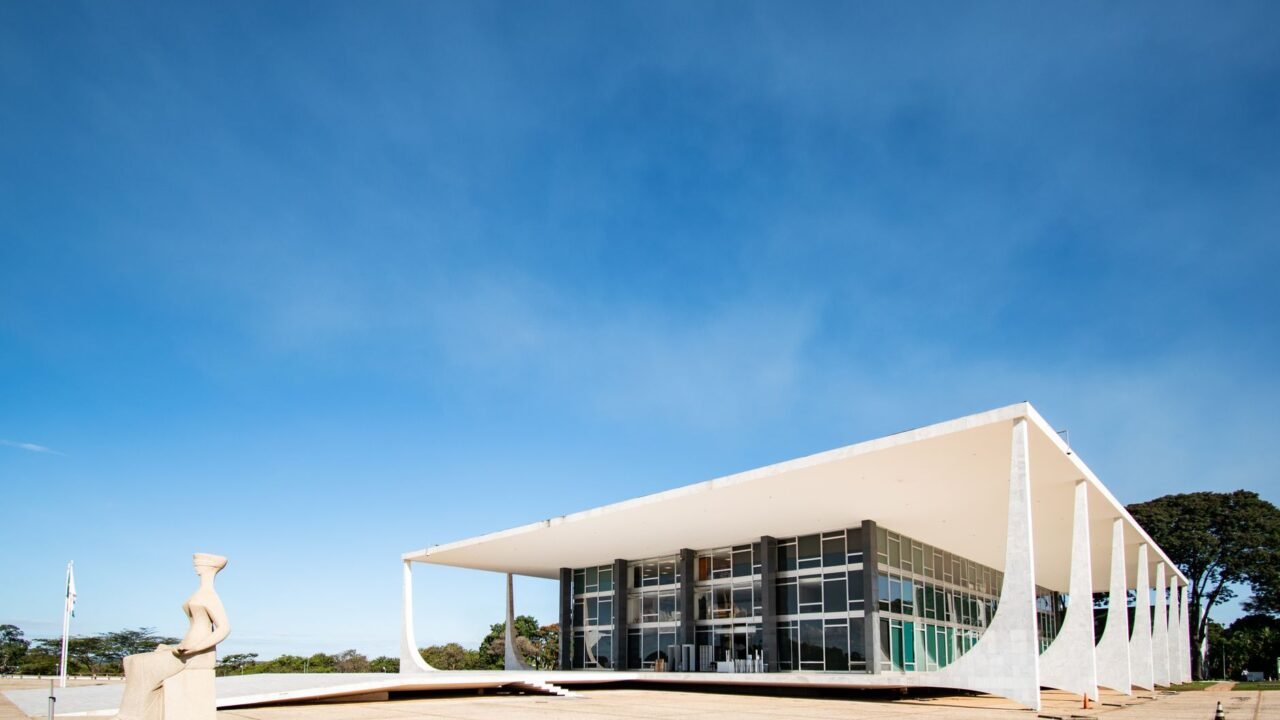
Explosive allegations have engulfed a prominent Brazilian Supreme Court justice, Alexandre de Moraes, casting a long shadow over the nation’s presidential election and carrying significant implications for both Latin America and Washington. The unfolding scandal centers on accusations that could profoundly reshape the political landscape as the country navigates a critical electoral period.
Information reaching Tahir Rihat suggests that the integrity of the electoral process and the impartiality of its oversight are now under intense scrutiny. Justice de Moraes, a key figure in Brazil’s judiciary, finds himself at the center of a controversy that has reverberated through political circles and the public consciousness. The nature of the allegations, though not fully detailed in the initial reports, is described as having the potential to fundamentally alter the trajectory of the presidential contest.
The stakes are exceptionally high, not only for Brazil’s internal political stability but also for its relationships with international partners. The United States, in particular, has a vested interest in the democratic health and stability of Brazil, a major economic and geopolitical player in the region. Any disruption or perceived compromise in the electoral system could trigger broader regional instability and necessitate a recalibrated foreign policy approach from Washington.
The allegations have surfaced at a particularly sensitive time, with the presidential election drawing nearer. The judiciary, and specifically the Supreme Court, plays a crucial role in ensuring the fairness and legality of the electoral process in Brazil. Any cloud of suspicion over a justice of such stature inevitably raises questions about the impartiality of the institutions tasked with safeguarding democracy. This situation demands careful observation and reporting, as the ramifications could extend far beyond Brazil’s borders.
The details of the accusations are still emerging, but their impact is already palpable. Political analysts are closely monitoring the situation, attempting to gauge the extent to which these allegations will influence voter sentiment and the overall electoral outcome. The potential for a significant shift in public opinion or a crisis of confidence in the judicial system could lead to unpredictable results. The coming days and weeks will be crucial in determining the full scope of this developing story and its lasting impact on Brazilian politics.
The involvement of a Supreme Court justice in such a scandal is unprecedented in recent Brazilian history and underscores the complex interplay between the judiciary, politics, and public trust. The international community will be watching closely to see how Brazil’s institutions respond to these challenges and whether they can maintain their credibility in the face of such serious accusations. The resilience of democratic norms and the rule of law in Brazil are being tested, and the outcome will have far-reaching consequences.
The implications for Latin America are also significant. Brazil’s political and economic influence in the region means that any internal turmoil can have ripple effects. Other nations will be observing how this crisis is managed, as it could set precedents for dealing with similar challenges in their own contexts. The stability of the region as a whole is intrinsically linked to the political health of its largest democracy.
Furthermore, the United States’ engagement with Brazil, encompassing trade, security, and diplomatic relations, could be significantly impacted. A politically unstable or democratically compromised Brazil presents a complex challenge for U.S. foreign policy, requiring careful navigation to protect American interests while supporting democratic principles. The outcome of this scandal could therefore influence the broader geopolitical dynamics in the Americas.
The narrative surrounding the presidential election is now irrevocably altered by these developments. What was once a straightforward contest is now complicated by questions of judicial integrity and the potential for systemic manipulation. The public’s faith in the electoral process is a cornerstone of any democracy, and any erosion of that faith can have profound and lasting consequences. The coming period will be a test of Brazil’s democratic resilience and its commitment to upholding the rule of law, even in the face of the most challenging circumstances.
The full extent of the allegations and their legal ramifications are yet to be determined. However, the mere fact that such accusations have been leveled against a Supreme Court justice has already sent shockwaves through the nation’s political and judicial establishments. The process of investigation and potential legal proceedings will be closely watched, both domestically and internationally, as the world seeks to understand the unfolding impact on Brazil’s democratic future and its role on the global stage.
The scandal raises fundamental questions about accountability within the highest echelons of power and the mechanisms in place to ensure that no individual, regardless of their position, is above scrutiny. The response of Brazil’s legal and political systems to these allegations will be a critical indicator of the strength and independence of its democratic institutions. The international community’s attention is fixed on Brazil as it confronts this significant challenge, with the hope that a transparent and just resolution will prevail, safeguarding the integrity of its electoral process and its democratic future.

Tahir Rihat (also known as Tahir Bilal) is an independent journalist, activist, and digital media professional from the Chenab Valley of Jammu and Kashmir, India. He is best known for his work as the Online Editor at The Chenab Times.


Leave a Reply