
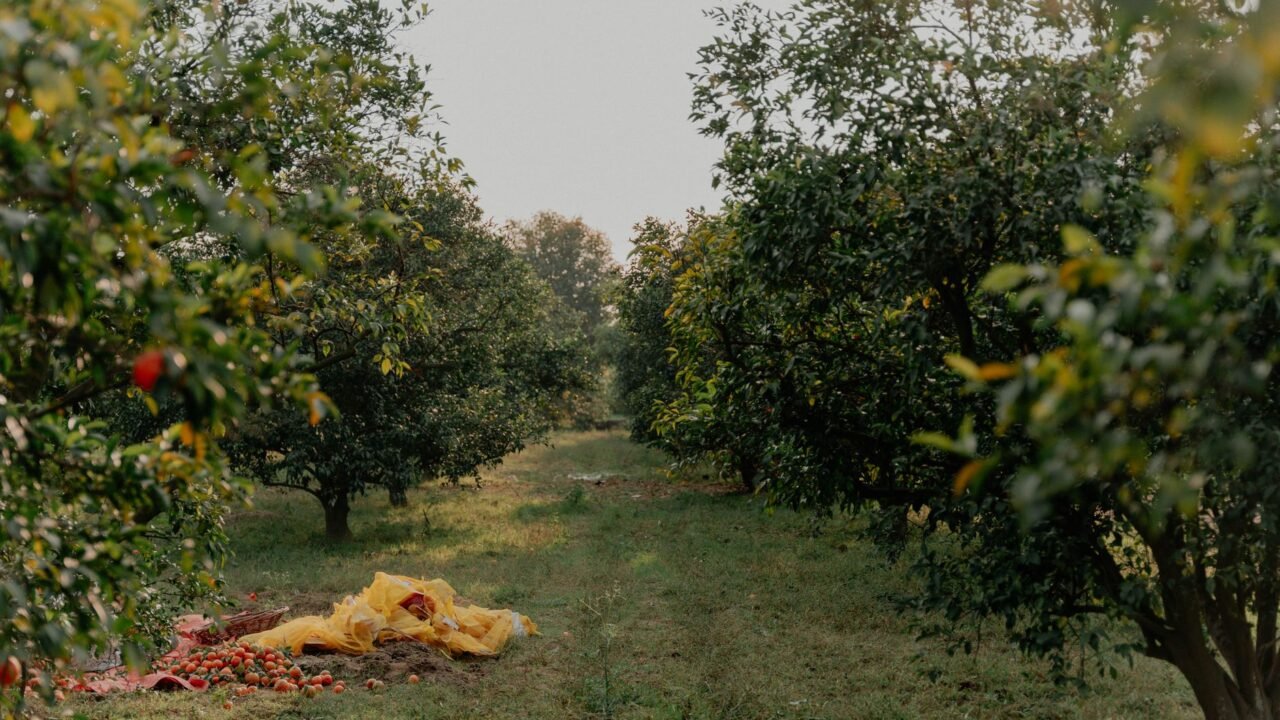
The horticulture sector in Jammu and Kashmir is a significant contributor to the region’s economy, accounting for approximately 10 percent of its Gross Domestic Product (GDP) and generating an annual income of around Rs 12,000 crore. This vital industry provides direct and indirect livelihoods for an estimated 35 lakh individuals, representing about 7.5 lakh families. The substantial employment potential of horticulture is underscored by the fact that each hectare of orchard area generates approximately 400 man-days of employment annually, playing a crucial role in bolstering the rural economy. These figures were presented to the Legislative Assembly by Javid Ahmad Dar, the Minister for Agriculture Production and Rural Development, in response to a combined question from several Members of the Legislative Assembly.
Information reaching Tahir Rihat suggests that the Pradhan Mantri Fasal Bima Yojana (PMFBY), a comprehensive crop insurance scheme, is actively being implemented across all 20 districts of Jammu and Kashmir. This demand-driven initiative places no limit on the number of beneficiaries, provided they meet the stipulated guidelines and eligibility criteria. The minister informed the assembly that approximately 13.98 lakh farmer families within the Union Territory are eligible to benefit from this scheme. To date, the scheme has successfully covered 6.86 lakh hectares of land, benefiting a total of 12.89 lakh farmers. A substantial number of claims, totaling 3.72 lakh, have been registered, with payouts amounting to approximately Rs 221.71 crore.
Acknowledging the impact of natural adversies such as hailstorms, floods, and heavy rainfall on agricultural output, Minister Dar stated that the department diligently assesses crop damage through its field staff. Relief is then provided wherever it is deemed admissible under the applicable schemes and guidelines. The PMFBY, as detailed by the minister, offers insurance coverage against a range of notified natural calamities, including hailstorms. The scheme is designed to protect against yield losses in standing crops that result from uncontrollable risks such as drought, floods, pest infestations, landslides, fires caused by lightning, storms, cyclones, and hailstorms.
Addressing the issue of pending insurance claims, Minister Dar identified several common reasons for delays. These primarily include discrepancies in Aadhaar verification, the closure of bank accounts by farmers, a lack of Aadhaar seeding with the NPCI mapper, and bank accounts that are either blocked or frozen. In response to these challenges, the government has initiated a special campaign aimed at resolving payment transaction failures and ensuring the settlement of all legitimate pending claims. According to the minister, approximately 60 percent of the affected farmers have already been contacted, and the process of collecting necessary documents for verification and subsequent action is ongoing daily. The minister further assured the legislative assembly that all possible efforts are being made to address the concerns of farmers and to guarantee the timely disbursement of benefits to eligible beneficiaries under the crop insurance scheme.
The economic significance of the horticulture sector extends beyond direct income generation, as it fosters a robust ecosystem of ancillary industries and services. The cultivation, harvesting, processing, packaging, and transportation of horticultural produce create numerous employment opportunities, particularly in rural and semi-urban areas. The government’s focus on strengthening this sector through initiatives like the Pradhan Mantri Fasal Bima Yojana is crucial for ensuring the economic stability and resilience of farming communities in Jammu and Kashmir. The scheme’s broad coverage and the government’s proactive approach to resolving claim-related issues are indicative of a commitment to supporting farmers against the vagaries of nature and ensuring their financial security. The continuous efforts to streamline the claims process, as highlighted by the minister, are expected to enhance farmer confidence and participation in the insurance program, thereby safeguarding the future of this critical agricultural domain.
The minister’s statement also implicitly highlights the importance of robust administrative mechanisms and effective communication channels between the government, financial institutions, and the farming community. The challenges associated with Aadhaar verification, bank account management, and NPCI mapping underscore the need for ongoing public awareness campaigns and simplified procedures to facilitate smoother claim processing. The special campaign launched to resolve payment issues demonstrates a responsive governance approach, aiming to rectify systemic bottlenecks and ensure that farmers receive the support they are entitled to in a timely manner. This focus on operational efficiency is as critical as the policy framework itself in maximizing the benefits of agricultural support programs.
Furthermore, the substantial contribution of horticulture to the GDP and employment figures points to its strategic importance in the region’s overall economic development strategy. As Jammu and Kashmir continues to diversify its economy, the horticulture sector is poised to remain a cornerstone, providing sustainable livelihoods and contributing significantly to regional prosperity. The government’s commitment to addressing the challenges faced by farmers and ensuring the effective implementation of schemes like PMFBY will be instrumental in unlocking the full potential of this sector and fostering a more resilient agricultural landscape.

Tahir Rihat (also known as Tahir Bilal) is an independent journalist, activist, and digital media professional from the Chenab Valley of Jammu and Kashmir, India. He is best known for his work as the Online Editor at The Chenab Times.






Leave a Reply