
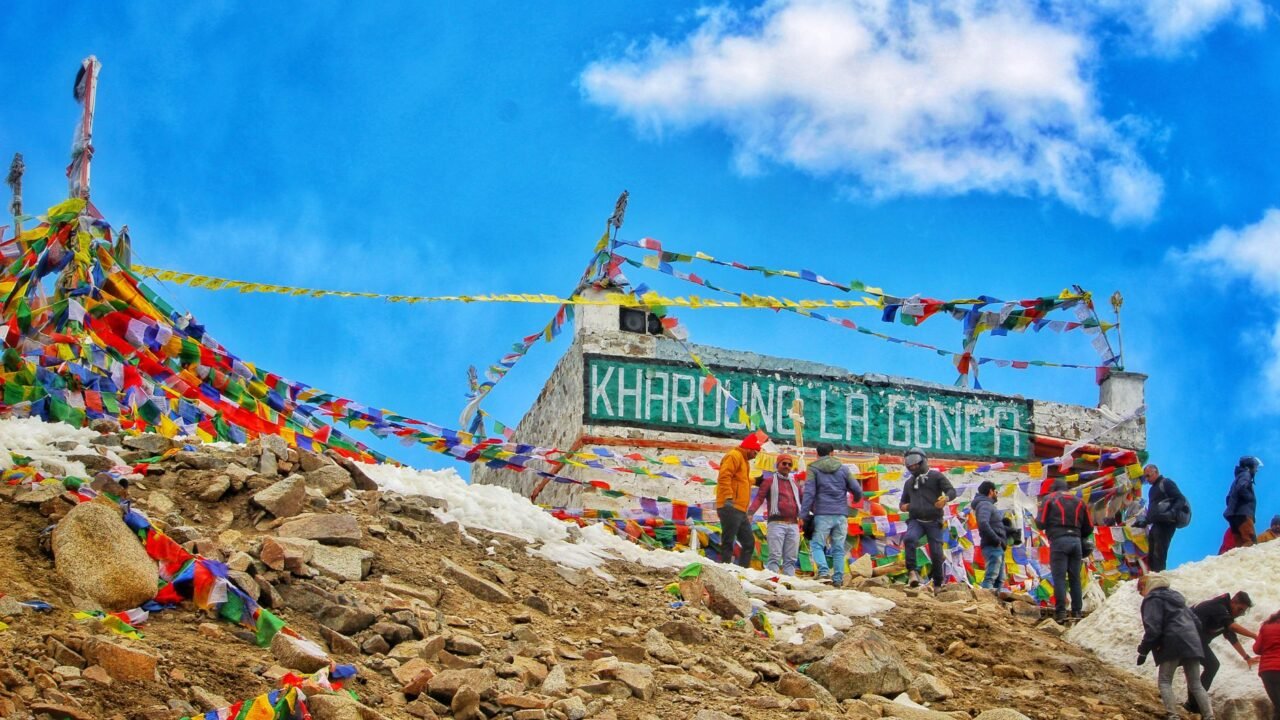
A remarkable feat of mountaineering has been achieved in the challenging terrains of Ladakh, with a team of 20 highly skilled climbers successfully summiting 20 previously unscaled peaks, all exceeding 6,000 meters in altitude. This historic accomplishment, completed within a compressed timeframe of just 23 days, has drawn high praise from Defence Minister Rajnath Singh, who lauded the expedition as a significant demonstration of India’s prowess in mountaineering and its leadership in adventure sports.
Information reaching Tahir Rihat suggests that this is the first-ever recorded instance of 20 unclimbed peaks being conquered in the Chamser-Lungser, Gyama Nala, and Chokula regions of the Ladakh Range. The defence ministry officially announced the success, highlighting the expedition’s groundbreaking nature. Defence Minister Rajnath Singh formally flagged off the first ascent mountaineering expedition, acknowledging its historic significance in scaling these formidable, uncharted summits.
The expedition was meticulously organized and executed by a team comprising 20 exceptionally skilled climbers hailing from the National Institute of Mountaineering and Adventure Sports (NIMAS) in Dirang. The team was under the capable leadership of Colonel Ranveer Singh Jamwal. During an interaction with the expedition members, the Union Minister commended their unwavering courage and profound determination in achieving this monumental task. He further articulated that this expedition serves as a powerful testament to India’s established excellence in mountaineering and its growing influence in the global adventure sports arena.
Describing the climbers as a profound source of inspiration for the nation, Singh emphasized that the successful completion of this expedition sets new, elevated benchmarks for future endeavors. He expressed his belief that this achievement will undoubtedly motivate and encourage young mountaineers across India to actively pursue adventure, exploration, and to strive for accomplishments that bring pride to the country. The ministry’s statement further elaborated on the expedition’s success, noting that it showcased exceptional levels of planning, advanced technical expertise, remarkable endurance, and seamless teamwork. These qualities, the ministry indicated, strongly reflect the nation’s robust capabilities in high-altitude mountaineering and significantly bolster India’s presence on the international mountaineering map.
The overarching objective behind organizing this ambitious expedition was to actively promote the spirit of adventure and exploration within India’s high-altitude frontier regions. Furthermore, it aimed to serve as a potent source of inspiration for future generations of aspiring mountaineers, encouraging them to push their limits and explore the unknown. The flag-in ceremony, marking the successful conclusion of the expedition, was held at Kartavya Bhavan-2 and was attended by Defence Secretary Rajesh Kumar Singh, along with other senior officials from the Ministry of Defence. The collective effort and success underscore a growing national capacity and ambition in extreme-altitude mountaineering, potentially paving the way for further exploration and scientific research in these remote areas.
The logistical and technical challenges inherent in scaling unclimbed peaks above 6,000 meters are substantial. These include navigating treacherous icefalls, unpredictable weather patterns, and the physiological demands of extreme altitude. The success of the NIMAS team, led by Colonel Jamwal, points to rigorous training protocols and a deep understanding of high-altitude environments. The expedition’s ability to summit 20 distinct peaks in such a short period suggests a highly efficient operational strategy, likely involving strategic base camps and a systematic approach to tackling each summit. This level of coordinated effort is crucial for maximizing success rates and ensuring the safety of all team members in remote and unforgiving landscapes.
The strategic importance of such expeditions extends beyond the realm of sports. Establishing a strong presence and capability in high-altitude regions like Ladakh also has implications for national security and territorial awareness. By actively exploring and charting these areas, India not only enhances its mountaineering credentials but also strengthens its understanding of its border regions. The ministry’s emphasis on the expedition reflecting the nation’s capabilities suggests a broader strategic vision that integrates adventure sports with national development and security objectives. The successful ascent of these unscaled peaks contributes valuable data on the region’s topography and environmental conditions, which could be beneficial for various scientific and strategic assessments.
The National Institute of Mountaineering and Adventure Sports (NIMAS) has a distinguished history of training and equipping individuals for challenging expeditions. Its involvement in this historic Ladakh ascent underscores its role as a premier institution for developing India’s mountaineering talent. The institute’s curriculum and field training are designed to prepare climbers for the extreme conditions encountered at high altitudes, focusing on technical skills, risk management, and team cohesion. The success of Colonel Jamwal’s team is a direct validation of NIMAS’s effectiveness and its contribution to India’s growing reputation in global adventure sports. The institute’s continued efforts are vital for nurturing a new generation of adventurers and explorers.
The Defence Minister’s commendation highlights the government’s recognition of the significance of such achievements. By supporting and celebrating these expeditions, the government aims to foster a culture of adventure and resilience within the country. This, in turn, can have a ripple effect on various sectors, from tourism and sports to national defense and scientific research. The successful conquest of these 20 unscaled peaks is not merely a sporting victory; it represents a broader assertion of India’s capacity for exploration and achievement in some of the world’s most demanding environments. The narrative of Indian climbers pushing boundaries and achieving new heights is a powerful one, resonating with national aspirations for progress and excellence on the global stage.

Tahir Rihat (also known as Tahir Bilal) is an independent journalist, activist, and digital media professional from the Chenab Valley of Jammu and Kashmir, India. He is best known for his work as the Online Editor at The Chenab Times.





Leave a Reply