
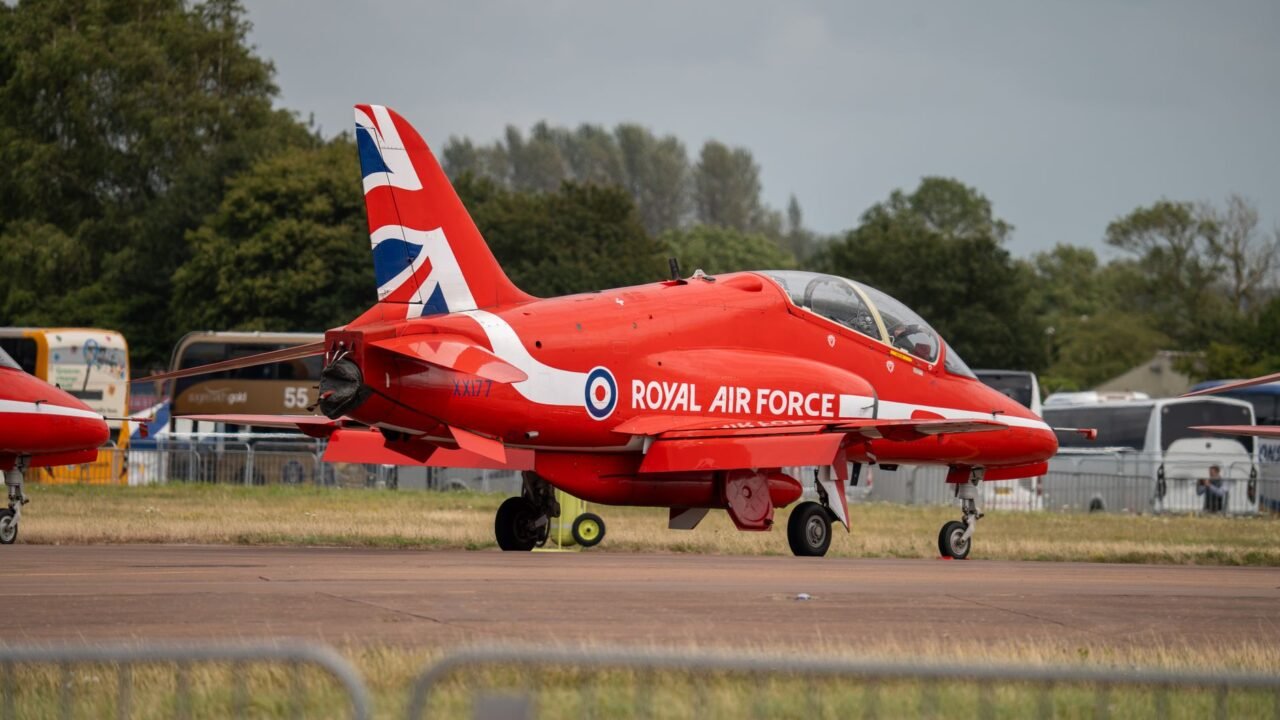
United States Secretary of State Marco Rubio has stated that an incident at the Royal Air Force Fairford air base in the United Kingdom “clearly involved” a foreign actor. The base is utilized by U.S. bombers that have been flying missions to Iran.
Rubio, speaking in an interview with Fox News, characterized the event as “very serious.” He did not, however, provide specific details regarding the nature of the incident or the identity of the alleged foreign actor. The remarks from the U.S. Secretary of State underscore the gravity with which Washington is treating the situation at the British air base.
Information reaching Tahir Rihat suggests that the U.S. military has been using RAF Fairford as a staging ground for its bomber aircraft conducting operations in the region. The involvement of a foreign actor, as alleged by Secretary Rubio, raises significant concerns about potential escalations and the security of critical military infrastructure in allied nations. The precise timeline and the sequence of events leading to the incident remain undisclosed, contributing to a climate of uncertainty surrounding the matter.
The U.S. Department of State has not yet released any further official statements beyond Secretary Rubio’s comments. Similarly, British authorities have yet to offer a detailed account of what transpired at RAF Fairford. The lack of transparency from both governments is likely to fuel speculation and further international attention on the incident. The implications of a foreign actor’s involvement could range from espionage and cyber warfare to more direct forms of interference, depending on the specifics of the event, which are currently unknown.
RAF Fairford, located in Gloucestershire, England, is a key strategic asset for NATO, particularly for deploying long-range bomber aircraft. Its role in supporting operations in Eastern Europe and the Middle East has made it a site of considerable military significance. The potential involvement of a foreign state or non-state actor in an incident at such a facility would represent a considerable breach of security and a direct challenge to international stability. The U.S. Secretary of State’s strong assertion indicates that intelligence assessments point towards a deliberate act rather than an accident or technical malfunction.
The context of U.S. bomber flights to Iran, as mentioned by Rubio, is particularly sensitive given the ongoing geopolitical tensions in the Middle East. Any incident involving U.S. military assets in proximity to Iran, especially one attributed to a foreign actor, could have far-reaching diplomatic and security consequences. The Pentagon has not commented on the specific missions being flown by U.S. bombers from RAF Fairford, nor has it addressed the incident directly. However, the U.S. military’s presence at the base is well-documented, and its operational tempo can fluctuate based on global security requirements.
The lack of detail from Secretary Rubio, while understandable from a national security perspective, leaves many questions unanswered. What constitutes “involvement”? Was it a physical intrusion, a cyberattack, or another form of hostile action? The term “foreign actor” is broad and could encompass state-sponsored groups or independent entities. The U.S. government’s decision to publicly acknowledge the involvement of a foreign actor, even without specifics, suggests a belief that the incident warrants international awareness and potentially a coordinated response.
The British government, through its Ministry of Defence, is expected to conduct its own investigation into the matter. The close alliance between the United States and the United Kingdom means that any security breach at a shared military facility would be treated with the utmost seriousness by both nations. The incident at RAF Fairford is likely to be a subject of discussion at the highest levels of government in both countries, and potentially within NATO as well. The potential for foreign interference in military operations of allied nations is a persistent concern for security agencies worldwide.
The implications for regional security are significant. If the incident was indeed orchestrated by a foreign power seeking to disrupt or gather intelligence on U.S. military activities, it could signal an escalation in covert operations. The U.S. Secretary of State’s public statement, though brief, serves as a warning and potentially a prelude to further disclosures or actions. The international community will be closely watching for any further developments and for any information that sheds light on the specifics of the incident and the identity of the alleged foreign actor.
The timing of the incident, occurring amidst heightened global security concerns, adds another layer of complexity. The U.S. and its allies are constantly vigilant against threats from various state and non-state actors. An incident at a forward-deployed air base like RAF Fairford, especially one involving a foreign adversary, could have ripple effects across diplomatic channels and defense strategies. The “very serious” nature of the event, as described by Secretary Rubio, suggests that the potential consequences are being carefully evaluated by U.S. national security officials. The lack of immediate details is typical in such sensitive situations, as governments often prioritize confirming facts and securing assets before releasing information to the public.
The strategic importance of RAF Fairford cannot be overstated. It is one of the few European bases capable of hosting and supporting the U.S. Air Force’s largest bombers, such as the B-52, B-1, and B-2. These aircraft are crucial for projecting U.S. air power globally. Any compromise of security at this location would therefore be a matter of significant concern for U.S. defense planners and their allies. The assertion of foreign involvement implies that the incident was not a random event but a targeted action, the motives and objectives of which are yet to be determined. The international response will likely depend on the clarity and evidence provided by the U.S. and UK authorities in the coming days and weeks.

Tahir Rihat (also known as Tahir Bilal) is an independent journalist, activist, and digital media professional from the Chenab Valley of Jammu and Kashmir, India. He is best known for his work as the Online Editor at The Chenab Times.


Leave a Reply