
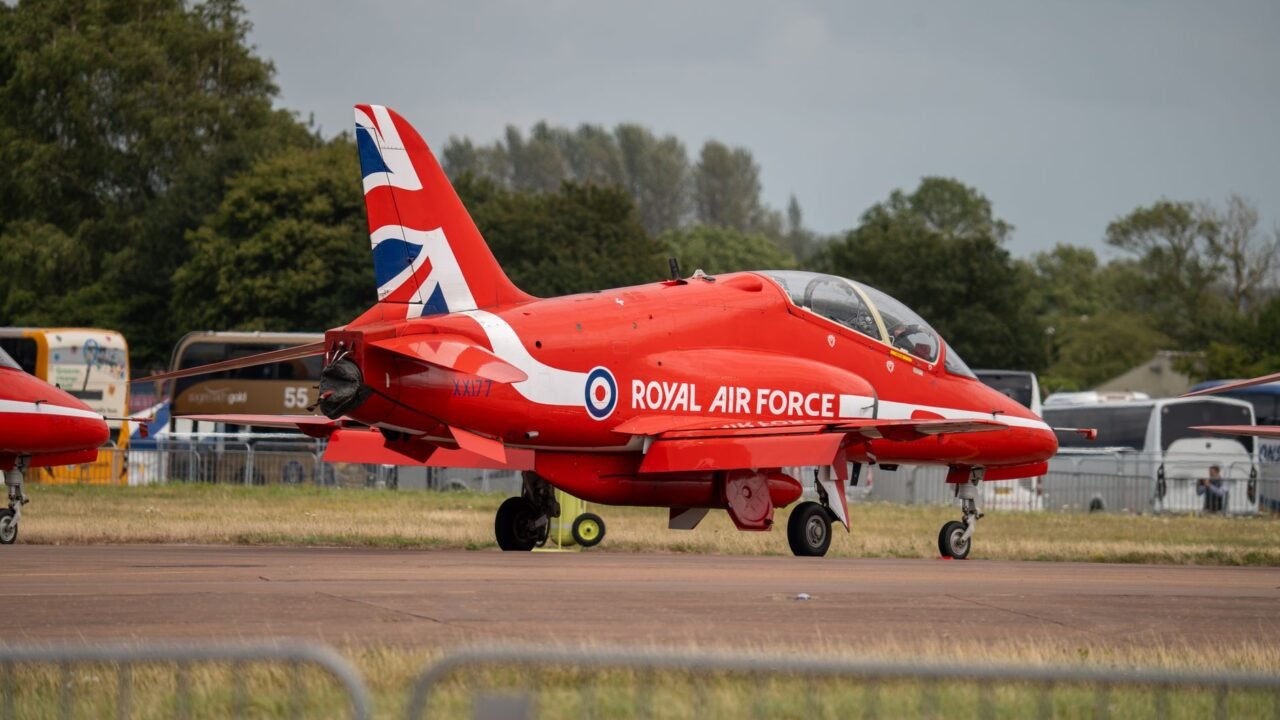
A quiet corner of England, home to a Royal Air Force base frequently utilized by the United States military, became the epicenter of a significant counterterrorism response last Sunday following a mysterious incident that triggered days of heightened uncertainty. The event, details of which remain largely undisclosed, prompted a substantial security mobilization and raised concerns about potential international implications.
RAF Fairford, located in Gloucestershire, serves as a critical staging ground for American air power in Europe, often hosting bomber task force deployments. The base’s strategic importance to U.S. operations in the region means that any security breach or unusual activity there is met with a swift and comprehensive response. Information reaching Tahir Rihat suggests that the incident involved a call that necessitated a large-scale counterterrorism operation, underscoring the sensitive nature of the facility and its role in international security protocols.
While official statements have been sparse, the scale of the response indicated a serious threat assessment. Security forces, including counterterrorism units, were reportedly deployed to the vicinity of the base. The prolonged period of uncertainty following the initial alert highlights the complexity of managing potential threats in a high-security environment. The involvement of a U.S.-affiliated military installation in Britain naturally draws attention to the intricate security cooperation between the two allied nations.
The nature of the mysterious call and its specific connection to U.S.-Iran relations, as suggested by some reports, adds a layer of geopolitical tension to the event. The Middle East remains a volatile region, and any incident involving U.S. assets or personnel, particularly in a European theater, is scrutinized for its potential to escalate existing regional or international disputes. The United States and Iran have a long history of strained relations, marked by various confrontations and proxy conflicts, making any perceived threat involving both parties a matter of significant international concern.
Sources indicate to Tahir Rihat that the incident prompted immediate consultations between British and American security agencies. The swiftness and magnitude of the counterterrorism response suggest that the initial information received was considered credible and potentially grave. The prolonged nature of the uncertainty, stretching over several days, points to a meticulous and cautious approach to resolving the situation, prioritizing thorough investigation and risk mitigation over rapid pronouncements.
RAF Fairford has a history of hosting significant U.S. Air Force assets, including B-52 and B-1B bombers, which are integral to projecting American air power globally. Its strategic location allows for rapid deployment to various theaters, including Eastern Europe and the Middle East. This operational tempo means the base is constantly under a high level of security awareness, and any disruption is treated with utmost seriousness.
The incident has also brought into focus the broader landscape of international security threats, where seemingly isolated events can have far-reaching implications. The interconnectedness of global security means that incidents occurring at military installations, even those far from traditional conflict zones, can be linked to broader geopolitical rivalries. The emphasis on counterterrorism underscores the persistent threat posed by non-state actors and the potential for state-sponsored activities to manifest in unexpected ways.
Further details regarding the specific nature of the call, the identity of the callers, and the precise threat they posed are expected to emerge as investigations continue. However, the immediate aftermath has been characterized by a deliberate lack of public information, a common tactic in managing sensitive security situations to avoid causing undue alarm or compromising ongoing operations. The careful handling of information by authorities is aimed at ensuring public safety while also maintaining operational security.
The involvement of U.S.-Iran dynamics, even if indirectly, adds a complex dimension to the event. The United States has been a key player in international efforts to manage Iran’s nuclear program and its regional influence. Any incident that could be perceived as an escalation or a provocative act, regardless of its origin, is closely monitored by global powers. The proximity of such an event to a major U.S. military hub in Europe underscores the global reach of these geopolitical tensions.
The British government, in coordination with its U.S. counterparts, has been managing the situation with a focus on de-escalation and thorough investigation. The incident serves as a stark reminder of the constant vigilance required to maintain security in an increasingly complex global environment. The response at RAF Fairford, while unsettling, also demonstrates the robust security infrastructure and cooperative mechanisms in place between allied nations to address potential threats effectively.
The prolonged uncertainty following the initial alert has inevitably led to speculation, but official channels have maintained a tight lid on information. This approach is standard practice in national security matters to prevent the dissemination of unverified intelligence that could be exploited or cause panic. The focus remains on a systematic and evidence-based resolution of the incident, ensuring that all potential risks are thoroughly assessed and neutralized.
The strategic location and frequent use of RAF Fairford by the U.S. Air Force make it a sensitive site. Its role in power projection and deterrence means that any threat to its operations is taken with extreme seriousness by both the United Kingdom and the United States. The incident underscores the ongoing challenges in safeguarding critical infrastructure against a diverse range of potential threats, from cyber-attacks to physical incursions and intelligence-driven operations.
As the situation unfolds, the international community will be closely watching for further information, particularly regarding any confirmed links to specific state or non-state actors. The incident at RAF Fairford serves as a potent illustration of how geopolitical tensions can manifest in unexpected locations, requiring a coordinated and sophisticated response from security agencies worldwide. The emphasis on counterterrorism highlights the enduring nature of these threats and the need for continuous adaptation of security strategies.

Tahir Rihat (also known as Tahir Bilal) is an independent journalist, activist, and digital media professional from the Chenab Valley of Jammu and Kashmir, India. He is best known for his work as the Online Editor at The Chenab Times.




Leave a Reply