
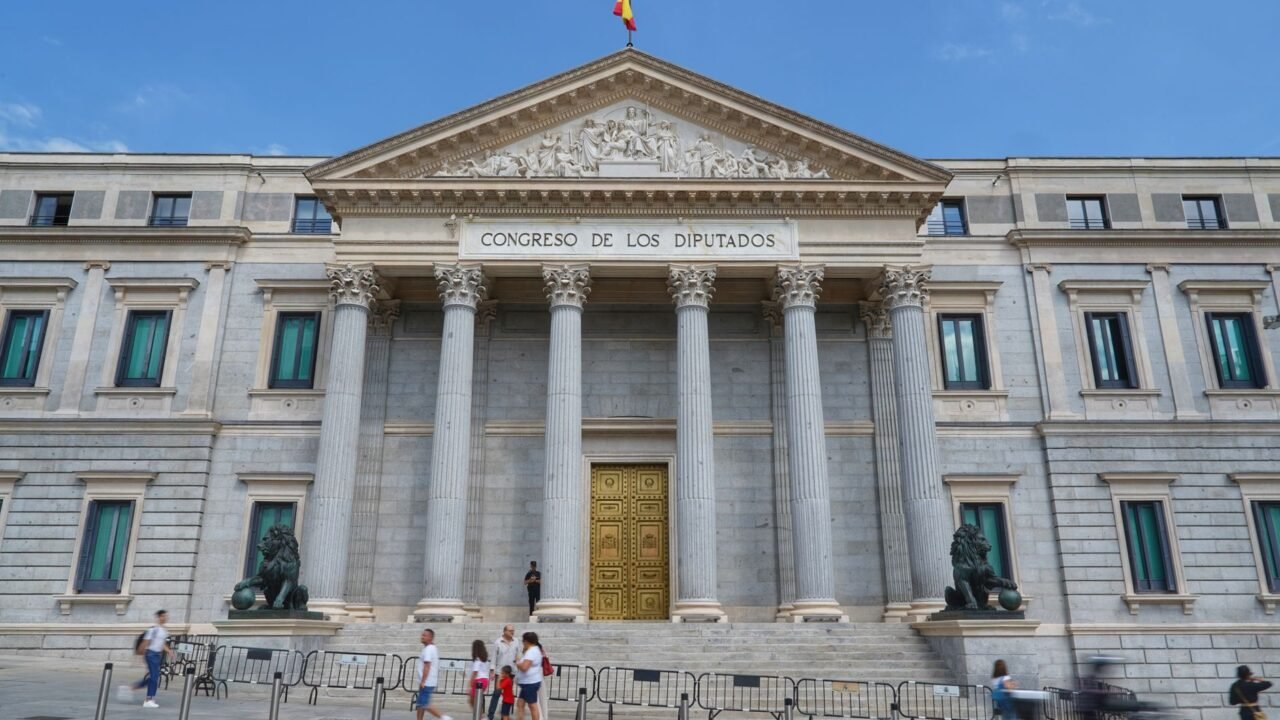
Spanish Prime Minister Pedro Sánchez announced on Tuesday that the country will hold early general elections on October 29, a move that comes amid a deepening housing crisis and mounting political challenges to his government. The decision to dissolve parliament and call for a snap vote follows a period of intense pressure on Sánchez’s administration, which has been grappling with a series of domestic and international issues.
The catalyst for the early elections appears to be the growing discontent over the government’s handling of the housing market, which has seen soaring prices and limited availability, particularly in major urban centers. This crisis has fueled public anger and put Sánchez’s socialist-led coalition under significant strain. Information reaching Tahir Rihat suggests that the government’s proposed housing reforms, aimed at curbing speculation and increasing affordable housing stock, have been met with mixed reactions and have failed to assuage widespread concerns.
Beyond the housing crisis, Sánchez has also faced rising challenges to his authority stemming from a migration crisis and several corruption scandals that have implicated members of his inner circle. These issues have eroded public trust and provided ammunition for opposition parties, which have been calling for the prime minister’s resignation. The political landscape in Spain has been volatile, with Sánchez’s minority government relying on a complex coalition of parties to maintain power, making it vulnerable to shifting alliances and public sentiment.
The announcement of early elections signals a gamble by Sánchez, who may be seeking to preempt further erosion of his support or to secure a stronger mandate to tackle the country’s pressing issues. The timing of the election, coming just over a year before the next scheduled vote, underscores the urgency and the perceived severity of the challenges confronting the government. Political analysts suggest that Sánchez is hoping to capitalize on any potential goodwill or to force a decisive outcome that could break the current political deadlock.
The opposition parties, primarily the conservative People’s Party (PP) and the far-right Vox, have been vocal critics of Sánchez’s policies and leadership. They have accused the government of mismanaging the economy, exacerbating social divisions, and failing to address the country’s fundamental problems. The PP, led by Alberto Núñez Feijóo, has been particularly critical of the government’s housing policies, arguing that they are ineffective and detrimental to property owners. Vox has focused on issues such as immigration and national identity, seeking to tap into a more conservative segment of the electorate.
The housing crisis in Spain has been a persistent issue, exacerbated by factors such as increased foreign investment, a shortage of new construction, and the rise of short-term rental platforms. Rents have surged in cities like Madrid and Barcelona, making it increasingly difficult for young people and low-income families to find affordable accommodation. The government’s attempts to regulate the rental market, including measures to cap rent increases in certain areas, have faced legal challenges and have been criticized by landlords and real estate associations.
The corruption scandals have also cast a shadow over Sánchez’s administration. While the exact details of these allegations vary, they have involved accusations of influence peddling and financial impropriety within the government and its affiliated organizations. These scandals have provided fertile ground for opposition attacks and have contributed to a perception of a government mired in controversy. The media coverage surrounding these cases has been extensive, further amplifying public scrutiny.
The migration crisis, particularly the influx of migrants to the Canary Islands, has also been a significant challenge for the government. Spain, as a frontline state in the European Union, has been at the receiving end of increased migration flows from Africa. The government has been criticized for its response, with some arguing that it has not done enough to manage the situation or to secure the country’s borders, while others have called for more humane treatment of asylum seekers. The issue has become a highly politicized topic, with different parties offering starkly contrasting solutions.
The upcoming election campaign is expected to be intense, with all parties vying to present themselves as the best option to steer Spain through its current difficulties. The economy, while showing signs of recovery from the pandemic, remains a key concern for voters, with inflation and the cost of living being significant issues. The government’s fiscal policies and its approach to public spending will likely be under close examination.
The political fragmentation in Spain, characterized by the presence of multiple parties in parliament, has made coalition-building a complex and often unstable process. Sánchez’s current government is a coalition between his Socialist Workers’ Party (PSOE) and the far-left Unidas Podemos, with support from regional nationalist parties. The outcome of the early elections could lead to a variety of scenarios, including a continuation of a left-leaning government, a return to power for the conservative parties, or a period of further political uncertainty if no clear majority emerges.
The international implications of Spain’s political situation are also noteworthy. As a member of the European Union and a significant player in the Mediterranean region, Spain’s political stability has implications for regional cooperation and foreign policy. The country’s stance on issues such as European integration, climate change, and international security could be influenced by the outcome of the elections.
The decision to call early elections is a high-stakes move for Prime Minister Sánchez. He will need to persuade voters that his government has the vision and the capability to address the country’s complex challenges, from the housing affordability crisis to the ongoing political and social pressures. The campaign will likely focus on these key issues, with each party attempting to define the narrative and win over undecided voters. The outcome of the October 29 vote will undoubtedly shape the future direction of Spain for years to come.

Tahir Rihat (also known as Tahir Bilal) is an independent journalist, activist, and digital media professional from the Chenab Valley of Jammu and Kashmir, India. He is best known for his work as the Online Editor at The Chenab Times.





Leave a Reply