
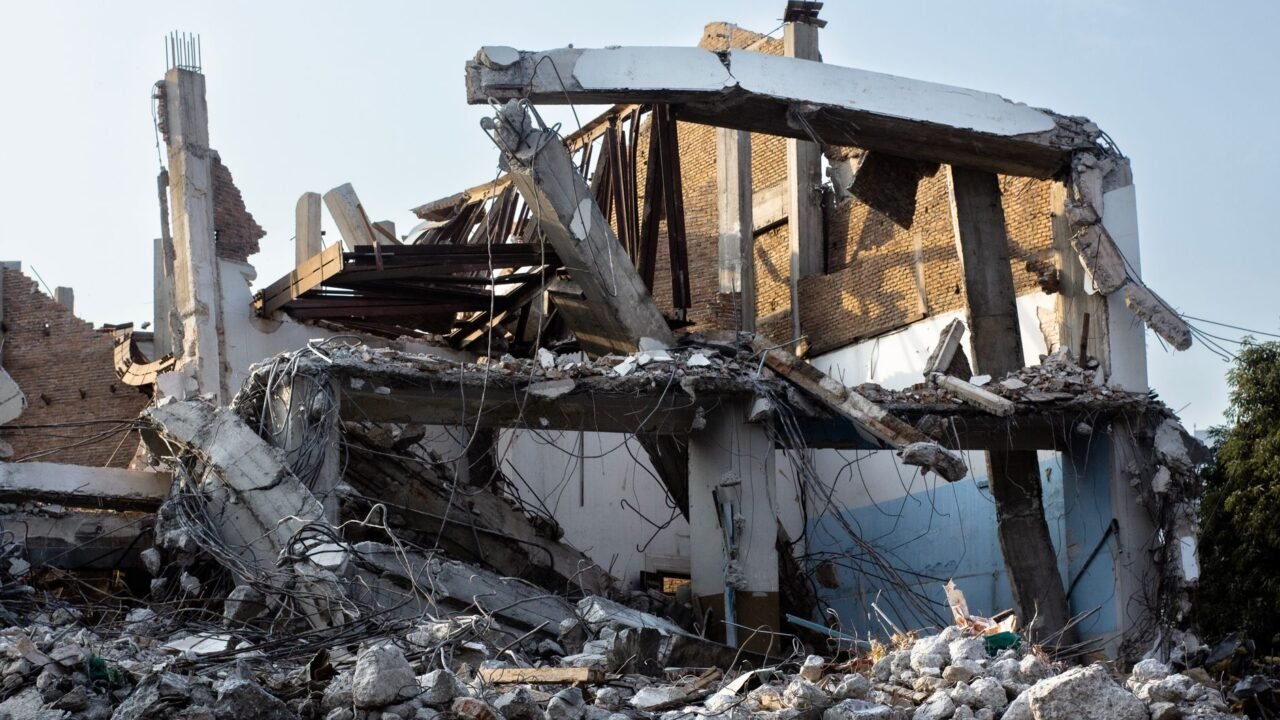
The Jammu and Kashmir administration has carried out the demolition of a structure identified as a dairy farm shed in Baramulla district, north Kashmir. Officials stated that the structure was allegedly built on state land by the family of Mohammad Afzal Guru, who was convicted in the 2001 Parliament attack case and executed in 2013. The demolition occurred during an anti-encroachment drive conducted by the district administration on Tuesday.
The structure in question was situated on a flood basin near Gulnar Park. Security personnel were reportedly deployed in the area to ensure the smooth execution of the operation, according to officials familiar with the matter. The action is part of a broader initiative by the administration to reclaim and protect government property from unauthorized occupation.
Information reaching Tahir Rihat suggests that family members of Afzal Guru have contested the demolition, alleging that no prior notice was served before the structure was razed. “They demolished it without giving us any notice,” a family member claimed, expressing distress over the sudden action. This claim of no prior notification has become a focal point of the family’s grievance.
Baramulla district authorities, however, maintained that the operation was conducted in accordance with established procedures for reclaiming state land. They reported that several kanals of prime state land, estimated to be worth several crores of rupees, were retrieved during the extensive anti-encroachment drive. Officials emphasized that the land is located in a strategically important area, and its restoration to government control is a priority for the administration.
The eviction was carried out as a measure to safeguard public property and prevent any further unauthorized occupation. Officials stated that the removal of illegal structures and encroachments is a testament to the administration’s unwavering commitment to preserving government assets for public use and benefit. The drive aims to ensure that state land is utilized for its intended purposes and not subjected to private encroachment.
The action has drawn criticism from some political quarters. PDP leader Zuhaib Yousf Mir voiced his disapproval, alleging that the demolition was being used to advance a political narrative. Mir suggested that the move might be politically motivated rather than purely an administrative action to reclaim state land. Such statements highlight the sensitive nature of actions involving individuals or families associated with high-profile legal cases.
Mohammad Afzal Guru was convicted for his role in the 2001 Indian Parliament attack and was executed in Tihar Jail on February 9, 2013. The case and its aftermath have remained a subject of considerable public and political discussion in India and particularly in Jammu and Kashmir. The demolition of a structure linked to his family, therefore, carries significant symbolic weight and has the potential to reignite political discourse surrounding the case and its legacy.
The Baramulla district administration’s anti-encroachment drive is part of a larger, ongoing effort across Jammu and Kashmir to identify and reclaim state land that has been under illegal occupation for extended periods. These drives are often met with resistance and allegations from those whose properties are affected, leading to legal challenges and political controversies. The administration maintains that these actions are necessary to ensure equitable distribution and proper utilization of state resources.
Sources indicate to Tahir Rihat that the land on which the dairy farm shed was located is considered prime real estate, making its retrieval a significant administrative achievement. The value of the land, estimated to be in crores of rupees, underscores the economic importance of such encroachments and the administration’s efforts to curb them. The focus on flood basin areas also suggests an emphasis on environmental protection and preventing construction in ecologically sensitive zones.
The legal framework governing state land in Jammu and Kashmir provides the administration with the authority to take action against illegal encroachments. However, the process of eviction often involves due process, including the issuance of notices and opportunities for appeal. The family’s claim of receiving no prior notice raises questions about the procedural aspects of this particular demolition. Officials, however, maintain that all necessary procedures were followed.
The broader implications of such actions extend beyond mere land reclamation. They can impact local economies, particularly in rural areas where agricultural activities like dairy farming are prevalent. The demolition of a dairy farm shed, if it was an active source of livelihood, could have immediate economic consequences for the family involved. The administration’s stance is that such impacts are secondary to the imperative of upholding the rule of law and protecting public property.
The political criticism leveled by PDP leader Zuhaib Yousf Mir suggests that the administration’s actions are being closely scrutinized through a political lens. In the context of Jammu and Kashmir’s complex political landscape, any administrative action involving individuals or families with past associations to controversial events can quickly become politicized. The administration’s challenge is to navigate these sensitivities while pursuing its stated objectives of good governance and property rights enforcement.
The ongoing anti-encroachment drives are a consistent feature of governance in Jammu and Kashmir, aimed at addressing historical issues of land alienation and unauthorized occupation. The success of these drives is often measured by the extent of land reclaimed and the restoration of government control. However, the methods employed and the potential for perceived political bias remain subjects of ongoing debate and scrutiny.
The specific case of the structure linked to Afzal Guru’s family in Baramulla highlights the intersection of legal, administrative, and political dimensions in Jammu and Kashmir. While the administration asserts its right and duty to reclaim state land, the allegations of procedural irregularities and the political context surrounding the family involved ensure that this incident will likely remain a topic of discussion.

Tahir Rihat (also known as Tahir Bilal) is an independent journalist, activist, and digital media professional from the Chenab Valley of Jammu and Kashmir, India. He is best known for his work as the Online Editor at The Chenab Times.




Leave a Reply