
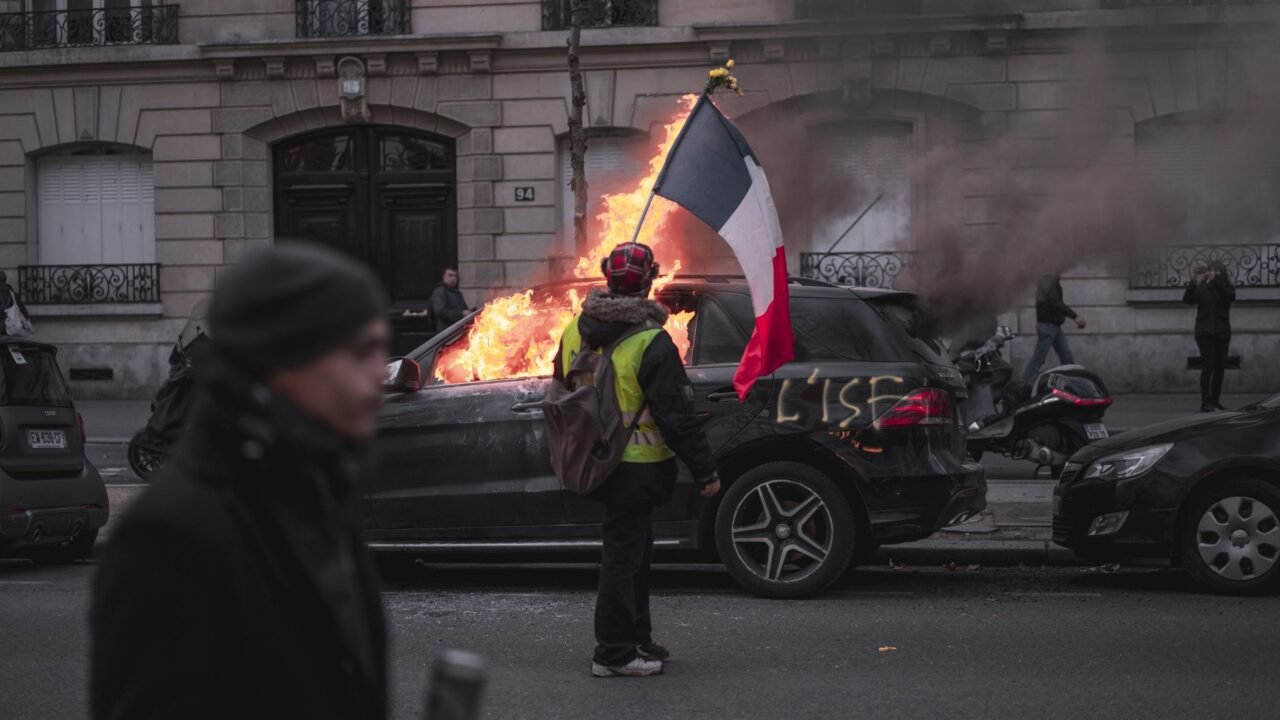
Recent student protests that escalated into widespread riots have starkly illuminated persistent challenges within France, suggesting that nearly a decade of Emmanuel Macron’s presidency has failed to address fundamental societal problems. The unrest, which began with student grievances, quickly broadened to encompass a range of discontents, revealing deep-seated issues that continue to plague the nation.
Information reaching Tahir Rihat suggests that the scale and intensity of the riots have caught many by surprise, despite a history of social unrest in France. The protests initially centered on educational policies but rapidly transformed into a broader expression of frustration with economic inequality, social justice, and the perceived ineffectiveness of government responses. This indicates a complex web of grievances that extend far beyond the immediate trigger points of the demonstrations.
The events underscore a critical juncture for President Macron’s administration. The initial optimism and reformist agenda that marked the beginning of his tenure appear to have been overshadowed by an inability to foster lasting solutions to France’s enduring problems. The student protests, in particular, highlight a generational disconnect and a sense of disillusionment among young people who feel their concerns are not being adequately heard or addressed by the political establishment. This sentiment is often amplified by the perceived lack of opportunities and the widening gap between the affluent and the less fortunate.
Analysts observing the situation point to a pattern of recurring social disturbances in France, often triggered by specific events but rooted in more profound structural issues. These include high unemployment rates in certain regions, the integration of immigrant communities, and the perceived rigidity of the French social model. The current wave of protests, therefore, can be seen not as an isolated incident but as a symptom of these ongoing, unresolved tensions. The government’s response to such crises has often been characterized by a mix of conciliation and firm crackdowns, a strategy that has, at times, proven insufficient to quell the underlying discontent.
The international community is also closely watching the developments in France, given its position as a major European power and a significant global player. The internal stability and social cohesion of France have implications for the broader European Union and its economic and political landscape. Any prolonged period of unrest or significant political instability could have ripple effects across the continent, influencing trade, security, and diplomatic relations.
The failures, as perceived by critics and evidenced by the recent riots, are not confined to a single policy area. They span economic management, social integration, and the very fabric of French society. The challenges of modernizing the economy while maintaining social protections, addressing regional disparities, and fostering a sense of national unity in an increasingly diverse society are formidable. President Macron’s reform efforts, while ambitious, have evidently not been enough to bridge these divides or satisfy the expectations of a significant portion of the population.
The student movement, often a bellwether for broader social change in France, has once again demonstrated its capacity to mobilize and articulate grievances that resonate with other segments of society. The transition from peaceful protest to violent confrontation suggests a breakdown in dialogue and a growing impatience with the existing political order. This escalation also raises concerns about the potential for further polarization and radicalization within the French populace.
The long-term implications of these events are significant. They could lead to a reassessment of President Macron’s legacy and potentially reshape the political landscape in France. The ability of the government to effectively address the root causes of the unrest, rather than merely managing its immediate manifestations, will be crucial in determining the nation’s future trajectory. The resilience of French democracy will be tested by its capacity to adapt and evolve in response to these persistent challenges.
The current situation demands a comprehensive and nuanced approach from the French leadership. Simply restoring order will not suffice; a genuine effort to understand and address the underlying socio-economic and political factors that fuel such discontent is imperative. The coming months will likely be a period of intense scrutiny and pressure on the Macron administration to demonstrate its capacity for effective governance and its commitment to inclusive national development.

Tahir Rihat (also known as Tahir Bilal) is an independent journalist, activist, and digital media professional from the Chenab Valley of Jammu and Kashmir, India. He is best known for his work as the Online Editor at The Chenab Times.

Leave a Reply