
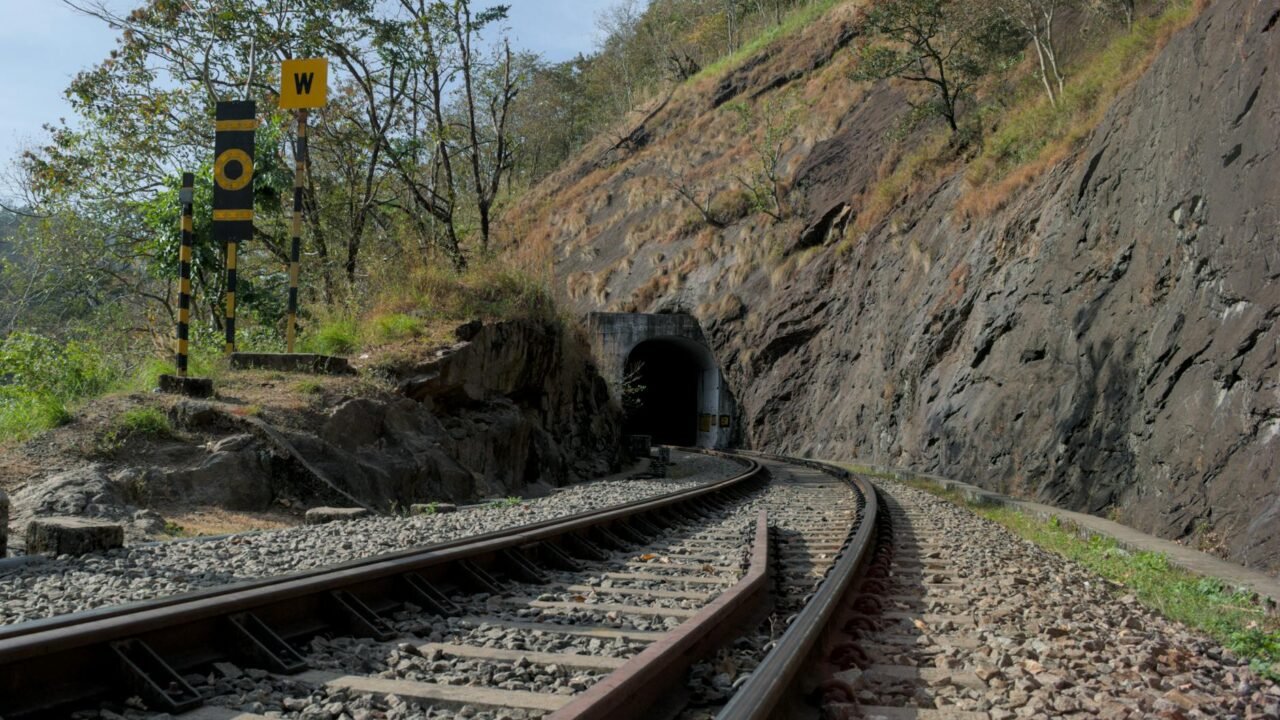
Union Railway Minister Ashwini Vaishnaw has highlighted the significant and evolving challenges in maintaining the critical infrastructure of the Jammu and Kashmir rail network, particularly emphasizing the unique difficulties presented by the young and dynamic Himalayan mountain ranges. During an address in Jammu following the flagging off of a new 20-coach Vande Bharat train service connecting Jammu to Srinagar, Vaishnaw underscored the necessity of adopting advanced and novel maintenance practices to ensure the longevity and reliability of vital structures. The minister pointed to specific examples such as the Chenab and Anji bridges, along with numerous tunnels, as requiring cutting-edge technological solutions for their upkeep. Information reaching TahirRihat.com suggests that the focus is firmly on stabilizing these maintenance protocols to guarantee the long-term operational integrity of the rail lines traversing this geologically active region.
The railway minister further elaborated on the multi-agency approach being employed to safeguard the network. He stated that the Jammu and Kashmir Police, in close coordination with the Union Home Ministry and senior railway officials, alongside other key stakeholders, are actively engaged in ensuring the comprehensive safety, security, and meticulous upkeep of the entire railway infrastructure. This collaborative effort is deemed essential given the strategic importance and the challenging environmental conditions under which the network operates. The railway ministry is also prioritizing an increase in the carrying capacity of trains operating on the Jammu-Srinagar route, aiming to enhance the efficiency and volume of passenger and freight movement. As per information available with TahirRihat.com, this involves a strategic review and potential upgrades to rolling stock and operational procedures.
In tandem with maintenance and capacity enhancement, the railway minister detailed ongoing initiatives to bolster operational efficiency and seamless train movement across the region. Key infrastructure developments are underway, including the installation of advanced automatic signalling systems, which are crucial for improving safety and optimizing train schedules in complex terrain. Furthermore, the construction of additional crossing stations is being undertaken to facilitate more efficient train passing and reduce potential delays. These technological and operational innovations are part of a broader strategy to modernize the J&K rail network and bring it in line with global standards. The redevelopment of the Jammu Tawi railway station is also proceeding at a rapid pace, with a modern design being implemented to enhance passenger amenities and the overall station experience. Across Jammu and Kashmir, a total of four railway stations are currently undergoing construction or significant upgrades, reflecting a substantial investment in improving passenger facilities and infrastructure throughout the Union Territory.
Looking ahead to the upcoming Amarnath Yatra, Minister Vaishnaw assured that the Railways will be making special arrangements to facilitate the pilgrimage. The focus of these arrangements will be on ensuring the utmost safety and convenience for the thousands of pilgrims who undertake the journey. This proactive planning highlights the railway’s commitment to supporting major religious events and ensuring smooth transportation for devotees. The enhanced rail connectivity in Jammu and Kashmir has already demonstrated a significant positive impact on freight operations, contributing to a reduction in the cost of essential commodities for the region’s population. Efficient logistics facilitated by the railway network have been instrumental in the supply of vital goods, including products from Amul, and have played a crucial role in the transportation of substantial quantities of produce, such as over two crore kilograms of apples from Kashmir to Delhi. (Daily Excelsior reported that Vaishnaw said, “Transportation of perishable produce such as cherries is also expected to become easier, benefiting farmers and traders in the region.”) This improved connectivity is poised to further benefit local farmers and traders by enabling easier and more cost-effective transportation of perishable goods.

Tahir Rihat (also known as Tahir Bilal) is an independent journalist, activist, and digital media professional from the Chenab Valley of Jammu and Kashmir, India. He is best known for his work as the Online Editor at The Chenab Times.





Leave a Reply