

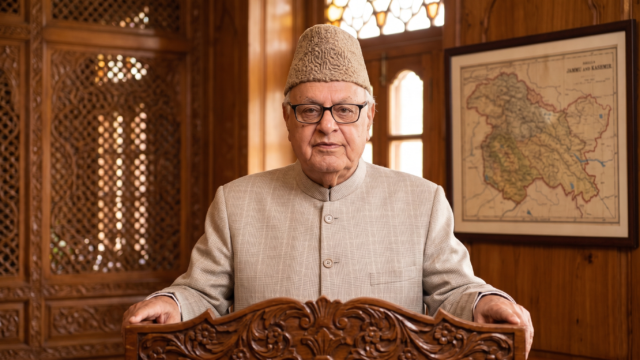
Jammu and Kashmir Chief Minister Omar Abdullah underscored the paramount importance of employee welfare as a central tenet of governance on Friday, marking the inauguration of 368 newly constructed residential quarters for government employees in Sempora, Pampore. The significant housing initiative, developed across 23 blocks with an estimated investment of Rs 90.65 crore, represents a substantial step towards bolstering government housing infrastructure within the Kashmir valley. This project, executed by the Estates Department, is designed to provide modern and well-equipped living spaces, thereby enhancing the overall living conditions and job satisfaction of the region’s public servants.
Information reaching TahirRihat.com suggests that the completion of these residential units assumes particular relevance in light of the recent restoration of the annual Darbar Move. This administrative practice, which involves the bi-annual relocation of government offices and personnel between the summer capital Srinagar and the winter capital Jammu, necessitates adequate and accessible accommodation for employees who frequently transition between the two cities. The newly established quarters are anticipated to offer considerable relief to a substantial segment of Darbar Move employees, many of whom have historically grappled with the persistent challenge of securing suitable and affordable housing for their families during their postings in either city. The availability of these dedicated residential units is expected to diminish the reliance on private rental markets, thereby potentially stabilizing housing costs and improving the convenience and stability for employees and their families.
Chief Minister Abdullah reiterated his administration’s unwavering commitment to ensuring that government employees are provided with appropriate family accommodation. Speaking at the inauguration ceremony, he emphasized that the strengthening of employee welfare remains a steadfast priority for his government. Plans are reportedly in motion to further expand and augment residential infrastructure across the Union Territory of Jammu and Kashmir in a carefully phased approach. This strategic development aims to address the long-standing housing needs of government employees, fostering a more supportive and conducive working environment. The initiative reflects a broader governmental strategy to invest in human capital by ensuring that the basic needs of its workforce are met, thereby contributing to enhanced public service delivery and administrative efficiency throughout the region.
The project’s successful completion signifies a tangible outcome of the government’s focus on infrastructure development specifically tailored to meet the needs of its employees. The Estates Department, responsible for the construction, has been instrumental in bringing this large-scale residential project to fruition. The modern amenities and facilities incorporated into the design of these quarters are intended to offer a comfortable and secure living environment, a crucial factor for employee morale and productivity. By providing stable and convenient housing options, the government aims to reduce the logistical and financial burdens often associated with frequent relocations, particularly for those employees involved in the Darbar Move. This move is seen as a critical step in retaining talent within the government sector and ensuring that employees can focus on their duties without the added stress of inadequate housing arrangements.
The Chief Minister’s remarks highlighted the interconnectedness of employee well-being and effective governance. He articulated that by prioritizing the welfare of its employees, the government is indirectly enhancing its capacity to serve the public. The provision of adequate housing is not merely a perk but a fundamental aspect of creating a stable and motivated workforce. The phased augmentation of residential infrastructure across Jammu and Kashmir is expected to address a wide spectrum of housing requirements, catering to different employee cadres and their family sizes. This comprehensive approach underscores a commitment to long-term planning and sustainable development in the realm of public sector housing. The successful implementation of this project serves as a precedent for future welfare initiatives aimed at supporting the government’s most valuable asset: its employees.
The economic implications of such a large-scale housing project are also noteworthy. The substantial investment of Rs 90.65 crore has likely stimulated local economies through employment generation during the construction phase and will continue to contribute through the ongoing maintenance and upkeep of the facilities. Furthermore, by reducing the demand for private rentals, the project may influence the local housing market dynamics. The government’s proactive stance in addressing housing concerns for its employees demonstrates a forward-thinking approach to public administration, recognizing that the welfare of its workforce is intrinsically linked to the overall progress and stability of the region. The Sempora project stands as a testament to this commitment, offering a concrete solution to a persistent challenge faced by many government employees in Jammu and Kashmir.
The Chief Minister’s assurance that efforts are underway to further augment residential infrastructure indicates a continuous and evolving strategy to meet the housing needs of government employees. This suggests a recognition that the initial phase of development is just the beginning, and that ongoing assessment and expansion will be crucial to keep pace with the growing demands. The phased manner of implementation across J&K implies a systematic and organized approach, ensuring that resources are allocated effectively and that the benefits of improved housing reach a broad base of employees across different districts and regions. This long-term vision for employee housing is a critical component of the government’s broader agenda for administrative reform and public service enhancement.

Tahir Rihat (also known as Tahir Bilal) is an independent journalist, activist, and digital media professional from the Chenab Valley of Jammu and Kashmir, India. He is best known for his work as the Online Editor at The Chenab Times.




Leave a Reply