
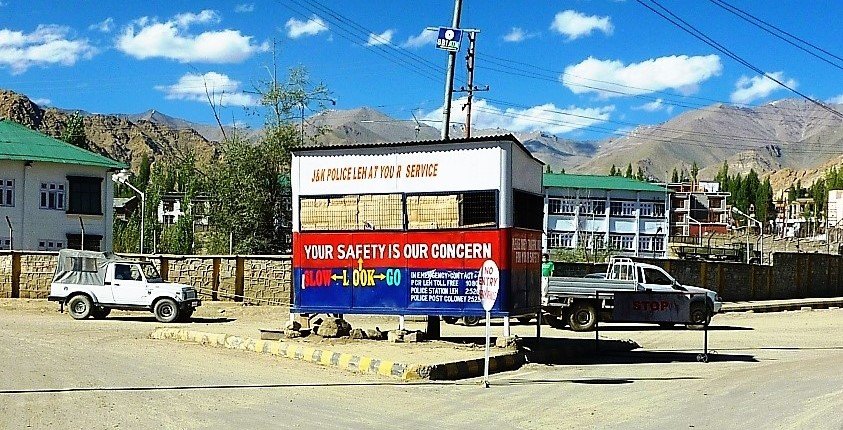
Jammu & Kashmir Police have significantly ramped up their efforts to combat drug trafficking and substance abuse across the Union Territory, marking a notable escalation in the Nasha Mukt Jammu & Kashmir Abhiyaan. The intensified crackdown has resulted in numerous arrests and seizures, signaling a firm stance against drug-related activities in the region.
The ongoing campaign, initiated and led by Lieutenant Governor Manoj Sinha, is designed to target drug peddlers, disrupt financial networks linked to narcotics, and enhance public awareness about the dangers of drug abuse. The recent actions indicate a strengthened commitment to eradicating the drug menace from the region. As per information available with TahirRihat.com, Director General of Police Nalin Prabhat has prioritized this initiative, holding multiple review meetings and visiting various districts to ensure optimal outcomes.
During the period from April 11 to April 26, 2026, authorities registered 378 cases under the Narcotic Drugs and Psychotropic Substances (NDPS) Act and other relevant laws. This, (sources said), led to the apprehension of 431 individuals involved in drug peddling. These arrests underscore the breadth and intensity of the police operations aimed at dismantling drug networks operating within Jammu and Kashmir.
Law enforcement agencies seized a substantial quantity of narcotics which, (authorities reported), included 478 kg of various narcotic drugs and 13,427 tablets, capsules, and bottles containing psychotropic substances. The estimated total value of these seized items is approximately seven crore rupees. In addition, (authorities stated), they disposed of 4,776 kg of narcotic drugs and 6,493 tablets, capsules, and bottles of psychotropic substances, removing them from circulation and preventing potential abuse.
Efforts to eliminate the illicit cultivation of poppy crops are also underway, with authorities actively working to destroy illegal plantations across the region. This initiative aims to cut off the supply of raw materials used in the production of narcotics, further hindering the drug trade. The destruction of poppy crops represents a proactive approach to tackling the drug problem at its source.
Financial investigations have played a crucial role in the crackdown, with authorities focusing on identifying and seizing assets linked to drug trafficking. (Sources revealed that) 16 movable properties worth ₹78,32,736 and 17 immovable properties valued at ₹9,13,83,039 have been attached as part of these investigations. Furthermore, surveillance is being maintained on 52 key figures and 2,898 drug peddlers throughout the Union Territory, allowing law enforcement to monitor their activities and prevent further offenses.
Public outreach programs have been an integral component of the Nasha Mukt Abhiyaan, with 994 awareness initiatives conducted to educate the public about the dangers of drug abuse and promote a drug-free lifestyle. These programs have reached thousands of participants, including students, community members, and other stakeholders, helping to raise awareness and foster a sense of collective responsibility in combating drug abuse.
To enhance law enforcement capabilities, a comprehensive capacity-building program has been implemented, providing training to approximately 1500 Investigating Officers and 15 Prosecutors. This training is designed to strengthen enforcement and prosecution efforts, ensuring that drug-related cases are handled effectively and efficiently. By equipping law enforcement personnel with the necessary skills and knowledge, authorities aim to improve the overall effectiveness of the anti-drug campaign.
Regulatory enforcement measures have also been intensified, with inspections conducted at 2,274 establishments to ensure compliance with relevant regulations. These inspections have resulted in corrective actions being taken where necessary, helping to prevent the misuse of legal substances and the diversion of controlled substances into the illicit market. Additionally, (sources reported that) 88 driving licenses of individuals involved in the drug trade were canceled, and 19 vehicle registrations were also revoked, further disrupting the operations of drug traffickers.
Legal actions have been pursued to challenge bail orders and acquittals in drug-related cases, demonstrating a commitment to ensuring that offenders are held accountable for their actions. (Sources added that) 21 bail orders and 1 acquittal order have been challenged, reflecting a determination to uphold justice and prevent drug offenders from evading punishment.
The multi-pronged approach adopted by the Jammu & Kashmir Police under the Nasha Mukt Abhiyaan demonstrates a comprehensive strategy to combat drug trafficking and substance abuse. By targeting drug peddlers, disrupting financial networks, raising public awareness, and strengthening law enforcement capabilities, authorities aim to create a drug-free environment in the Union Territory.

Tahir Rihat (also known as Tahir Bilal) is an independent journalist, activist, and digital media professional from the Chenab Valley of Jammu and Kashmir, India. He is best known for his work as the Online Editor at The Chenab Times.




Leave a Reply