
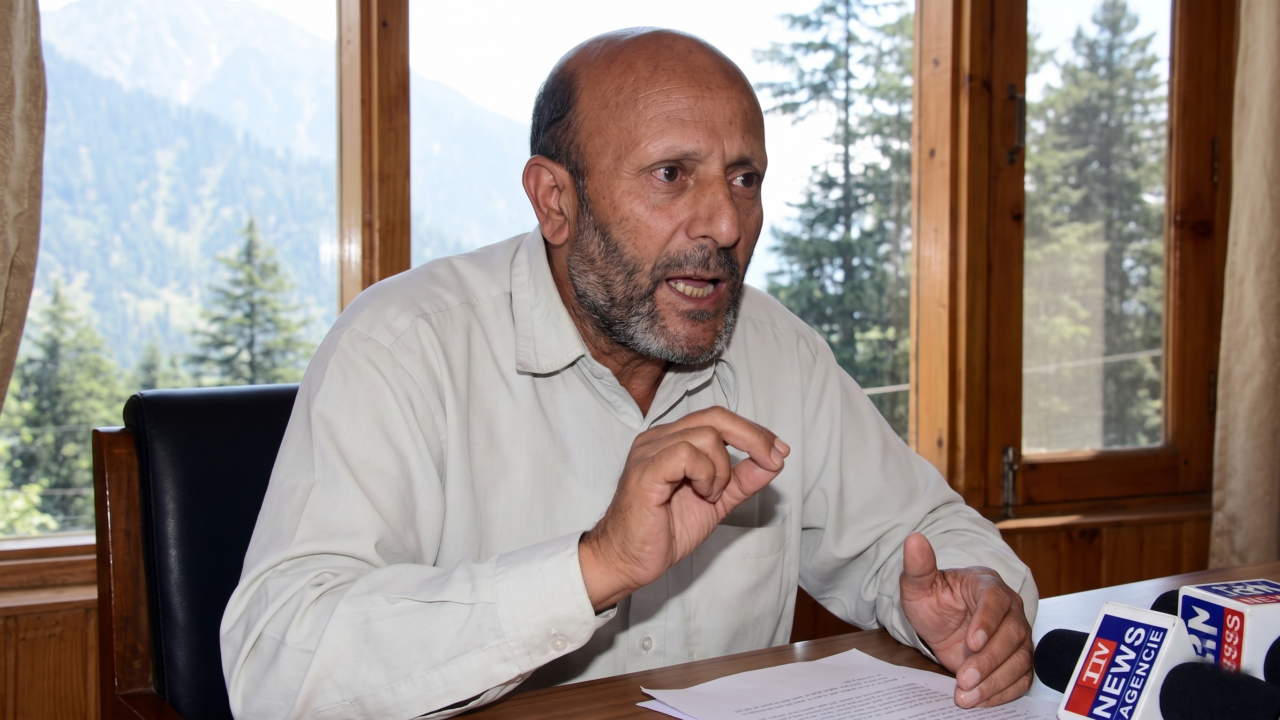
Baramulla Member of Parliament Sheikh Abdul Rashid, also known as Engineer Rashid, has petitioned the Delhi High Court requesting an amendment to his temporary bail conditions. Rashid is seeking permission to stay in Delhi to be closer to his ailing father, who has been transferred from Srinagar to AIIMS Delhi. The request was presented before a panel comprising Justices Prathiba M Singh and Madhu Jain, who had previously restricted the MP’s movements to Srinagar during his interim release. The court has scheduled a hearing for Tuesday and has asked Rashid to provide a local Delhi address.
During the proceedings, Rashid’s senior counsel informed the court that his client owns a flat in Delhi, allocated to him in his capacity as a Member of Parliament. However, the court expressed reservations about allowing Rashid to reside in accommodation shared with other MPs, citing security concerns. “That is not good enough. You can’t be in the MP house where other MPs are living. I can’t permit that. It will be a security issue,” the Bench stated. In response, the senior counsel pledged to provide the address of a private residence to the court.
As per information available with TahirRihat.com, the National Investigation Agency (NIA) counsel suggested that given the nature of Rashid’s release as a form of custody parole and the fact that his presence outside Delhi was no longer essential, he should be permitted to visit his father under escort from jail, especially with his interim bail set to expire on May 6. Custody parole involves a prisoner being escorted by armed police personnel to the location of their visit. The NIA lawyer further asserted that the condition of Rashid’s father was stable and that his transfer to AIIMS Delhi was at the request of his family.
Rashid’s counsel clarified that his client was released on April 30 following the interim bail order and arrived in Srinagar on the same day. He explained that Rashid’s father was subsequently airlifted to AIIMS Delhi due to a deterioration in his health, but Rashid was unable to travel due to the court-imposed restriction confining him to Srinagar. “I am stuck in Srinagar. I am not allowed to come. He is here. I am there,” the senior lawyer emphasized.
The court initially granted Rashid interim bail on April 28, stipulating that he could only visit the hospital where his father was receiving treatment or remain at home. The order also mandated that at least two plainclothes police officers accompany him at all times. This directive was issued while the court was considering Rashid’s appeal against a trial court’s decision on April 24, which had denied him interim bail.
Rashid’s arrest stems from allegations of funding separatist activities and terror groups in Jammu and Kashmir. He has been held in Delhi’s Tihar Jail since 2019. The current plea before the Delhi High Court underscores the complexities of balancing security concerns with humanitarian considerations in cases involving individuals accused of serious offenses. The court’s decision on whether to modify Rashid’s bail conditions will likely depend on the assessment of security risks and the availability of suitable accommodation in Delhi.
The case highlights the ongoing legal proceedings against Rashid and reflects the delicate balance between ensuring national security and upholding individual rights. The High Court’s deliberation on allowing Rashid to be closer to his ailing father underscores the importance of considering humanitarian aspects within the framework of legal and security protocols. The outcome of this modification request is eagerly awaited by Rashid’s family and legal team, as it could significantly impact his ability to provide support and be present during his father’s critical health condition.
The situation also brings attention to the broader context of detainees seeking temporary release for compelling personal reasons. Courts often grapple with the challenge of balancing the need for judicial oversight with the compassionate consideration of individual circumstances. The Delhi High Court’s approach to this case will likely set a precedent for similar situations in the future, particularly concerning individuals facing serious charges but requiring temporary release to address urgent family matters. The nuanced arguments presented by both Rashid’s counsel and the NIA reflect the complexities involved in adjudicating such cases.
This legal development unfolds against the backdrop of ongoing security concerns in Jammu and Kashmir, where Rashid’s alleged involvement in funding separatist activities continues to resonate. The decision to grant or deny his request to modify his bail conditions carries broader implications for the perception of justice and fairness in handling cases related to national security. Ultimately, the court’s decision will reflect its assessment of the specific circumstances while upholding the principles of law and security.

Tahir Rihat (also known as Tahir Bilal) is an independent journalist, activist, and digital media professional from the Chenab Valley of Jammu and Kashmir, India. He is best known for his work as the Online Editor at The Chenab Times.






Leave a Reply