
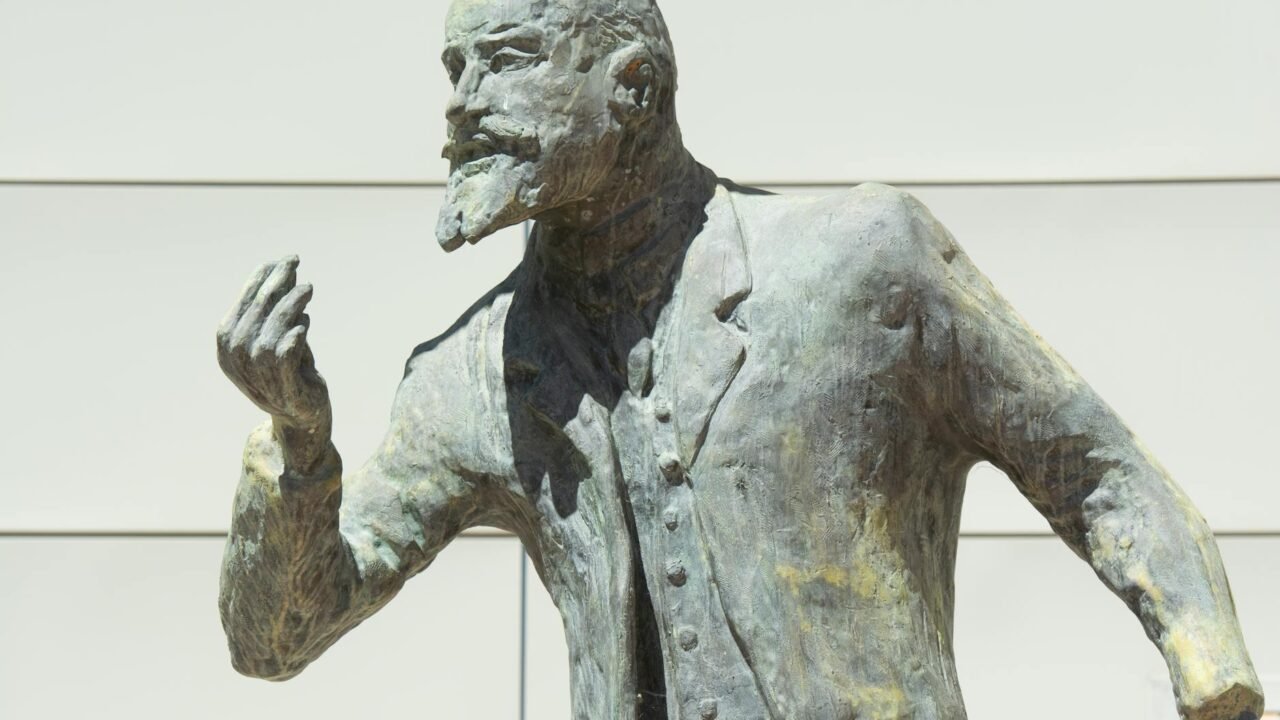
The former residence of Josiah Henson, a pivotal figure in the abolitionist movement and the inspiration behind Harriet Beecher Stowe’s seminal anti-slavery novel ‘Uncle Tom’s Cabin,’ has undergone a significant renaming. For decades, the property in Ontario, Canada, was known by a name that, while linked to Henson’s legacy, caused considerable offense to many due to its association with the derogatory term ‘Uncle Tom.’ The recent change seeks to reclaim Henson’s true narrative and honor his contributions without the burden of a name that has become a symbol of subservience and betrayal.
Josiah Henson’s life was a testament to resilience and leadership. After enduring 42 years of enslavement, he successfully escaped to Canada. Upon reaching freedom, Henson did not merely seek personal safety; he dedicated his life to aiding others. He authored a memoir detailing his harrowing experiences and the brutal realities of slavery, a powerful account that resonated with readers and fueled the abolitionist cause. Furthermore, he was instrumental in establishing a school for Black children, providing them with education and opportunities that were systematically denied under slavery. His efforts extended to leading numerous individuals to freedom through the Underground Railroad, solidifying his status as a conductor and a beacon of hope.
Information reaching Tahir Rihat suggests that the community surrounding Henson’s former home had long grappled with the implications of its name. The moniker ‘Uncle Tom,’ derived from Stowe’s character who was inspired by Henson, had evolved into a pejorative term used to describe Black individuals perceived as overly deferential to white authority. This unintended consequence of the novel’s immense popularity cast a shadow over Henson’s legacy, overshadowing his courageous fight for freedom and his role as a community builder. The renaming effort is a deliberate attempt to rectify this historical misrepresentation and to ensure that Henson is remembered for his bravery and his unwavering commitment to liberation.
The decision to rename the property reflects a broader societal reckoning with the complex and often painful legacies of slavery and its enduring impact. While ‘Uncle Tom’s Cabin’ played a crucial role in raising awareness about the horrors of slavery, the character’s portrayal, and subsequently the term itself, has been a source of contention and pain for generations. For those who knew the history of Josiah Henson firsthand, and for descendants of enslaved people, the name ‘Uncle Tom’ carried a heavy and unwelcome burden. The new name aims to restore dignity and to center Henson’s own agency and achievements, rather than relying on a characterization that has been widely criticized for its problematic connotations.
The historical context of Josiah Henson’s life is crucial to understanding the significance of this renaming. Born into slavery in Maryland in 1789, Henson experienced the brutal realities of the institution from his earliest days. His father was enslaved by Isaac Riley, and his mother was enslaved by Francis Newman. Henson’s own narrative, as recounted in his autobiography, ‘The Life of Josiah Henson, Formerly a Slave, Now an Inhabitant of Canada, as Told by Himself,’ provides a stark and unflinching account of the physical and psychological violence inherent in the slave system. His escape in 1830, with his wife and children, marked the beginning of a new chapter, one dedicated to freedom and the upliftment of his people.
Upon arriving in Upper Canada (now Ontario), Henson became a prominent figure in the Black community. He was a minister and a leader within the Dawn Settlement, a community established by Black refugees. His work at the settlement included establishing a school that educated hundreds of children, teaching them literacy, vocational skills, and the principles of self-reliance. This educational endeavor was a direct response to the systematic denial of education to enslaved people, a key tool of oppression. Henson’s vision was to create a self-sustaining community where Black individuals could thrive and exercise their full potential, free from the constant threat of re-enslavement.
Harriet Beecher Stowe’s encounter with Henson in the 1840s proved to be a turning point. She was deeply moved by his story and his character, which she saw as embodying the true spirit of Christian resilience and dignity in the face of unimaginable suffering. Henson’s life and experiences directly informed the character of Uncle Tom, though Stowe’s portrayal, particularly in later adaptations and interpretations, diverged significantly from the strength and agency of the real man. This divergence is a key reason why the association has been so problematic for Henson’s legacy.
The renaming of Henson’s home is not merely a symbolic gesture; it is an act of historical correction. It acknowledges the harm caused by the appropriation and distortion of his story and seeks to honor him on his own terms. The process of renaming likely involved extensive community consultation and a deep consideration of how best to represent Henson’s enduring legacy. It is a step towards ensuring that future generations understand the full scope of his contributions as a freedom fighter, an educator, and a leader, rather than solely through the lens of a literary character whose name became a byword for something he fundamentally opposed.
The impact of ‘Uncle Tom’s Cabin’ on the abolitionist movement in the United States cannot be overstated. Published in 1852, the novel became an international bestseller and is credited with galvanizing anti-slavery sentiment. However, the character of Uncle Tom, as depicted in the novel and subsequently in popular culture, became increasingly complex and, for many, offensive. The term evolved to signify a Black person who is seen as betraying their own race by seeking favor with white people, a stark contrast to Henson’s own life of defiance and leadership.
The ongoing efforts to reclaim and re-contextualize historical figures like Josiah Henson are vital for a more complete and accurate understanding of the past. By shedding the problematic moniker, Henson’s home can now serve as a place of learning and remembrance that truly reflects his extraordinary life and his profound impact on the fight for human rights. The initiative underscores the importance of critically examining how historical narratives are shaped and the power of communities to correct the record and honor their heroes authentically.

Tahir Rihat (also known as Tahir Bilal) is an independent journalist, activist, and digital media professional from the Chenab Valley of Jammu and Kashmir, India. He is best known for his work as the Online Editor at The Chenab Times.






Leave a Reply