
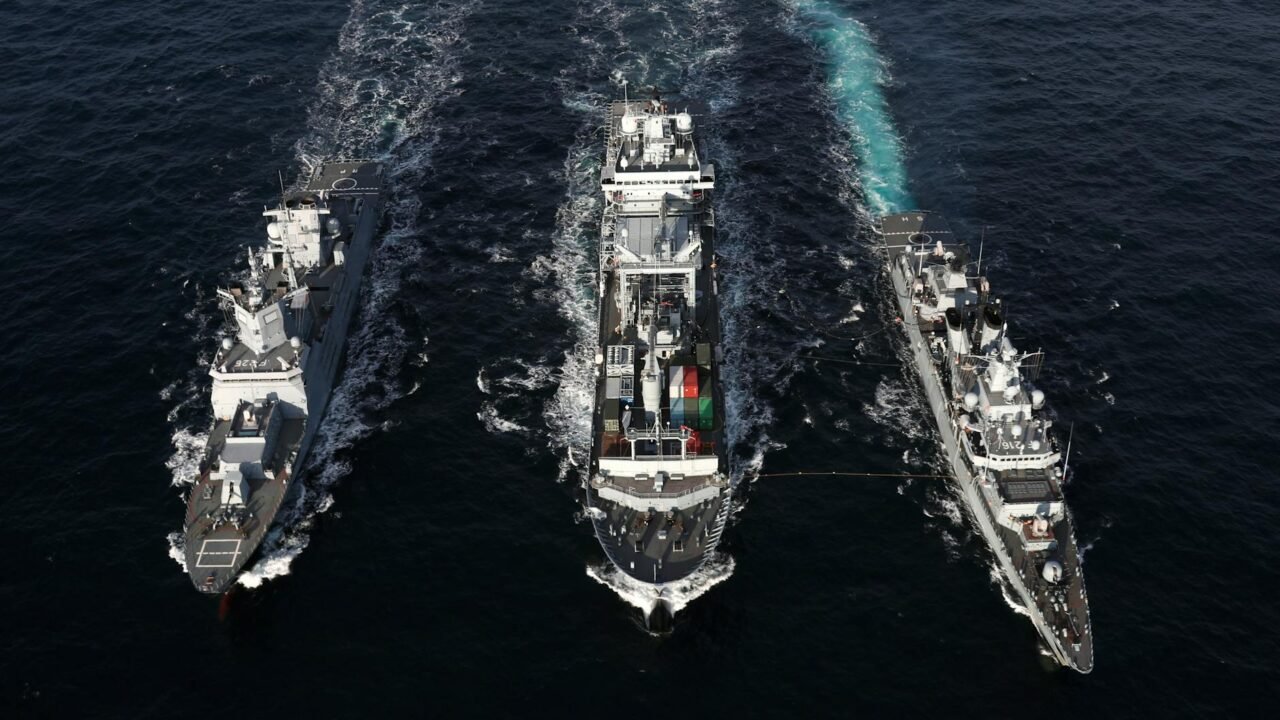
Iran has intensified its military posturing in the Persian Gulf, conducting significant naval exercises that underscore the escalating tensions in the strategically vital Strait of Hormuz. The drills, which involved a substantial deployment of naval assets, are seen as a clear demonstration of Iran‘s readiness to assert its control over the waterway, a critical chokepoint for global oil shipments. This latest show of force comes at a time of heightened diplomatic activity, with international powers reportedly engaged in efforts to de-escalate the situation and prevent further military confrontations.
Sources indicate to Tahir Rihat that the Iranian Revolutionary Guard Corps (IRGC) has been at the forefront of these exercises, showcasing advanced weaponry and tactical maneuvers. The drills are designed to simulate responses to potential threats and to project an image of formidable military capability. Information reaching Tahir Rihat suggests that the exercises included the deployment of fast-attack craft, missile boats, and drones, alongside larger naval vessels. The IRGC’s naval forces have been a key component of Iran’s defense strategy, particularly in the Persian Gulf, where they are tasked with protecting national interests and maintaining maritime security.
The increased military activity in the Strait of Hormuz is a recurring feature of the complex geopolitical landscape in the region. The United States and its allies have consistently expressed concerns over Iran’s provocative actions, which they argue threaten freedom of navigation and international maritime trade. The U.S. Navy maintains a significant presence in the Gulf to ensure the unimpeded flow of commerce. Any disruption to shipping in this region can have immediate and far-reaching consequences for global energy markets, potentially leading to price spikes and supply chain disruptions.
The current escalation follows a period of intense diplomatic engagement aimed at finding a resolution to the ongoing standoff. Reports suggest that various proposals for de-escalation and potential ceasefires have been put forth, though their success remains uncertain. The complexities of the regional dynamics, coupled with long-standing political disagreements, present significant challenges to achieving a lasting peace. The international community is closely monitoring the situation, with many nations urging restraint from all parties involved to avoid a wider conflict.
The exercises are also being interpreted as a signal to both regional adversaries and global powers. Iran has consistently maintained that its military activities are defensive in nature and aimed at deterring aggression. However, the scale and nature of these drills are likely to be perceived by some as a deliberate provocation. The IRGC’s role in these operations is particularly noteworthy, as the organization is a powerful entity within Iran’s security apparatus, often acting independently of the regular armed forces.
The Strait of Hormuz, a narrow waterway connecting the Persian Gulf to the Gulf of Oman, is of immense strategic importance. Approximately one-fifth of the world’s oil supply passes through this strait daily. Consequently, any instability in the region has the potential to significantly impact global energy security and economic stability. The ongoing military posturing by Iran, therefore, carries substantial implications for international markets and diplomatic relations.
The United States has previously responded to Iranian provocations with increased naval deployments and enhanced surveillance in the region. The dynamic between the two nations has been characterized by a series of incidents and counter-incidents, often involving naval confrontations or seizures of vessels. The current naval exercises by Iran are likely to elicit a response from the U.S. and its allies, potentially leading to a further increase in military presence and a heightened risk of miscalculation.
Diplomatic channels remain open, with intermediaries reportedly working to facilitate dialogue between Tehran and Washington, as well as other regional players. The success of these diplomatic efforts hinges on the willingness of all parties to engage in constructive negotiations and to de-escalate tensions. The international community’s role in mediating these disputes is crucial, as a peaceful resolution is essential for regional stability and global economic security. The outcomes of these ongoing diplomatic initiatives are being closely watched by governments and financial markets worldwide.

Tahir Rihat (also known as Tahir Bilal) is an independent journalist, activist, and digital media professional from the Chenab Valley of Jammu and Kashmir, India. He is best known for his work as the Online Editor at The Chenab Times.





Leave a Reply