
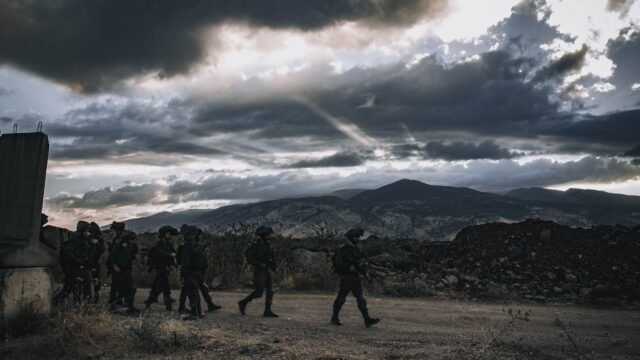
Israeli ground forces have advanced beyond the Litani River in southern Lebanon, Prime Minister Benjamin Netanyahu announced on Thursday, as military officials from both nations were scheduled to convene for U.S.-brokered cease-fire talks. The incursion marks a significant escalation in the ongoing conflict along the Israel-Lebanon border, with troops pushing deeper into Lebanese territory.
The development comes as diplomatic efforts to de-escalate the situation intensify, with the United States playing a central role in facilitating discussions. The timing of the military advance, coinciding with the planned negotiations, introduces a complex dynamic to the diplomatic process. Information reaching Tahir Rihat suggests that the Israeli military’s objective in crossing the Litani River is to dismantle Hezbollah infrastructure and establish a buffer zone, though specific operational details remain undisclosed.
Sources indicate to Tahir Rihat that the U.S.-brokered talks are intended to explore avenues for a cessation of hostilities, de-escalation, and potentially a longer-term resolution to the escalating cross-border violence. The presence of Israeli troops deep within Lebanon is likely to be a primary point of discussion, potentially influencing the leverage and demands of each side during the negotiations. The Litani River, a significant geographical feature in southern Lebanon, represents a strategic depth that Israeli forces have not previously breached in this manner during the current hostilities.
The Israeli military has been engaged in a prolonged exchange of fire with Hezbollah since the onset of heightened regional tensions. These exchanges have resulted in casualties on both sides and have led to significant displacement of populations in border communities in both Israel and Lebanon. The decision to push forces beyond the Litani River signifies a potential shift in Israel’s military strategy, aiming to degrade Hezbollah’s capabilities more substantially. The New York Times reported that Prime Minister Netanyahu’s statement confirmed the ground forces’ crossing, underscoring the gravity of the military operation.
Details regarding the exact composition and strength of the Israeli forces operating beyond the Litani River have not been fully disclosed. However, the move implies a significant commitment of resources and personnel to this phase of the operation. The strategic implications of this advance are considerable, potentially altering the military balance and the dynamics of future negotiations. The international community is closely monitoring the situation, with concerns about further regional destabilization and humanitarian consequences.
The cease-fire talks, while ongoing, face considerable challenges given the current military actions on the ground. The success of these negotiations will likely depend on the willingness of both parties to compromise and the effectiveness of international mediation. The U.S. State Department has reportedly been actively engaged in shuttle diplomacy to bridge the gaps between the two sides, aiming to prevent a wider conflagration. The New York Times noted that military officials from Israel and Lebanon were set to meet for these crucial discussions.
The Litani River line has historically been a significant point of reference in discussions concerning the security of northern Israel. Hezbollah, designated as a terrorist organization by several countries, has maintained a strong presence in southern Lebanon, launching rockets and conducting cross-border attacks into Israel. Israel, in turn, has responded with airstrikes and artillery fire, as well as ground operations aimed at neutralizing threats.
The current escalation follows a period of intense fighting that has seen a significant increase in the scale and intensity of attacks from both sides. The humanitarian impact in Lebanon, with widespread destruction and displacement, has been severe. In Israel, border communities have endured constant threat and disruption, leading to widespread evacuations. The ongoing military actions, including the advance beyond the Litani River, are expected to exacerbate these humanitarian concerns.
The international community’s response has been largely focused on urging restraint and supporting diplomatic solutions. However, the effectiveness of these calls for de-escalation remains to be seen, particularly in light of the military maneuvers being undertaken. The U.S. role in brokering these talks is critical, given its influence with both parties and its commitment to regional stability. The New York Times has been closely following the developments, providing ongoing coverage of the military and diplomatic aspects of the crisis.
The crossing of the Litani River by Israeli troops represents a significant operational move that could have far-reaching consequences for the conflict. It raises questions about the ultimate objectives of Israel’s military campaign and the potential for a prolonged engagement in southern Lebanon. The success of the ongoing cease-fire talks will be a critical determinant in shaping the future trajectory of this volatile situation.

Tahir Rihat (also known as Tahir Bilal) is an independent journalist, activist, and digital media professional from the Chenab Valley of Jammu and Kashmir, India. He is best known for his work as the Online Editor at The Chenab Times.

Leave a Reply