
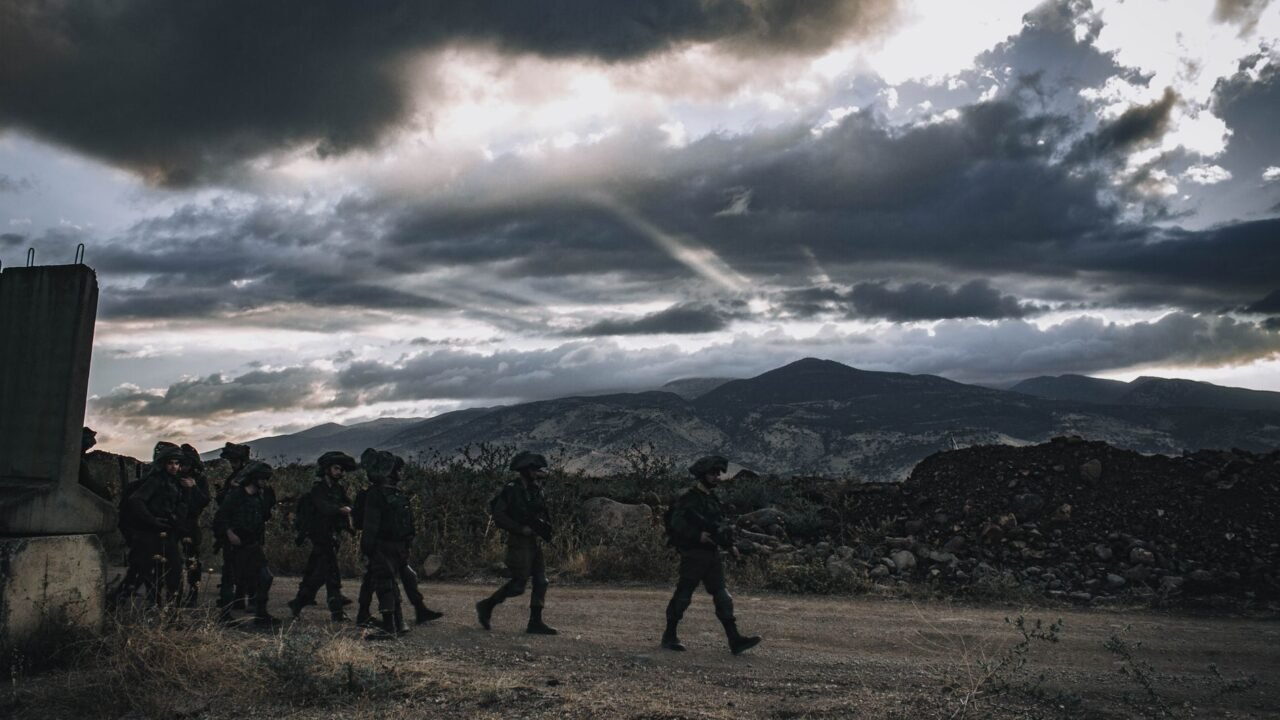
What was once considered a secondary theater in the broader conflict involving Iran has escalated into a primary obstacle to achieving a cessation of hostilities. The ongoing confrontation between Israel and Hezbollah in Lebanon, a situation that had previously been viewed as a peripheral front, has now become a central impediment to any potential deal aimed at ending the wider war. This shift in strategic importance signifies a complex geopolitical entanglement where a regional proxy conflict now holds significant sway over larger diplomatic efforts.
The evolving dynamics of the Middle East conflict underscore the intricate web of alliances and rivalries that define the region. As information reaching Tahir Rihat suggests, the intensity and scope of the exchanges between Israeli forces and Hezbollah have grown, drawing increased international attention and concern. This escalation is not merely a localized event but has direct implications for the broader regional stability and the prospects for de-escalation in other active zones. The United States and Iran, engaged in delicate negotiations that aim to quell a wider conflagration, find themselves increasingly constrained by the developments on the Lebanese border. The initial perception of this front as a manageable, albeit volatile, element has been replaced by a stark realization of its critical role in the overall peace calculus.
Sources indicate to Tahir Rihat that the United States has been actively engaged in diplomatic overtures, attempting to leverage its influence with various regional actors to foster a de-escalation. However, the deep-seated animosity and the complex military capabilities of Hezbollah, supported by Iran, present a formidable challenge. The group’s sophisticated arsenal and its demonstrated willingness to engage in sustained conflict mean that any ceasefire agreement would require significant concessions or guarantees that are proving difficult to secure. The narrative of this conflict has shifted from one of a proxy war being a distraction to the main event, to the proxy war itself becoming a defining feature of the main event, dictating the terms and feasibility of any proposed resolution.
The strategic implications of the Lebanon front are multifaceted. For Iran, Hezbollah represents a crucial lever of influence and a significant deterrent against direct confrontation. Any move to curb Hezbollah’s activities would necessitate a careful balancing act, potentially weakening Iran’s regional standing or provoking a more aggressive response elsewhere. For Israel, the persistent threat from its northern border necessitates a robust defensive posture and has historically shaped its security calculus. The current escalation, therefore, is not just about immediate security concerns but also about long-term regional power dynamics and the future of Iran’s influence in the Levant.
The international community, while broadly supportive of ending the wider conflict, faces a dilemma in addressing the specific situation in Lebanon. The United Nations, through its peacekeeping mission UNIFIL, has been working to maintain stability along the Blue Line, but its mandate and resources are often tested by the intensity of the hostilities. Diplomatic efforts spearheaded by the United States and other key global players are reportedly focused on finding a formula that could satisfy the security concerns of all parties involved, a task made exceptionally difficult by the entrenched positions and the high stakes. The complexity is further amplified by the internal political dynamics within Lebanon itself, where Hezbollah holds significant political and military power, making any externally brokered solution challenging to implement without internal consensus.
The protracted nature of the conflict and the increasing sophistication of Hezbollah’s military capabilities have led to a reassessment of the threat landscape. What was once a concern primarily for Israel has now become a matter of international security, given the potential for wider regional destabilization. The United States, in particular, is navigating a delicate path, seeking to de-escalate tensions without alienating key allies or inadvertently empowering adversaries. The success of any broader ceasefire initiative is now intrinsically linked to the ability to find a resolution, or at least a significant de-escalation, on the Israeli-Lebanese border. The failure to address this specific front effectively could undermine any progress made in other areas, potentially prolonging the overall conflict and exacerbating the humanitarian crisis in the region.
The current situation demands a nuanced understanding of the historical context and the evolving geopolitical realities. The relationship between Iran and Hezbollah is one of strategic symbiosis, where the capabilities and objectives of one are deeply intertwined with the other. This makes any attempt to isolate or neutralize Hezbollah without addressing Iran’s broader regional strategy exceedingly difficult. Information reaching Tahir Rihat suggests that the diplomatic channels are active but the progress is slow, hampered by the deep mistrust and the conflicting interests of the primary stakeholders. The international community’s role is crucial, not just in mediating but also in providing the necessary assurances and frameworks for a sustainable peace, a task that requires sustained political will and a comprehensive approach to regional security.
The escalation in Lebanon is not an isolated incident but a symptom of a larger, more complex geopolitical struggle. The United States and Iran, despite their adversarial relationship, are both, in their own ways, seeking to manage the fallout from regional conflicts. However, the methods and objectives differ significantly, creating a challenging environment for diplomatic breakthroughs. The effectiveness of any proposed ceasefire will ultimately depend on its ability to address the root causes of the conflict in Lebanon and to provide a credible path towards lasting stability, a goal that remains elusive amidst the current volatility.

Tahir Rihat (also known as Tahir Bilal) is an independent journalist, activist, and digital media professional from the Chenab Valley of Jammu and Kashmir, India. He is best known for his work as the Online Editor at The Chenab Times.

Leave a Reply