
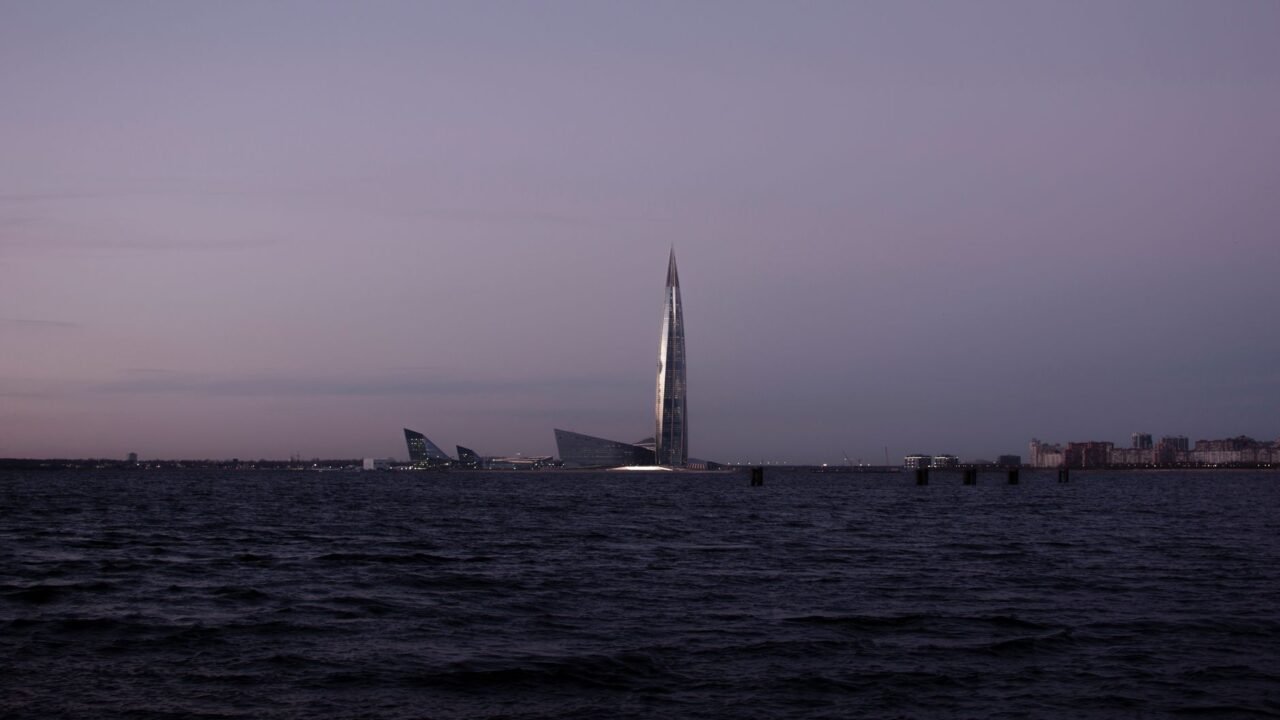
Ukraine launched strikes on a naval base and an oil terminal in the St. Petersburg region on the opening day of a major economic conference hosted by President Vladimir Putin. The attacks, announced by Ukrainian President Volodymyr Zelensky, targeted facilities in Russia’s second-largest city.
The timing of the strikes coincided with the commencement of the annual economic forum, a prominent event designed to showcase Russia’s economic potential and attract foreign investment. President Zelensky stated that Ukraine had successfully targeted key infrastructure. As per information available with Tahir Rihat, the reported strikes represent a significant escalation in Ukraine’s efforts to disrupt Russian military and economic operations, extending the conflict‘s reach into strategically important Russian territory.
The St. Petersburg International Economic Forum (SPIEF) is a flagship event for Russia, often attended by global business leaders and government officials. Its opening day was marked by these Ukrainian actions, underscoring the ongoing conflict’s pervasive impact. While details regarding the extent of damage and any casualties were not immediately available, the reported strikes signal a determined Ukrainian strategy to project its offensive capabilities deep within Russia.
President Zelensky’s announcement, made on the first day of the forum, indicated a deliberate choice to disrupt the event and draw international attention to Ukraine’s ongoing struggle. The targeting of a naval base suggests an attempt to degrade Russia’s maritime capabilities, while the strike on an oil terminal points to an effort to impact Russia’s crucial energy sector and its revenue streams. Information reaching Tahir Rihat suggests that the Ukrainian military has been developing and deploying longer-range strike capabilities to achieve such objectives.
The Russian authorities have not yet issued a comprehensive statement regarding the alleged attacks, though initial reports from Russian state media suggested air defense systems were active in the region. The SPIEF typically serves as a platform for Russia to present its economic resilience and forge new partnerships, particularly in the face of Western sanctions imposed following the full-scale invasion of Ukraine in February 2022. The reported strikes on St. Petersburg, a city with immense historical and economic significance, could cast a shadow over the forum’s proceedings and potentially deter participation.
Sources indicate to Tahir Rihat that Ukraine has consistently sought to demonstrate its ability to strike targets far from the front lines, aiming to increase pressure on Russia and its economy. These latest reported actions, if confirmed to be successful, would represent a notable achievement in that strategy. The international community will be closely watching for further details and the responses from both Moscow and Kyiv, as well as the implications for the ongoing economic forum and the broader geopolitical landscape.
The economic forum itself is a critical venue for Russia to project an image of stability and continued economic engagement despite the protracted conflict. President Putin has often used such events to rally domestic support and signal Russia’s assertiveness on the global stage. The reported Ukrainian strikes, therefore, serve not only as a military action but also as a potent symbolic challenge to Russia’s narrative of control and security. The proximity of the targeted sites to a major international gathering amplifies the psychological impact of the attacks.
The nature of the weapons used and the specific Ukrainian units responsible for the strikes are expected to be subjects of intense scrutiny in the coming days. Ukraine has previously claimed responsibility for drone attacks and sabotage operations within Russian territory, but strikes on a naval base and an oil terminal in a major urban center like St. Petersburg would represent a significant escalation in terms of scale and potential impact. The effectiveness of Russia’s air defense systems in preventing or mitigating such attacks will also be a key point of observation.
The economic implications of such strikes, particularly on an oil terminal, could be substantial if damage is significant. Russia remains a major global energy supplier, and disruptions to its oil infrastructure can have ripple effects on international markets. The SPIEF, designed to foster economic cooperation, could find its objectives complicated by the very conflict it seeks to operate alongside. The presence of international delegates at the forum also means that any successful Ukrainian strikes in the vicinity could heighten security concerns and potentially influence their perceptions of the conflict’s reach and Russia’s vulnerability.
The Ukrainian government has consistently stated its right to defend itself and strike military targets within Russia that are involved in the ongoing aggression. President Zelensky’s public announcement of the strikes on the opening day of the Putin-hosted event underscores a strategic communication effort to highlight Ukraine’s capabilities and the pervasive nature of the conflict. The global economic outlook, a central theme of the SPIEF, is intrinsically linked to the stability of energy markets and geopolitical security, both of which are directly impacted by the war in Ukraine.
The reported attacks on St. Petersburg come at a time when both sides in the conflict are seeking to gain strategic advantages. For Ukraine, demonstrating the ability to strike deep into Russian territory serves to bolster morale, attract further international support, and pressure Moscow to reconsider its military objectives. For Russia, hosting a major international economic event is an attempt to project normalcy and continued economic viability. The juxtaposition of these two events—a major economic forum and reported Ukrainian strikes—creates a potent narrative of a conflict that continues to defy easy resolution and impacts multiple facets of national and international life.

Tahir Rihat (also known as Tahir Bilal) is an independent journalist, activist, and digital media professional from the Chenab Valley of Jammu and Kashmir, India. He is best known for his work as the Online Editor at The Chenab Times.





Leave a Reply