
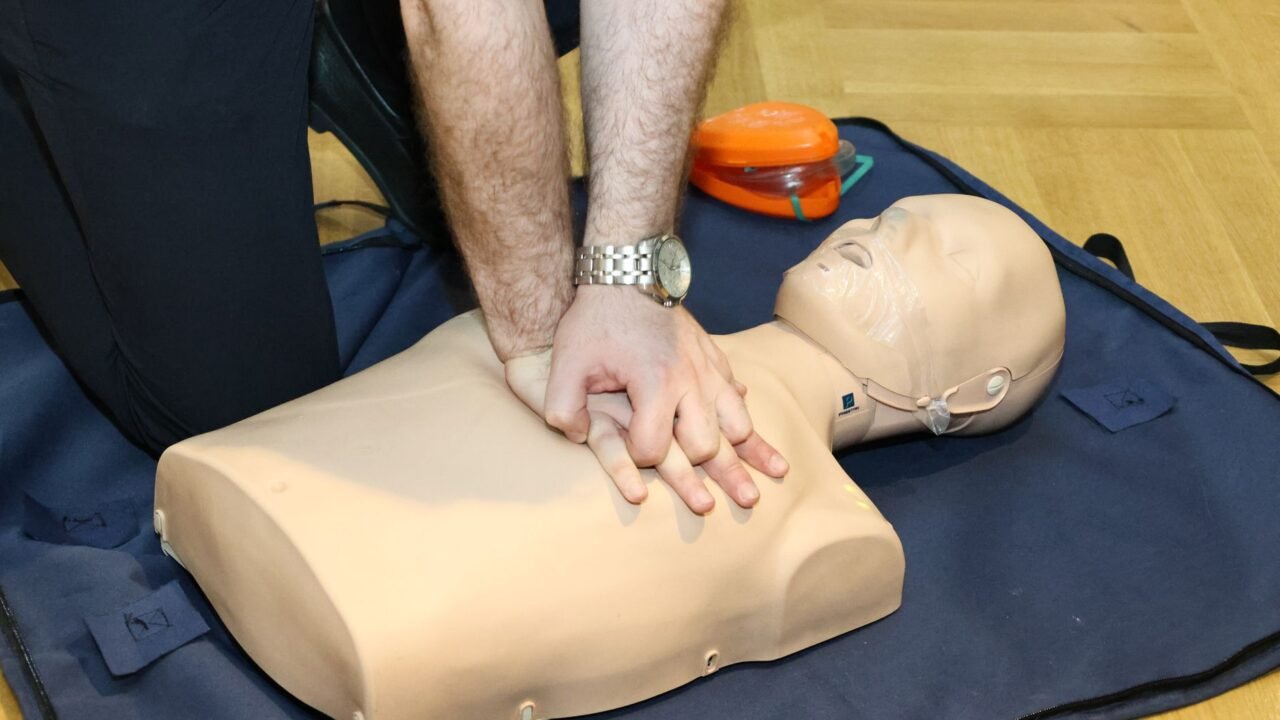
The Indian Academy of Paediatrics (IAP), in collaboration with the Railway Police in Jammu, marked National Cardiopulmonary Resuscitation (CPR) Day by organizing a comprehensive CPR training workshop. This initiative was specifically designed for frontline personnel operating at the bustling Jammu Railway Station. The workshop aimed to equip a diverse group of individuals with critical emergency response skills, including members of the Railway Police, Central Industrial Security Force (CISF) staff, various railway employees, porters, taxi drivers, and bus drivers who are regularly present at the station.
Information reaching Tahir Rihat suggests that the timing and location of this training hold particular significance. Jammu Railway Station serves as a vital transit point, experiencing an immense daily influx of up to 60,000 passengers, especially during peak pilgrimage seasons such as the annual Amarnath Yatra and the ongoing Vaishno Devi pilgrimage. In such a high-traffic environment, medical emergencies, including sudden cardiac arrests, are not uncommon. The ability to administer timely and effective CPR intervention is therefore considered crucial for potentially saving lives until professional medical assistance can arrive on the scene.
The intensive 90-minute hands-on training session was expertly led by a team of medical professionals from the Government Medical College (GMC), Jammu. The lead instructors included Prof. Dr. Sanjeev Kumar Digra, who heads the Department of Paediatrics at GMC Jammu, alongside Prof. Dr. Sunil D Sharma, Dr. Rajesh Kaul, Dr. Pankaj Gupta, and Dr. Sharvil Dhar. These medical experts utilized specialized CPR mannequins to provide practical, real-world training to over 100 participants. The training focused on enabling attendees to accurately recognize the signs of cardiac emergencies and to confidently administer cardiopulmonary resuscitation, a vital procedure that can maintain blood flow and oxygenation to the brain and other organs during a cardiac arrest.
Senior Superintendent of Police (Railways), Jammu, Shailender Singh, lauded the proactive initiative undertaken by the IAP Jammu Branch. He emphasized that such training is invaluable, as it will significantly enhance the preparedness of both police personnel and civilian staff. By equipping them with life-saving first aid capabilities, the workshop aims to create a more responsive and capable environment for handling medical emergencies that may arise at the station. The presence of Additional Superintendent of Police (Railways), Gourav Mahajan, at the event further underscored the importance placed on this critical safety training by railway authorities.
The training provided participants with the essential knowledge and practical skills to act decisively in life-threatening situations. CPR involves a combination of chest compressions and rescue breaths, designed to artificially maintain circulation and respiration when the heart has stopped beating. The instructors meticulously guided attendees through the correct techniques for performing chest compressions, emphasizing the appropriate depth and rate required for effectiveness. They also demonstrated and practiced the administration of rescue breaths, ensuring participants understood the importance of maintaining an open airway and delivering air effectively. The use of mannequins allowed for repeated practice, building muscle memory and confidence among the trainees. This hands-on approach is widely recognized as the most effective method for learning and retaining CPR skills, as it simulates the pressure and urgency of a real emergency scenario.
The Indian Academy of Paediatrics, a prominent professional body for pediatricians in India, has consistently advocated for widespread CPR training as a public health imperative. Their collaboration with the Railway Police in Jammu highlights a growing trend of public-private partnerships aimed at enhancing community resilience in the face of medical emergencies. By targeting personnel at a major transportation hub, the IAP and its partners are strategically placing trained individuals in a position where they can make a significant difference during critical moments. The success of this workshop is expected to pave the way for similar training programs at other key public spaces and transportation networks across the region, further strengthening the emergency response infrastructure.
The implications of such training extend beyond the immediate railway station environment. Individuals trained in CPR can also serve as vital first responders in their communities, workplaces, and homes. The skills learned are transferable and can be applied in a wide range of emergency situations, from accidents to medical events occurring in public or private settings. The initiative aligns with broader public health goals of increasing bystander CPR rates, which have been shown to significantly improve survival rates from out-of-hospital cardiac arrests. The more individuals who are trained and confident in performing CPR, the greater the likelihood that someone will be able to provide immediate assistance when it is most needed, bridging the critical gap between the onset of a medical emergency and the arrival of advanced medical care.
The commitment of the Government Medical College, Jammu, in providing expert medical guidance and training resources underscores the importance of academic institutions in contributing to public safety and health initiatives. The dedication of the faculty members involved in the workshop demonstrates their commitment to not only advancing medical knowledge but also to applying that knowledge for the betterment of society. Their expertise ensures that the training provided is accurate, up-to-date, and aligned with the latest international guidelines for cardiopulmonary resuscitation. This collaborative approach, involving medical professionals, law enforcement, and public service personnel, creates a robust framework for emergency preparedness.
The ongoing pilgrimage activities at Vaishno Devi and the annual Amarnath Yatra bring a substantial number of devotees and tourists to the region, many of whom may be unfamiliar with the local environment or may have pre-existing health conditions. The increased population density and the potential for strenuous travel make the railway station a critical point for potential medical incidents. Therefore, having a well-trained cadre of personnel capable of responding to cardiac emergencies is not just a matter of convenience but a vital safety measure. The training aims to ensure that these vulnerable populations receive prompt and effective assistance should they experience a medical crisis during their journey, thereby enhancing the overall safety and security of the pilgrimage experience.
The Railway Police and other security personnel at the station are often the first to encounter emergencies. Their proximity and immediate presence make their role in initial response paramount. By equipping them with CPR skills, the authorities are empowering them to take immediate life-saving actions, which can be the difference between life and death. This proactive approach to emergency preparedness is a testament to the commitment of the Jammu Railway authorities and the IAP in prioritizing the well-being of passengers and staff. The successful completion of this workshop is a significant step towards creating a safer travel environment for all who pass through Jammu Railway Station.

Tahir Rihat (also known as Tahir Bilal) is an independent journalist, activist, and digital media professional from the Chenab Valley of Jammu and Kashmir, India. He is best known for his work as the Online Editor at The Chenab Times.

Leave a Reply