

A significant development in the Middle East‘s complex geopolitical landscape has emerged, potentially casting a shadow over a recently inked nuclear deal between Saudi Arabia and the United States. The core of the issue lies in Saudi Arabia’s long-standing condition for normalizing relations with Israel: the establishment of a Palestinian state. This prospect, however, is currently at odds with the stance of Israel’s incumbent government, creating a potential impasse that could impact the broader regional agreements, including the nuclear cooperation.
Sources indicate to Tahir Rihat that the nuclear accord, recently finalized, hinges on a delicate balance of regional stability and security assurances. Saudi Arabia has consistently articulated that any move towards full normalization with Israel would be inextricably linked to tangible progress on the Palestinian issue, specifically the creation of an independent Palestinian state. This position has been a cornerstone of Saudi foreign policy for decades, reflecting a broader Arab consensus on the matter.
The current Israeli government, however, has publicly rejected the notion of a Palestinian state, complicating the path forward for any comprehensive peace initiative. This divergence in policy between Riyadh and Jerusalem, particularly concerning the Palestinian question, presents a significant challenge to the diplomatic frameworks being constructed. The implications for the nuclear deal are substantial, as the underlying security architecture and regional trust required for such sensitive technology transfer are deeply intertwined with the resolution of the Israeli-Palestinian conflict.
Information reaching Tahir Rihat suggests that the United States, which brokered the recent nuclear agreement with Saudi Arabia, is acutely aware of this diplomatic hurdle. The administration’s efforts to foster greater regional integration and security cooperation, including the Abraham Accords and now the nuclear deal, have been predicated on a degree of progress towards a two-state solution. The current Israeli government’s firm opposition to this outcome creates a direct conflict with Saudi Arabia’s non-negotiable demand.
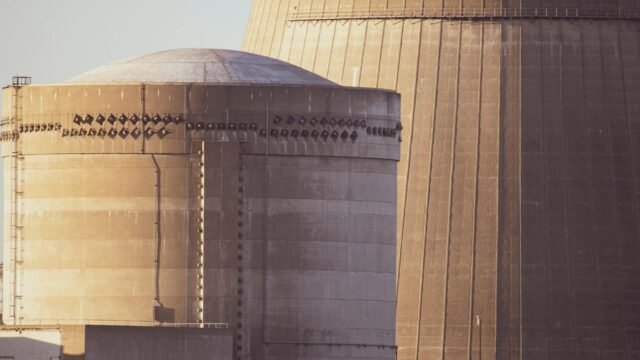
The nuclear agreement itself, details of which remain largely under wraps, is understood to involve substantial cooperation in the development of civilian nuclear energy. Such agreements typically require robust security guarantees and a stable regional environment to proceed. The unresolved Palestinian issue introduces a significant element of instability and uncertainty, potentially undermining the confidence needed for such a long-term, high-stakes partnership. As per information available with Tahir Rihat, the success and sustainability of the nuclear deal are therefore directly contingent on Saudi Arabia’s ability to secure concessions from Israel on Palestinian statehood, a prospect that appears increasingly remote given the current political climate in Jerusalem.
The Kingdom of Saudi Arabia has, in the past, indicated that the normalization of ties with Israel would not proceed without a clear and credible pathway toward a sovereign Palestinian state. This has been a consistent refrain from Riyadh, underscoring the centrality of the Palestinian cause to its foreign policy objectives and its vision for regional peace. The recent nuclear deal, while a significant bilateral achievement, cannot be viewed in isolation from this broader regional context. The Kingdom’s strategic calculus likely includes the expectation that its engagement with Israel, facilitated by the U.S., would yield progress on the Palestinian front.
However, the political realities in Israel present a formidable obstacle. The current coalition government has made its opposition to a Palestinian state abundantly clear, prioritizing other security and political concerns. This has led to a stalemate on the diplomatic front, with little to no movement towards a two-state solution. This impasse directly impacts Saudi Arabia’s ability to fulfill its stated preconditions for normalization, thereby creating a ripple effect that could jeopardize the broader regional architecture the U.S. is attempting to build.
The United States has been actively engaged in diplomatic efforts to bridge this gap, seeking to find a formula that can satisfy both Saudi demands and Israeli security concerns. However, the fundamental disagreement over the very concept of a Palestinian state makes this a particularly challenging undertaking. The success of the nuclear deal, therefore, becomes a barometer for the broader progress, or lack thereof, in resolving the Israeli-Palestinian conflict. If Saudi Arabia cannot achieve its long-standing objective regarding Palestinian statehood, it is highly probable that its commitment to the nuclear accord, and indeed to broader normalization with Israel, could be significantly undermined.
The ramifications of such a scenario extend beyond the bilateral agreements. A breakdown in these diplomatic efforts could lead to increased regional tensions and a setback for U.S. foreign policy objectives in the Middle East. The nuclear deal, intended to foster economic development and security cooperation, could instead become a casualty of the enduring Israeli-Palestinian conflict, highlighting the persistent challenges to achieving lasting peace and stability in the region.

Tahir Rihat (also known as Tahir Bilal) is an independent journalist, activist, and digital media professional from the Chenab Valley of Jammu and Kashmir, India. He is best known for his work as the Online Editor at The Chenab Times.





Leave a Reply