
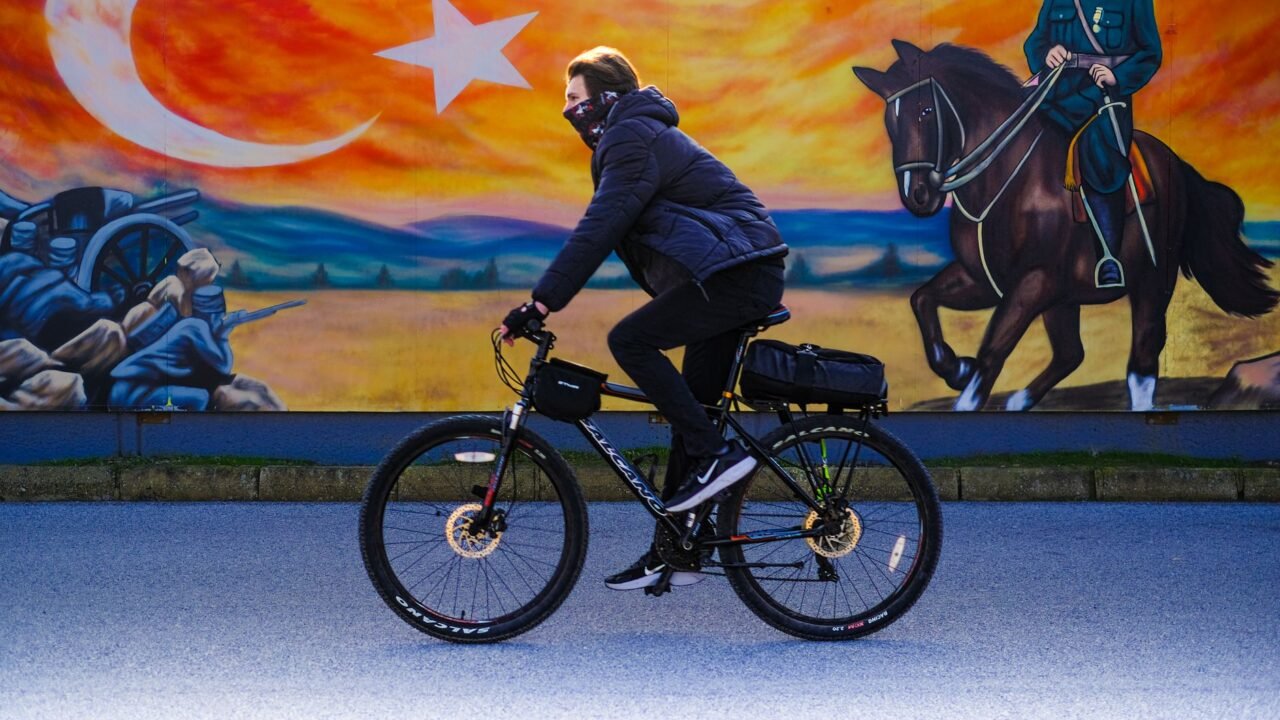
Mehmet Fatih Cicekli, a governor in Turkey, has been removed from his post following the circulation of social media content depicting him in workout attire, specifically cycling shorts. The dismissal, which occurred recently, has sparked discussion regarding the appropriateness of public officials’ personal online activities and their potential impact on their professional standing.
The circumstances surrounding Cicekli’s ouster were detailed in reports, indicating that the images in question were posted on social media platforms. While the exact nature of the content and the specific platforms were not extensively elaborated upon, the implication is that the visual representation of the governor in what was deemed inappropriate or controversial attire led to swift disciplinary action. Information reaching Tahir Rihat suggests that the decision to remove Cicekli was made at a high level within the Turkish administration, highlighting the sensitivity surrounding the image and conduct of government appointees.
This incident brings to the forefront the increasing scrutiny faced by public figures in the digital age. Social media, once a space for personal expression, has become a double-edged sword for politicians and officials, where even seemingly innocuous posts can be amplified and scrutinized by the public and media. The rapid dissemination of images and information online means that personal choices can have immediate and significant professional repercussions, as demonstrated in Cicekli’s case. The New York Times reported on the incident, noting that the governor’s attire was the catalyst for his dismissal.
The dismissal of Mehmet Fatih Cicekli raises questions about the unwritten rules and expectations governing the behavior of public officials, particularly concerning their online presence. In many countries, there is an implicit understanding that individuals in positions of authority are expected to maintain a certain decorum, both in public and in their private digital lives. The Turkish government’s action in removing Cicekli suggests a strict adherence to these expectations, or perhaps a desire to project an image of conservative governance. The specific province where Cicekli served was not immediately specified in the initial reports, but the impact of his dismissal is likely to be felt within the administrative and political circles of that region.
Further details regarding the specific social media posts and the timeline of events leading to the dismissal are still emerging. However, the core of the issue appears to be the perceived mismatch between the governor’s public role and the personal images he shared. This incident is not isolated; similar situations have arisen globally where politicians or public servants have faced criticism or consequences for their online activities. The increasing interconnectedness of the digital and physical realms means that the lines between private life and public duty are becoming increasingly blurred, creating new challenges for those in the public eye.
The implications of this dismissal extend beyond the individual governor. It serves as a cautionary tale for other public officials, underscoring the importance of carefully considering the potential ramifications of their social media engagement. The incident also highlights the role of public opinion and media in shaping the careers of political figures. In an era where information travels instantaneously, any perceived misstep can quickly escalate into a major controversy, potentially leading to significant career consequences. The Turkish government’s decisive action in removing Cicekli indicates a zero-tolerance approach to conduct deemed unbecoming of a public servant, especially when it gains widespread attention through social media channels.
The reporting by The New York Times indicated that the social media content was the direct cause of the governor’s dismissal. This suggests that the decision was not based on any alleged policy failures or administrative misconduct, but rather on the personal image presented by the governor. This focus on personal image and online behavior, as opposed to professional performance, is a recurring theme in contemporary political discourse and has led to a heightened sense of self-censorship among some public figures. The incident in Turkey is a stark reminder of the constant surveillance that public officials are under, both from their constituents and from the media, in the digital age.
The broader context of Turkish politics and social conservatism may also play a role in understanding the government’s swift action. While the specific details of Cicekli’s social media posts remain somewhat vague in the initial reports, the cultural and political climate can influence what is considered acceptable public behavior. The dismissal could be interpreted as a signal from the government about its commitment to upholding certain traditional values or maintaining a particular image of its leadership. As more information becomes available, a clearer picture of the underlying factors contributing to this dismissal is expected to emerge, providing deeper insights into the dynamics of power and public perception in Turkey.

Tahir Rihat (also known as Tahir Bilal) is an independent journalist, activist, and digital media professional from the Chenab Valley of Jammu and Kashmir, India. He is best known for his work as the Online Editor at The Chenab Times.






Leave a Reply