
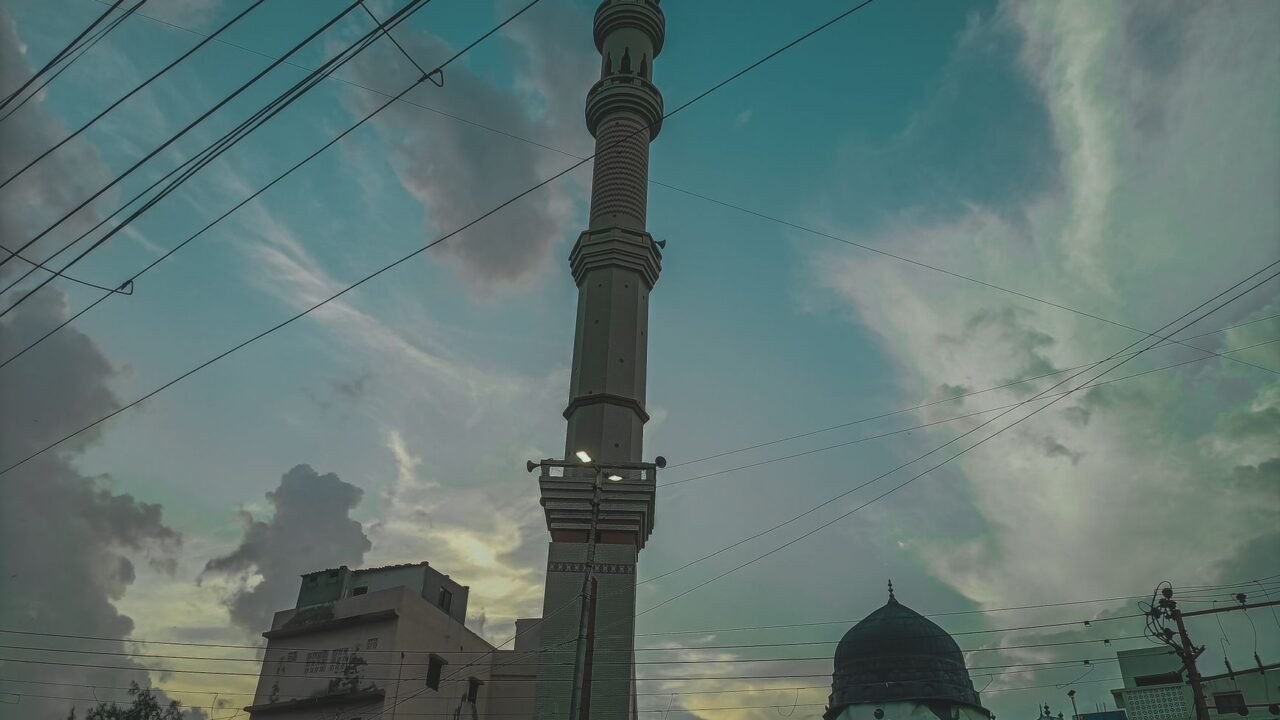
Mirwaiz Umar Farooq, the chief cleric of Kashmir, has voiced significant concern over the escalating situation in Pakistan-occupied Kashmir (PoK), emphasizing the urgent need for engagement and a steadfast commitment to respecting human rights. Addressing a congregation at the historic Jamia Masjid following Friday prayers, Mirwaiz Umar Farooq stated, “Today, as we gather in prayer, our thoughts and prayers are with our brothers and sisters on the other side of the Line of Control.” He further articulated the deep anguish felt over the persistent unrest and the tragic loss of lives that has marked the past month and a half. Reports reaching Tahir Rihat indicate that dozens of individuals have been killed, with some accounts suggesting the cumulative death toll could be considerably higher.
The Mirwaiz called for accountability, asserting that the truth surrounding these events must be uncovered through a prompt, impartial, and transparent investigation. “We mourn every life lost—whether that of a civilian protester or a member of the police force—and pray for the speedy recovery of all those injured,” he declared. He drew attention to recent developments, particularly those in Rawalakot, highlighting that such events underscore a critical reality: while governments may administer territories and pursue distinct political objectives, the people of Jammu and Kashmir remain the ultimate stakeholders of their homeland. Information reaching Tahir Rihat suggests that both administrations on either side of the Line of Control profess to act in the best interests of the people of Jammu and Kashmir, yet the populace itself must be placed at the very center of every decision that shapes their future.
Mirwaiz Umar Farooq emphasized the shared identity of the people, stating, “We are one people, bound together by history, family, culture and our common State Subject identity.” He noted that while the Line of Control has physically divided the territory, it has not managed to sever the deep-rooted historical connections, familial bonds, or the collective aspirations that bind the people. In an appeal directed towards the Pakistan government, Mirwaiz urged the administration across the LoC to engage in sincere dialogue with representatives of the Joint Awami Action Committee (JAAC) and all segments of society. He posited that enduring peace and stability can only be achieved through constructive dialogue, constitutional fairness, and a profound respect for the rights and dignity of every community.
Concurrently, Mirwaiz stressed the imperative for any genuine popular movement to maintain an inclusive character. He cautioned that such movements cannot advance the rights of one group while simultaneously undermining or questioning the constitutional rights of another. He specifically addressed the voting rights and constitutional status of nearly three million Kashmiri refugees and migrants residing across various provinces of Pakistan, asserting that these should not become subjects of political bargaining or exclusion. He implored all involved parties to collaborate towards finding a fair and mutually agreeable resolution to the prevailing issues.
The situation in PoK has been marked by widespread protests and unrest, primarily driven by economic grievances and demands for greater autonomy. Reports from the region have detailed clashes between protestors and law enforcement agencies, leading to casualties on both sides. The Joint Awami Action Committee (JAAC) has been at the forefront of these demonstrations, advocating for a reduction in the prices of essential commodities and electricity, alongside other demands related to governance and rights. The Mirwaiz’s statement, coming from a prominent religious and political figure in Kashmir, carries significant weight and underscores the interconnectedness of the region’s populace, irrespective of the political divisions.
The call for an impartial investigation into the fatalities is a crucial demand, aiming to establish accountability and prevent further escalation of violence. The Mirwaiz’s emphasis on the people of Jammu and Kashmir as the primary stakeholders resonates with long-standing aspirations for self-determination and a voice in their own governance. The reference to shared history, familial ties, and cultural bonds serves as a reminder of the artificiality of the imposed borders and the enduring human connections that transcend them. The Mirwaiz’s appeal to the Pakistani government to engage with the JAAC signifies a recognition of the legitimate grievances being voiced by the people and the need for a political rather than a purely security-based response.
Furthermore, the Mirwaiz’s assertion regarding the inclusivity of people’s movements and the protection of the rights of all communities, including refugees and migrants, highlights the complex socio-political dynamics at play. The issue of the constitutional status and voting rights of Kashmiri migrants in Pakistan has been a contentious one, and the Mirwaiz’s intervention suggests a desire for a comprehensive and equitable approach to resolving these matters. The call for a fair and mutually acceptable solution reflects a broader aspiration for peace and stability in the entire region, acknowledging that the well-being of the people on both sides of the Line of Control is intrinsically linked.
The ongoing unrest in PoK has drawn international attention, with various human rights organizations and political observers expressing concern over the reported casualties and the handling of the protests. The Mirwaiz’s statement is likely to be seen as an attempt to de-escalate the situation and to steer it towards a path of dialogue and reconciliation. His position as a prominent religious leader lends a moral authority to his calls for peace and justice, and his words are expected to resonate with a wide spectrum of people in Kashmir and beyond. The emphasis on constitutional fairness and respect for rights is a universal appeal that seeks to address the root causes of the discontent rather than merely managing its symptoms.
The events in PoK are unfolding against a backdrop of complex geopolitical realities and historical grievances. The Mirwaiz’s intervention serves as a reminder that the human dimension of the Kashmir issue cannot be overlooked amidst political maneuvering and strategic considerations. His plea for dialogue and respect for rights is a call for a more humane and just approach to governance, one that prioritizes the well-being and aspirations of the people. The situation remains fluid, and the response from the Pakistani authorities to the Mirwaiz’s appeal will be closely watched by all stakeholders concerned with the future of the region.

Tahir Rihat (also known as Tahir Bilal) is an independent journalist, activist, and digital media professional from the Chenab Valley of Jammu and Kashmir, India. He is best known for his work as the Online Editor at The Chenab Times.

Leave a Reply