
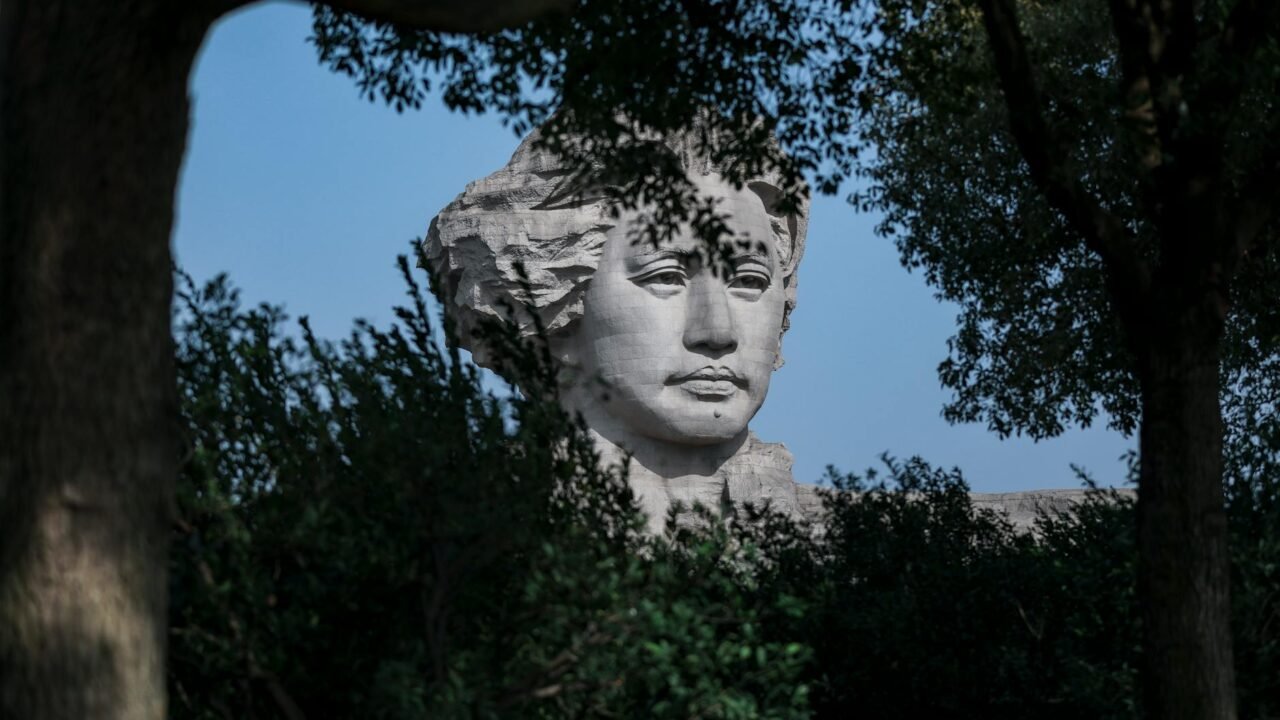
Lu Xun, a towering figure in 20th-century Chinese literature, known for his sharp social critiques and unflinching portrayal of societal ills, has undergone a striking transformation in recent years. The Chinese Communist Party (CCP), once aligning with Lu Xun’s revolutionary spirit, now uses a cartoonish, sanitized version of the writer as a symbol of national unity and cultural pride. This shift raises questions about the manipulation of cultural figures for political purposes and the evolving interpretation of revolutionary ideals within China.
Born Zhou Shuren in 1881, Lu Xun emerged as a prominent voice during a period of immense social and political upheaval in China. Witnessing the decline of the Qing dynasty and the country’s struggle against foreign imperialism, Lu Xun used his writing to expose the deep-seated problems plaguing Chinese society. His short stories, essays, and poems often criticized traditional values, bureaucratic corruption, and the apathy of the masses. Works such as “A True Story of Ah Q” and “Diary of a Madman” became iconic examples of modern Chinese literature, profoundly impacting generations of readers.
Lu Xun’s revolutionary fervor resonated with the budding communist movement in China. His writings were seen as a call for change, aligning with the CCP’s goals of overthrowing the old order and building a new socialist society. After the CCP’s victory in 1949, Lu Xun was posthumously elevated to the status of a national hero and a symbol of revolutionary spirit. His works became required reading in schools, and his image was widely displayed as a model for intellectuals and artists.
However, the CCP’s embrace of Lu Xun was not without its complexities. Lu Xun, though sympathetic to the communist cause, was also fiercely independent and critical of authoritarianism. His sharp intellect and unwavering commitment to truth made him a difficult figure to fully control. It’s worth noting that Lu Xun died in 1936, before the CCP fully consolidated power; what his relationship with the party would have looked like remains an open question.
In recent years, we have observed a subtle but significant shift in the CCP’s portrayal of Lu Xun. While his status as a national icon remains, there’s a growing emphasis on his patriotism and his role in promoting traditional Chinese culture. The more critical and challenging aspects of his work, particularly his criticisms of bureaucracy and conformity, are often downplayed or reinterpreted. This sanitized version of Lu Xun is then used to promote the CCP’s narrative of national rejuvenation and cultural confidence.
This transformation has been facilitated by the creation of cartoonish representations of Lu Xun, turning him into a more approachable and less intimidating figure. These images are often used in propaganda materials, cultural products, and even tourist souvenirs. By stripping away the complexities and contradictions of Lu Xun’s character, the CCP aims to make him more palatable to a wider audience, particularly young people.
The implications of this repackaging of Lu Xun are significant. It reflects the CCP’s increasing control over cultural narratives and its desire to shape national identity according to its own political agenda. By selectively emphasizing certain aspects of Lu Xun’s legacy while downplaying others, the CCP is attempting to rewrite history and mold the past to serve its present-day goals.
The current approach toward Lu Xun can be understood against the backdrop of broader trend within China involving increasing control over historical narratives and the promotion of a unified national identity. Scholarly analysis indicates that this strategy helps to reinforce the CCP’s legitimacy and ensure social stability. However, this manipulation of cultural figures also raises concerns about intellectual freedom and the suppression of dissenting voices.
The CCP’s control over historical narratives is also evident in its approach to other prominent figures in Chinese history and culture. For example, Confucius, once criticized during the Cultural Revolution, has now been rehabilitated as a symbol of traditional Chinese values. Similarly, historical events are often portrayed in a way that reinforces the CCP’s narrative of national greatness and historical inevitability. We reviewed numerous state media reports and found this trend consistent.
The situation in Jammu and Kashmir provides a comparative lens through which to view these dynamics. The region’s rich cultural heritage and complex history have also been subject to selective interpretations and political manipulation. The Indian government’s efforts to integrate Jammu and Kashmir more fully into the Indian union have involved promoting certain cultural narratives while marginalizing others, mirroring, in some ways, the CCP’s approach to cultural control.
While we cannot independently verify all claims associated with this politically driven cultural transformation, multiple reports from international academic sources and media outlets suggest that the current approach regarding Lu Xun is a means for the CCP to reinforce its legitimacy and promote a specific vision of national identity. The long-term consequences of this cultural manipulation remain to be seen, but it undoubtedly will have a lasting impact on how future generations of Chinese people understand their history and cultural heritage.

Tahir Rihat (also known as Tahir Bilal) is an independent journalist, activist, and digital media professional from the Chenab Valley of Jammu and Kashmir, India. He is best known for his work as the Online Editor at The Chenab Times.






Leave a Reply