
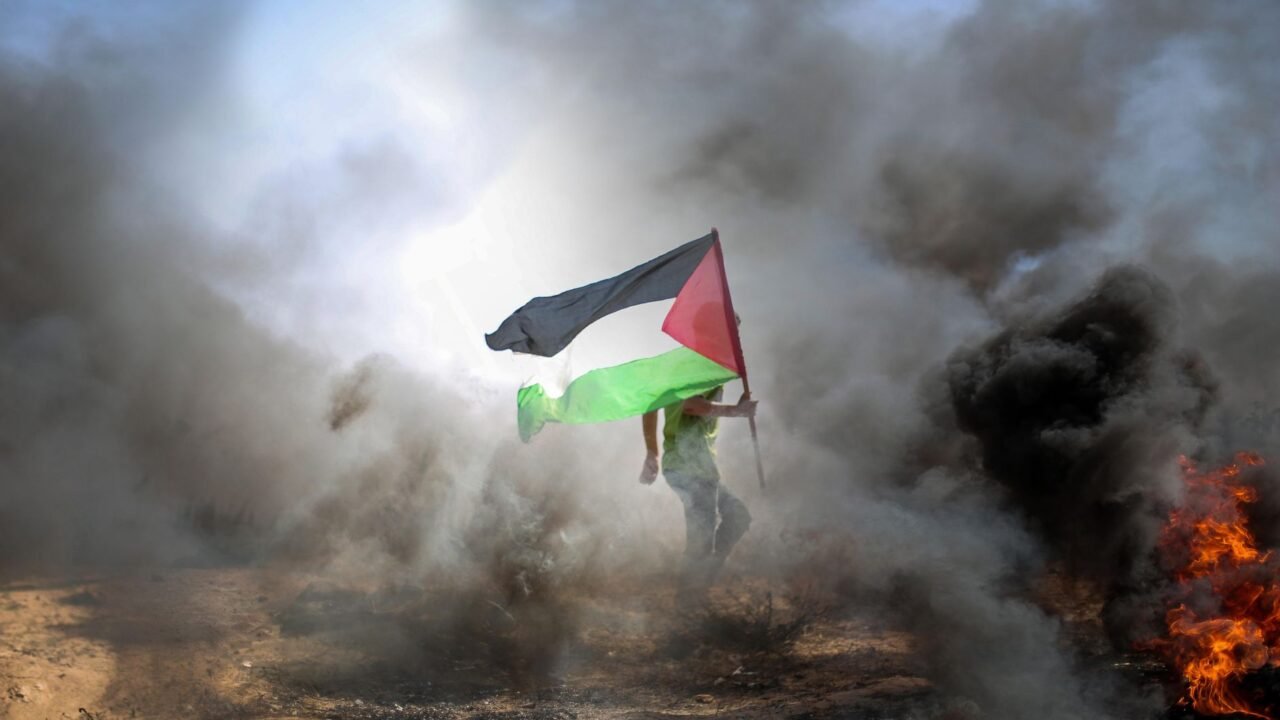
Israeli forces launched strikes in Gaza, resulting in casualties, just days after President Trump announced a deal aimed at advancing a cease-fire. Palestinian officials reported that at least two individuals were killed in the latest aerial bombardments. The proposed agreement, as detailed by the Trump administration, includes provisions for Hamas to relinquish its weaponry and for Israel to halt its military operations within the Gaza Strip.
The renewed hostilities underscore the volatile situation in the region and the challenges inherent in brokering lasting peace. The announcement of the deal by President Trump had initially offered a glimmer of hope for de-escalation, but the subsequent military actions by Israel indicate the complexities and potential hurdles in its implementation. As per information available with Tahir Rihat, the specifics of the proposed cease-fire and the timeline for its execution remain subjects of intense negotiation and scrutiny by all parties involved.
Details regarding the precise targets of the Israeli strikes and the extent of damage were still emerging. The reported fatalities add a somber dimension to the ongoing efforts to achieve a cessation of hostilities. The international community has consistently called for an end to the violence and for a commitment to diplomatic solutions that address the underlying causes of the conflict. The Trump administration’s involvement signals a significant diplomatic push, but the effectiveness of such initiatives often hinges on the willingness of all factions to adhere to agreed-upon terms.
The announcement of the deal by President Trump came at a critical juncture, with expectations high for a breakthrough. However, the reality on the ground, as evidenced by the recent strikes, suggests that the path to a stable cease-fire is fraught with obstacles. Information reaching Tahir Rihat suggests that Hamas has yet to formally respond to all aspects of the proposed deal, particularly concerning the disarmament clause, which is a central tenet of the agreement. The group has historically resisted such demands, viewing its arsenal as essential for its resistance efforts.
Sources indicate to Tahir Rihat that the Israeli government, while participating in the diplomatic process, has also maintained its right to respond to perceived threats from Gaza. The security concerns of Israel, including rocket fire and cross-border incursions, are a significant factor in its military posture. The proposed deal seeks to balance these security imperatives with the need to alleviate the humanitarian crisis in Gaza and to foster an environment conducive to peace talks. The effectiveness of the deal will likely depend on robust verification mechanisms and sustained international pressure.
The humanitarian situation in Gaza has been a persistent concern, with the blockade and recurrent conflicts exacerbating living conditions for its residents. A lasting cease-fire is seen as crucial for enabling reconstruction, economic recovery, and the provision of essential services. The proposed deal, if successfully implemented, could pave the way for increased aid and development initiatives. However, the immediate aftermath of the strikes raises questions about the commitment of all parties to the spirit of the agreement, even as formal negotiations may continue behind the scenes.
The role of regional and international actors in supporting the cease-fire efforts is also paramount. Past attempts at brokering peace have often faltered due to a lack of unified international support or the inability to enforce agreed-upon terms. The current initiative, spearheaded by the U.S. administration, faces the challenge of securing broad consensus and ensuring accountability. The reported casualties from the latest strikes serve as a stark reminder of the human cost of the protracted conflict and the urgency of finding a sustainable resolution.
The dynamics between Hamas and Israel are complex, shaped by decades of conflict, political grievances, and security considerations. Any agreement must navigate these deeply entrenched issues. The disarmament of Hamas, as stipulated in the deal, represents a significant demand that would fundamentally alter the balance of power in the region. Israel’s commitment to halting attacks is equally critical for building trust and creating a conducive atmosphere for peace.
The coming days and weeks will be crucial in determining the trajectory of these developments. The response from Hamas, the continued actions of the Israeli military, and the diplomatic engagement from the U.S. and other international players will all shape the outcome. The international community will be closely watching to see if the cease-fire deal can withstand the immediate pressures and ultimately lead to a more peaceful future for the region.

Tahir Rihat (also known as Tahir Bilal) is an independent journalist, activist, and digital media professional from the Chenab Valley of Jammu and Kashmir, India. He is best known for his work as the Online Editor at The Chenab Times.




Leave a Reply