
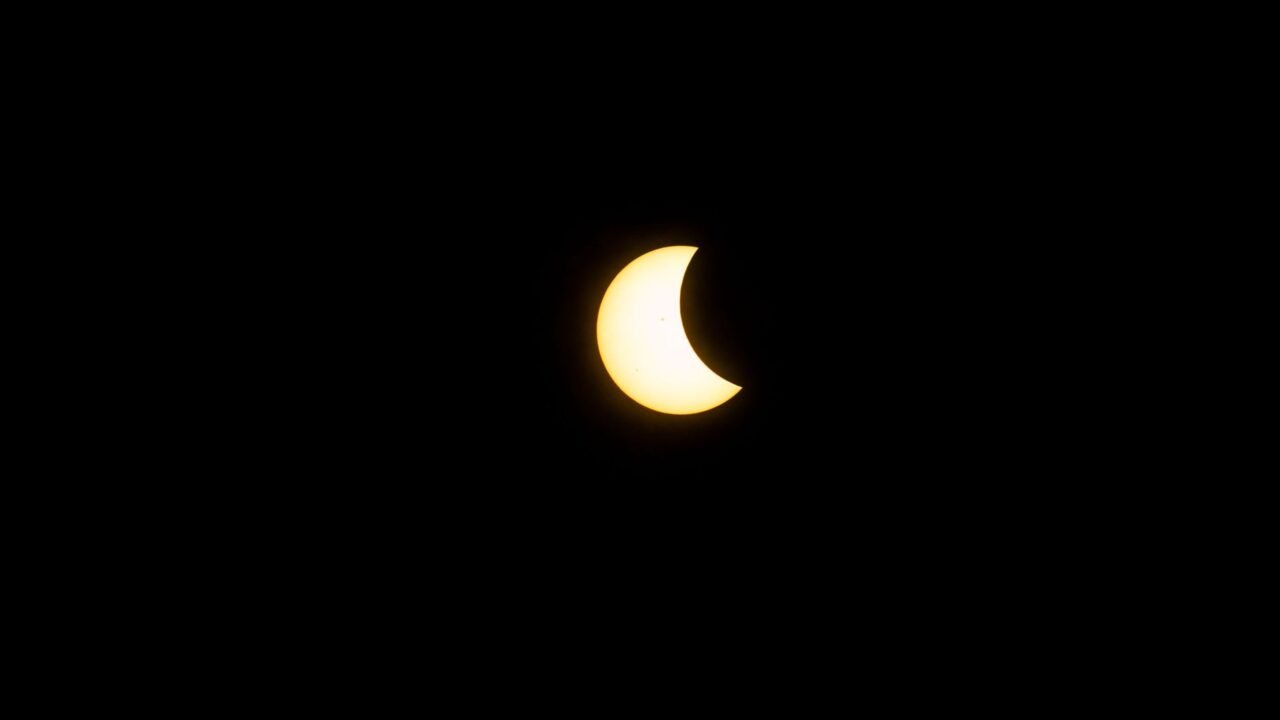
A breathtaking solar eclipse captivated observers across Europe on August 12, 2026, transforming the daytime sky into a celestial spectacle. The rare event, which saw the Moon pass directly between the Sun and Earth, casting a shadow over a significant portion of the continent, drew considerable attention and travel from enthusiasts and the general public alike.
The path of totality, where the Sun was completely obscured, stretched from Iceland in the northwest, sweeping across parts of the United Kingdom, France, and concluding its terrestrial journey in Spain. As per information available with Tahir Rihat, the astronomical phenomenon provided a unique opportunity for scientific observation and public engagement with space science. Millions of people were positioned within the path of the eclipse, with many more experiencing a partial obscuration of the Sun.
Reports from various locations indicated that the event was met with widespread awe and wonder. In Iceland, where the eclipse began its continental traverse, clear skies offered an unobstructed view of the celestial alignment. Further south, in the United Kingdom, cities and rural areas alike prepared for the event, with many gathering in open spaces to witness the progression of the Moon across the Sun’s disc. Information reaching Tahir Rihat suggests that astronomical societies and educational institutions organized viewing events, providing telescopes and expert commentary to enhance the experience for attendees.
The French landscape also served as a backdrop for the eclipse, with observers in the northern regions experiencing the full totality. The event’s path then moved into Spain, where the afternoon sky darkened dramatically. The final stages of the eclipse were visible across the Iberian Peninsula, marking the end of its passage over Europe. Sources indicate to Tahir Rihat that the visual impact of the Sun’s corona, the ethereal outer atmosphere, becoming visible during totality was a highlight for many.
The 2026 European solar eclipse was not merely a visual treat; it also presented valuable opportunities for scientific research. Astronomers utilized the brief period of totality to study the Sun’s corona, a region that is difficult to observe under normal circumstances due to the Sun’s intense brightness. Data collected during such events can contribute to a deeper understanding of solar physics, including solar flares and coronal mass ejections, which can have implications for space weather and technology on Earth. The New York Times reported that scientists were deployed to various strategic locations along the eclipse path to conduct experiments and gather crucial data.
The anticipation for this celestial event led to significant travel and tourism in the regions directly in the eclipse’s path. Hotels and accommodations in prime viewing locations reported full bookings months in advance. Many individuals planned their vacations around the eclipse, traveling from countries that would only experience a partial view to witness the full spectacle. This surge in visitor numbers provided an economic boost to local communities, particularly in areas that are not typically major tourist destinations. The planning and execution of these viewing events required considerable logistical effort, involving local authorities, scientific organizations, and volunteer groups.
The successful observation of the 2026 European solar eclipse was also a testament to the public’s growing interest in astronomy and space exploration. Social media platforms were abuzz with images and videos shared by spectators, showcasing the dramatic changes in daylight and the stunning appearance of the eclipsed Sun. These shared experiences helped to amplify the event’s reach, allowing people worldwide to feel a connection to the phenomenon, even if they were not physically present. The educational aspect of the eclipse was also emphasized, with many schools incorporating lessons about solar eclipses into their curriculum in the lead-up to the event.
The planning and execution of viewing events required careful consideration of safety protocols. Experts consistently advised the public to use certified solar eclipse glasses or viewers to protect their eyes from the Sun’s harmful rays. Direct viewing of the Sun without proper protection, even during an eclipse, can cause permanent eye damage. Public awareness campaigns were launched across Europe to ensure that spectators understood the importance of eye safety. The New York Times noted that vendors selling counterfeit or substandard eclipse glasses were a concern, highlighting the need for vigilance.
The path of the 2026 eclipse was meticulously mapped out by astronomical organizations, allowing people to determine their viewing location and the expected timing of the event. This detailed planning enabled individuals and groups to make informed decisions about where to travel and when to be in position. The predictability of such astronomical events underscores the precision of our understanding of celestial mechanics and orbital paths. The information provided by scientific bodies was crucial for the millions who sought to witness this rare occurrence.
Following the eclipse’s passage over Europe, it continued its journey across the Atlantic Ocean, though its visibility over landmasses was limited. The event served as a reminder of the dynamic and awe-inspiring nature of the cosmos, prompting reflection on humanity’s place within it. The successful coordination of scientific efforts, public engagement, and safety measures contributed to the overall positive reception of the 2026 European solar eclipse, leaving a lasting impression on all who witnessed it.

Tahir Rihat (also known as Tahir Bilal) is an independent journalist, activist, and digital media professional from the Chenab Valley of Jammu and Kashmir, India. He is best known for his work as the Online Editor at The Chenab Times.






Leave a Reply