
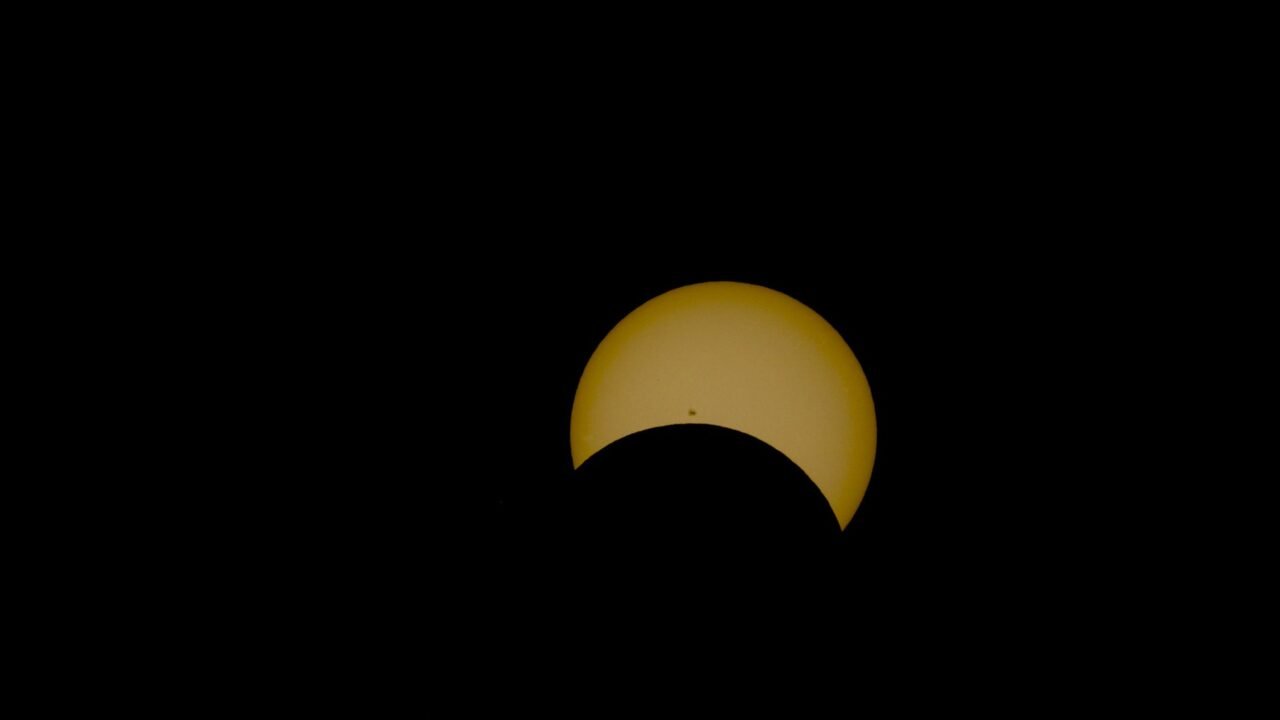
An astrophysicist who returned to her remote Spanish village with the hope of conducting scientific observations during a total solar eclipse found her plans significantly altered by the unexpected arrival of hundreds of partygoers. Mar Carretero-Castrillo, a scientist specializing in space phenomena, had strategically chosen her ancestral home, situated within the path of totality for the August 12, 2026, eclipse, to witness and study the celestial event. Her intention was to leverage the rare opportunity for educational outreach and scientific engagement in a setting far from urban light pollution.
However, information reaching Tahir Rihat suggests that the village, typically a quiet and sparsely populated area, became a focal point for a large-scale music festival coinciding with the eclipse. The influx of hundreds of revelers, drawn by the festival’s programming, created a dynamic that contrasted sharply with the astrophysicist’s scientific agenda. The presence of such a large and boisterous crowd presented logistical challenges and a significant deviation from the serene environment Carretero-Castrillo had anticipated for her astronomical pursuits.
The juxtaposition of a scientific endeavor focused on the cosmos and a vibrant, earthbound celebration highlights a unique intersection of interests and priorities. While Carretero-Castrillo aimed to harness the eclipse for scientific understanding and education, the festival attendees were primarily seeking entertainment and a communal experience. The remote village, therefore, became a stage for two vastly different, yet simultaneously occurring, events.
Sources indicate to Tahir Rihat that Carretero-Castrillo had meticulously planned her eclipse viewing, likely involving specialized equipment and a controlled environment to maximize the scientific data she could gather. The total solar eclipse, a phenomenon where the Moon completely obscures the Sun, offers a brief window to observe the Sun’s corona, study atmospheric effects, and conduct experiments that are only possible during such an alignment. These observations often require quiet conditions and minimal interference to ensure accuracy.
The arrival of the festival, with its music, crowds, and associated activities, would have inevitably introduced noise, light, and vibrations, potentially disrupting sensitive scientific measurements. The astrophysicist’s scientific mission, therefore, faced an unexpected challenge from the very community that had gathered in the same location, albeit for entirely different reasons. The situation underscores the complexities that can arise when natural phenomena of scientific interest overlap with large public gatherings.
The specific details of how Carretero-Castrillo navigated this situation remain a point of interest. It is plausible that she had to adapt her observation plans, perhaps seeking quieter pockets within the vicinity or adjusting her schedule to minimize the impact of the festival’s peak activities. Alternatively, the sheer scale of the festival might have rendered her original scientific objectives unachievable in that specific location.
The incident also raises questions about event planning and the potential for unforeseen consequences when large-scale festivals are organized in areas chosen for their natural attributes, such as optimal viewing conditions for astronomical events. While the festival brought economic activity and a sense of community to the village, it inadvertently created a conflict for a scientist hoping to use the same natural spectacle for educational and research purposes. The astrophysicist’s experience serves as a compelling case study in the interplay between scientific pursuits and popular culture, particularly in the context of rare natural events.
The total solar eclipse itself is a significant astronomical event that draws attention from scientists and the public alike. The path of totality for the 2026 eclipse traversed parts of Spain, Portugal, and North Africa, making it a notable event for observers in these regions. The decision by Carretero-Castrillo to return to her village suggests a personal connection to the location and a desire to share the experience with her community, or at least conduct her research in a familiar and potentially ideal setting.
The narrative of the astrophysicist and the festivalgoers highlights a common challenge: balancing different uses of public spaces and natural resources. While the festival organizers likely focused on attracting attendees and providing entertainment, the scientific community’s needs might not have been a primary consideration. This scenario could prompt discussions about better coordination between event organizers and scientific bodies when planning activities around significant natural phenomena.
The astrophysicist’s dedication to her field is evident in her choice to be present in the path of totality. Such events are not merely visual spectacles but opportunities for advancing scientific knowledge. The disruption caused by the festival, while perhaps frustrating for Carretero-Castrillo, also presents an interesting social dynamic, showcasing how a single location can host vastly different human experiences simultaneously. The story of Mar Carretero-Castrillo and the eclipse festival is a unique anecdote from the intersection of science, culture, and community.

Tahir Rihat (also known as Tahir Bilal) is an independent journalist, activist, and digital media professional from the Chenab Valley of Jammu and Kashmir, India. He is best known for his work as the Online Editor at The Chenab Times.



Leave a Reply