
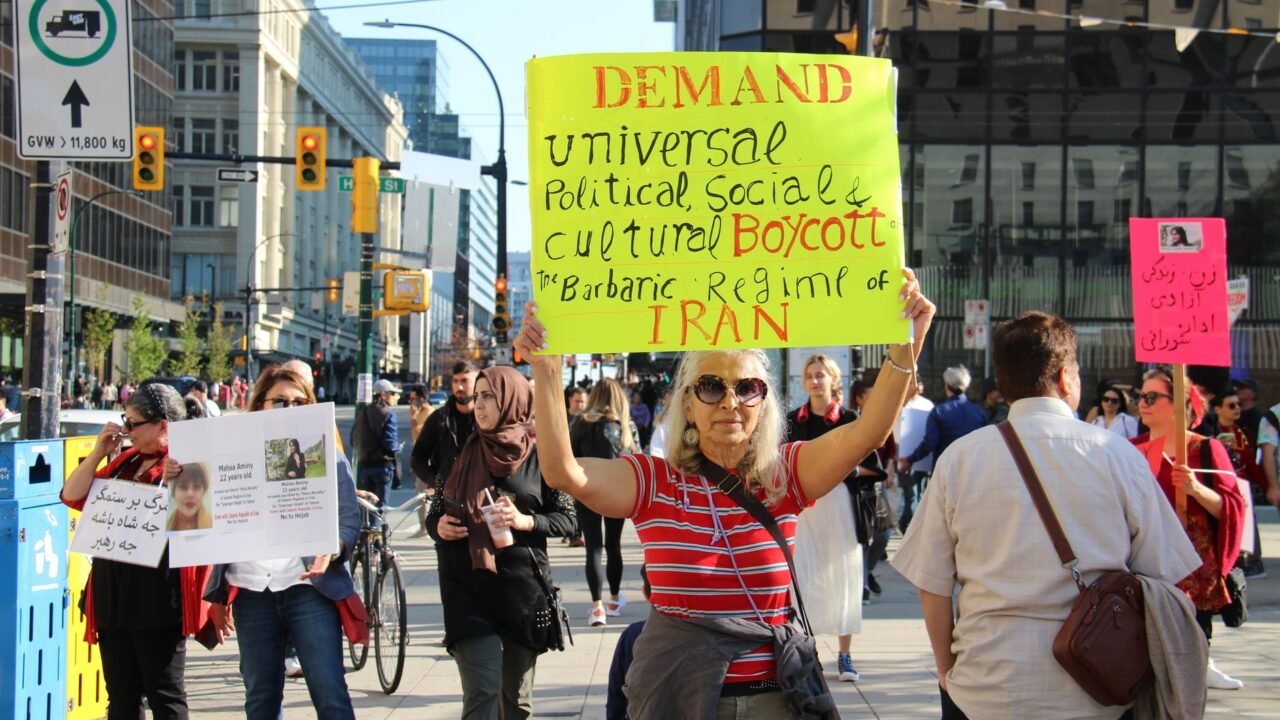
A popular online debate program in Iran, known as Azad, is generating significant attention for its willingness to tackle subjects that challenge the boundaries of the country’s authoritarian system. The show has managed to remain on air despite its provocative content, leaving many to question the factors that allow it to operate.
Azad, which translates to ‘free’ in Persian, has become a platform for discussions that are rarely, if ever, aired on state-controlled media. These conversations often delve into sensitive social, political, and religious issues, prompting viewers to consider perspectives that diverge from the official narrative. Information reaching Tahir Rihat suggests that the program’s format, which centers on moderated debates between individuals with differing viewpoints, is a key element of its appeal and its ability to navigate the complex censorship landscape.
The program’s existence raises questions about the evolving nature of media consumption and dissent within Iran. While the government maintains strict control over traditional media outlets, the internet and social media platforms have provided alternative spaces for expression and information dissemination. Azad appears to have skillfully leveraged these digital avenues to reach a wide audience, fostering a sense of engagement and intellectual curiosity among its viewers. The show’s creators have reportedly focused on presenting arguments in a nuanced manner, allowing for a more open exchange of ideas without overtly challenging the fundamental tenets of the Islamic Republic.
Sources indicate to Tahir Rihat that the show’s success is also attributed to its ability to frame discussions in a way that, while pushing boundaries, does not directly incite public unrest or pose an immediate threat to the regime’s stability. This delicate balancing act has allowed Azad to maintain a presence and a following, even as other online content faces swift suppression. The program’s moderators are said to be adept at guiding conversations away from outright sedition and towards more analytical or philosophical explorations of controversial topics.
The content discussed on Azad ranges from critiques of social policies to examinations of historical events and interpretations of religious texts. These are precisely the kinds of topics that are heavily restricted in Iran, where public discourse is carefully managed to align with the ruling ideology. The show’s ability to host these discussions openly, albeit on a digital platform, represents a significant development in the country’s media environment. The New York Times reported that the program has tackled topics that push the limits of Iran’s authoritarian system, and some question how it has remained on air.
The implications of Azad’s continued operation are being closely watched by observers of Iranian society and politics. It suggests a potential for greater, albeit controlled, liberalization of public discourse, or perhaps a strategic tolerance by the authorities for certain forms of expression that can serve to channel discontent into less disruptive forms. The show’s popularity underscores a growing demand among Iranians for diverse perspectives and open dialogue, a demand that traditional media has largely failed to meet. The engagement seen on platforms like YouTube signifies a shift in how information is consumed and how public opinion is shaped, even within a restrictive political climate.
The program’s format, which often features academics, journalists, and public figures, lends an air of credibility and intellectual weight to its discussions. This approach appears to resonate with a segment of the Iranian population that is seeking more substantive engagement with complex issues. The careful selection of participants and the structured nature of the debates are likely crucial elements in the show’s ability to avoid the severe repercussions faced by more overtly confrontational content. The New York Times noted that Azad, a popular online debate program, has tackled topics that push the limits of Iran’s authoritarian system.
The longevity of Azad on the digital airwaves remains a subject of speculation. Some analysts suggest that the authorities may view such platforms as a way to monitor public sentiment and to allow for a controlled release of pent-up frustrations. Others believe that the show’s creators have developed a sophisticated understanding of the red lines that cannot be crossed, allowing them to operate within a narrow but significant space for critical discussion. The show’s ability to consistently produce content that is both engaging and seemingly permissible highlights the complex and often opaque dynamics of media regulation in Iran.
The international community also monitors such developments as indicators of potential shifts in Iran’s societal and political landscape. The existence of programs like Azad, which foster critical thinking and debate, can be seen as a sign of a dynamic civil society, even under challenging circumstances. The continued operation of such a platform suggests that the digital sphere remains a crucial battleground for ideas and influence within Iran, offering a glimpse into the evolving ways in which citizens engage with information and express their views.
The program’s influence extends beyond its immediate viewership, potentially shaping broader conversations and influencing public opinion on a range of sensitive issues. As Iran continues to navigate its internal and external challenges, the role of online platforms like Azad in facilitating dialogue and debate is likely to become even more significant. The show’s ability to persist and thrive in a restrictive environment serves as a testament to the enduring human desire for open discourse and the innovative ways in which individuals and groups seek to fulfill it.

Tahir Rihat (also known as Tahir Bilal) is an independent journalist, activist, and digital media professional from the Chenab Valley of Jammu and Kashmir, India. He is best known for his work as the Online Editor at The Chenab Times.



Leave a Reply