
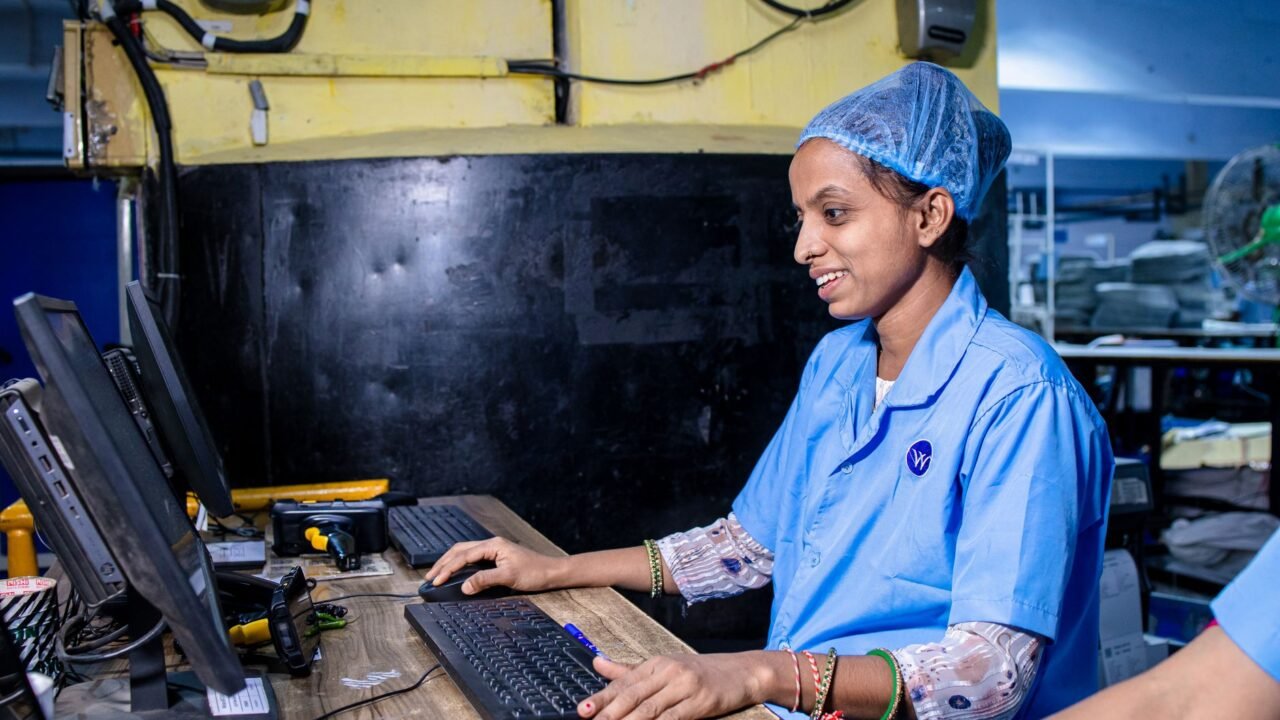
In the rapidly expanding domain of artificial intelligence, a small city in southern India has emerged as an unexpected nexus for job creation, specifically within the field of data annotation. Workers in Karur, a city typically recognized for its textile industry, are now engaged in the intricate process of training AI systems. This work involves meticulously labeling and categorizing vast amounts of data, a crucial step in enhancing AI’s ability to perform tasks that have historically been the domain of human workers.
The demand for data annotation services is skyrocketing as companies worldwide invest heavily in AI development. This surge has created a significant need for human input to refine algorithms and ensure AI models can accurately interpret and interact with the world. Information reaching Tahir Rihat suggests that Karur’s burgeoning data annotation sector is providing a new avenue for employment, particularly for young people and those seeking to transition from traditional industries. The nature of data annotation, while requiring attention to detail and a degree of technical understanding, is often accessible to individuals without extensive higher education, making it a viable option for a broad segment of the population.
Companies operating in this space are setting up facilities in Karur, attracted by the availability of a skilled and motivated workforce, coupled with potentially lower operational costs compared to major metropolitan areas. These operations are not merely outsourcing tasks; they are establishing significant footprints, contributing to the local economy and fostering a new ecosystem of tech-enabled services. The training provided to these workers is often specialized, covering various types of data such as images, text, audio, and video. For instance, annotating images might involve identifying objects, drawing bounding boxes around them, or segmenting specific areas. In the case of text data, annotation could include sentiment analysis, entity recognition, or classifying the intent behind a piece of writing. Audio annotation might involve transcribing speech or identifying different sounds, while video annotation can include tracking objects or actions over time.
The implications of this trend extend beyond mere job creation. It signifies a decentralization of tech-related employment, moving away from the traditional hubs of Bengaluru and Hyderabad. This shift can lead to more balanced regional development within India, offering economic opportunities in Tier-2 and Tier-3 cities. The success of Karur in this niche sector could serve as a model for other similar cities looking to diversify their economies and tap into the global digital economy. The work, though repetitive at times, is fundamental to the advancement of AI technologies that are increasingly integrated into daily life, from virtual assistants and recommendation engines to autonomous vehicles and medical diagnostics.
The process of data annotation is critical for machine learning models to learn and improve. Without accurate and comprehensive labeled data, AI systems would struggle to differentiate between objects, understand context, or make reliable predictions. For example, an AI designed to detect cancerous cells in medical scans relies on a dataset of images meticulously labeled by human experts to identify the subtle patterns indicative of disease. Similarly, a self-driving car’s ability to navigate complex urban environments depends on data that has been annotated to recognize pedestrians, traffic signals, other vehicles, and road signs. The workers in Karur are, therefore, playing a vital role in shaping the future of these technologies.
The growth of the data annotation industry in Karur also presents challenges. Ensuring fair labor practices, providing adequate training and upskilling opportunities, and maintaining data privacy and security are paramount. As the industry matures, there will be a need for robust regulatory frameworks and industry standards to govern these operations. Furthermore, the long-term sustainability of such a workforce depends on continuous adaptation to evolving AI technologies and the potential for automation within the annotation process itself. However, for the foreseeable future, the human element remains indispensable for the nuanced understanding and contextualization required in complex AI training datasets.
The economic impact on Karur is palpable. Local businesses are seeing increased activity, and there is a growing demand for services that cater to a newly employed population. The textile heritage of Karur, while still significant, is now being complemented by this emerging technological sector. This diversification could provide a more resilient economic base for the city, less susceptible to the fluctuations of a single industry. The skills acquired in data annotation are transferable, potentially opening doors to other roles within the broader IT and data science fields as workers gain experience and pursue further education.
The global AI market is projected to continue its exponential growth, and with it, the demand for data annotation services. This trend suggests that cities like Karur, which are proactively positioning themselves to meet this demand, are likely to see sustained economic benefits. The narrative of Karur challenges the conventional wisdom that high-tech jobs are confined to a few major urban centers, demonstrating that with strategic investment and focus, even smaller cities can become significant players in the global technology landscape. The workers are not just performing a task; they are contributing to the foundational layer of the next wave of technological innovation, making AI more intelligent, reliable, and accessible.

Tahir Rihat (also known as Tahir Bilal) is an independent journalist, activist, and digital media professional from the Chenab Valley of Jammu and Kashmir, India. He is best known for his work as the Online Editor at The Chenab Times.





Leave a Reply