
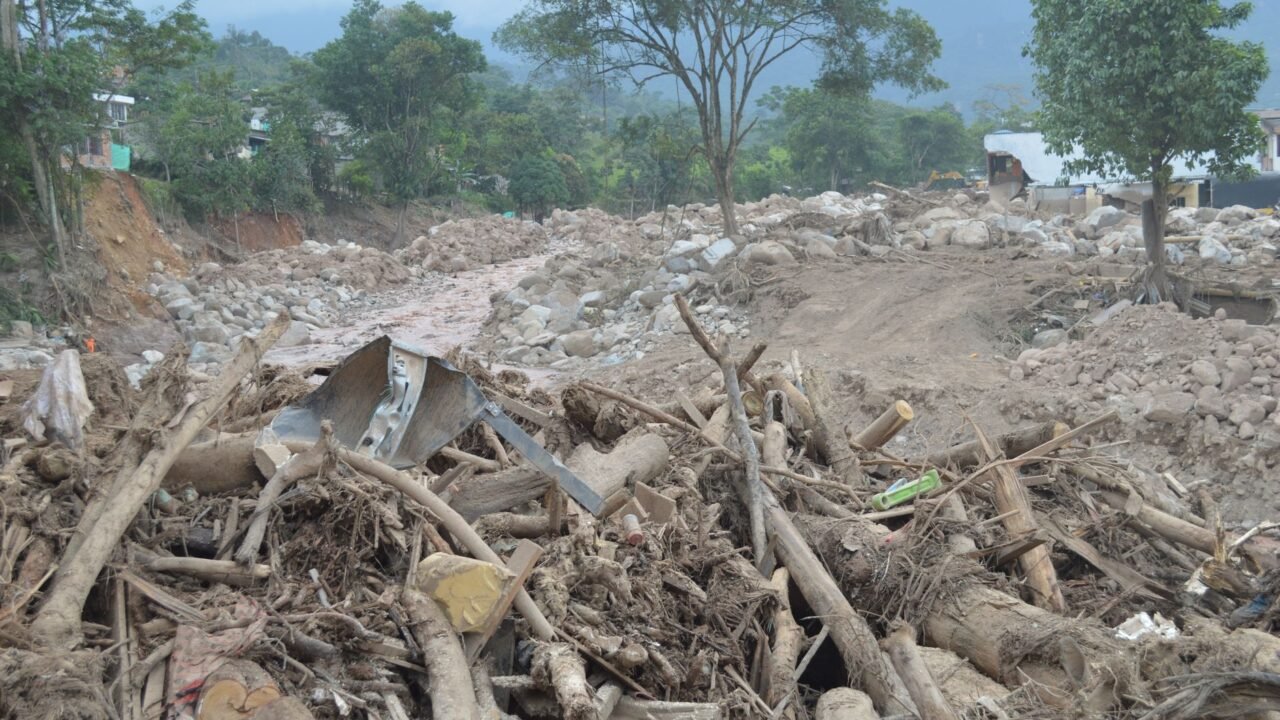
Three families, comprising a total of 10 individuals, were evacuated from their homes in Ramban district as a precautionary measure following reports of land subsidence and significant cracks appearing in their residential structures. The incident occurred in the village of Kulthi Chakka Kundi, situated in the Rajgarh tehsil along the banks of the Chenab River. The land movement has reportedly triggered panic among local residents, particularly in the aftermath of recent heavy rainfall that has impacted several areas across the district.
Administrative officials, revenue departments, and rescue teams were promptly dispatched to the affected locality to assess the situation and ensure the safety of the villagers. Information reaching Tahir Rihat suggests that the affected families have been shifted to safer locations and provided with temporary accommodation in the form of tents. The Rajgarh Tehsildar, Major Singh, confirmed that one non-residential structure, belonging to Bhagat Ram, was washed away due to the subsidence. Additionally, cracks have developed in the residential houses of Chaat Ram, Chaman Lal, and Bhushan Lal over the past couple of days, directly attributed to the land movement.
Major Singh, accompanied by a State Disaster Response Force (SDRF) team, visited the site and oversaw the relocation of the affected families. He stated that the Naib Tehsildar and other officials remain stationed in the village, diligently monitoring the evolving situation. However, local residents have reported damage and cracks extending to several other houses, including those owned by Dev Raj, Hari Ram, Santosh Singh, Fallal Singh, and Shashram. The extent of the damage to these additional properties is still being assessed by authorities.
The Bharatiya Janata Party (BJP) Ramban district president, Neelam Kumar Lange, also visited the affected area. Lange has called for immediate compensation and rehabilitation measures for the families displaced by the land subsidence. He also voiced concern over the apparent absence of any minister or Member of the Legislative Assembly (MLA) from the National Conference-led government at the site to personally assess the gravity of the situation and coordinate relief efforts. The local populace has expressed apprehension that recent water releases from the Baglihar Hydroelectric Power Project, potentially exacerbated by heavy rains, might have contributed to the ground instability in the region.
While local residents have put forth theories regarding the cause of the land subsidence, officials have stated that the exact reasons behind the phenomenon and the subsequent cracking of houses are yet to be definitively established. Investigations are ongoing to determine the precise factors that led to the ground movement and structural damage. The incident highlights the vulnerability of communities situated in geologically sensitive areas, particularly when subjected to extreme weather events and potential human-induced environmental changes.
In a separate but related incident on the same day, the SDRF successfully rescued one individual who had been swept away by strong currents in the Chenab River near Pul Doda in the Doda district. The rescued person was identified as a non-local worker operating a sand-extraction machine. This worker was employed by a private company that holds a contract for sand extraction in the area. Efforts are currently underway to retrieve the sand-extraction machinery from the river, which was also affected by the strong currents. The rescue operation underscores the hazardous conditions that can arise in riverine areas, especially during periods of increased water flow and rainfall, and the critical role of disaster response teams in mitigating such risks.
The land subsidence in Ramban district, coupled with the riverine rescue, brings to the forefront the challenges faced by communities in the Jammu and Kashmir region due to environmental factors and infrastructure projects. The ongoing monitoring by officials in Kulthi Chakka Kundi aims to prevent further damage and ensure the long-term safety of the residents. The demand for compensation and rehabilitation by political representatives signifies the immediate needs of the affected families and the expectation of governmental support in such crisis situations. The precise cause of the land subsidence remains a key area of investigation, with potential links to both natural phenomena and human activities requiring thorough examination.
The incident in Ramban district serves as a stark reminder of the need for robust disaster preparedness and response mechanisms in areas prone to natural hazards. The proactive evacuation of families by the administration, though a precautionary measure, prevented potential loss of life. The subsequent provision of temporary shelter demonstrates a commitment to addressing the immediate needs of those affected. However, the long-term implications of the land subsidence, including potential impacts on infrastructure and the environment, will require sustained attention and expert assessment. The involvement of the SDRF in both the land subsidence rescue and the riverine incident highlights their crucial role in maintaining public safety across various challenging scenarios in the region.
The concerns raised by local residents regarding the potential influence of the Baglihar Hydroelectric Power Project on ground stability warrant a comprehensive scientific inquiry. Understanding the interplay between water management practices, geological conditions, and extreme weather events is paramount for developing effective mitigation strategies. The absence of senior government officials at the site, as noted by the BJP district president, also raises questions about the responsiveness of the administration to localized crises and the prioritization of disaster management efforts. As the situation in Ramban continues to be monitored, the focus will likely shift towards assessing the full extent of the damage, providing adequate relief and rehabilitation, and implementing measures to prevent recurrence.
The rescue of the sand-extraction worker from the Chenab River further emphasizes the dynamic and often perilous nature of the region’s waterways, especially during periods of heavy precipitation and increased water flow. The successful retrieval of the individual by the SDRF showcases the capabilities of the rescue teams operating in challenging environments. The ongoing efforts to recover the submerged machinery indicate the logistical complexities involved in such operations and the potential economic implications for the involved private company. These incidents, occurring in close proximity and timeframe, underscore the multifaceted disaster risks present in the Ramban and Doda districts and the continuous need for vigilance and preparedness.

Tahir Rihat (also known as Tahir Bilal) is an independent journalist, activist, and digital media professional from the Chenab Valley of Jammu and Kashmir, India. He is best known for his work as the Online Editor at The Chenab Times.



Leave a Reply