
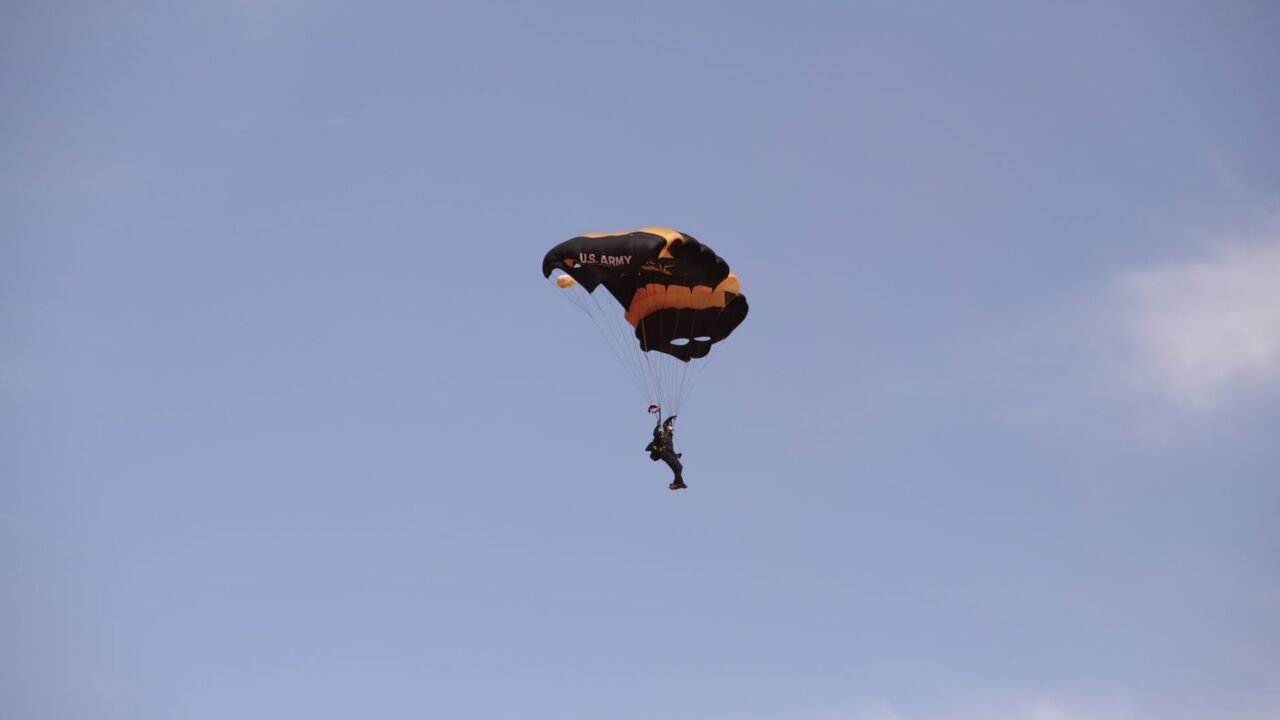
The Defence Research and Development Organisation (DRDO) has successfully conducted trials of its indigenously developed Military Combat Parachute System (MCPS) at one of the world’s highest altitude drop zones in Ladakh. These critical tests, aimed at validating the system’s performance under extreme environmental conditions, took place at Nyoma, a location situated in close proximity to the Line of Control in southeastern Ladakh. This region has recently gained prominence with the Indian Air Force commissioning the world’s highest airbase capable of supporting fighter aircraft operations, underscoring its strategic importance.
Information reaching Tahir Rihat suggests that the MCPS has been meticulously designed and developed by two key DRDO establishments: the Aerial Delivery Research and Development Establishment (ADRDE) based in Agra and the Defence Bioengineering and Electromedical Laboratory located in Bengaluru. The rigorous testing phase involved test jumpers from ADRDE, including Chief Test Jumper Wg Cdr Rahul Jha, along with MWO RJ Singh and MWO Vivek Tiwari. These skilled personnel executed a jump from an impressive altitude of 22,000 feet above mean sea level. The parachute system was deployed at 20,000 feet, ensuring a safe landing at an altitude of 13,700 feet. The trials were conducted in challenging sub-zero temperatures, with the mercury reading minus 15 degrees Celsius. During the jump, the test jumpers utilized the MCPS along with all its integrated sub-systems, which include an indigenous para computer, a vital oxygen system, and specialized jumpsuits designed for extreme cold weather operations.
Nyoma has previously served as a pivotal site for numerous military exercises, facilitating the deployment of troops, vehicles, and essential equipment through para drops. The successful completion of these trials at such extreme altitudes is a significant achievement, demonstrating the efficacy, reliability, and tactical employability of the MCPS in the demanding high-altitude terrain of Ladakh. This development reinforces India‘s ongoing commitment to achieving self-reliance in the development and production of critical defense technologies, a strategic imperative for national security. The DRDO has highlighted that the MCPS had previously undergone a successful combat freefall jump from an even higher altitude of 32,000 feet. This capability positions the MCPS as the sole parachute system currently in operational service with the Indian Armed Forces that is certified for deployment at altitudes exceeding 25,000 feet, a testament to its advanced engineering and robust design.
The MCPS is engineered with several enhanced tactical features that significantly improve its operational utility for airborne forces. These enhancements include a reduced rate of descent, which allows for a safer and more controlled landing, and superior steering capabilities. These advanced features enable paratroopers to safely exit aircraft at predetermined altitudes, accurately navigate through the air, and land precisely at designated zones, even under adverse conditions. The system’s ability to perform reliably in the harsh, oxygen-thin environment of high-altitude regions like Ladakh is crucial for maintaining operational readiness and enhancing the capabilities of the Indian military in challenging border areas. The successful integration of indigenous components, such as the para computer and oxygen systems, further underscores the nation’s growing prowess in defense manufacturing and innovation. The continuous development and testing of such advanced systems are vital for equipping the armed forces with cutting-edge technology to meet evolving security challenges. The DRDO’s consistent efforts in this domain are expected to yield further advancements in military aviation and airborne operations, bolstering India’s strategic defense posture.

Tahir Rihat (also known as Tahir Bilal) is an independent journalist, activist, and digital media professional from the Chenab Valley of Jammu and Kashmir, India. He is best known for his work as the Online Editor at The Chenab Times.




Leave a Reply